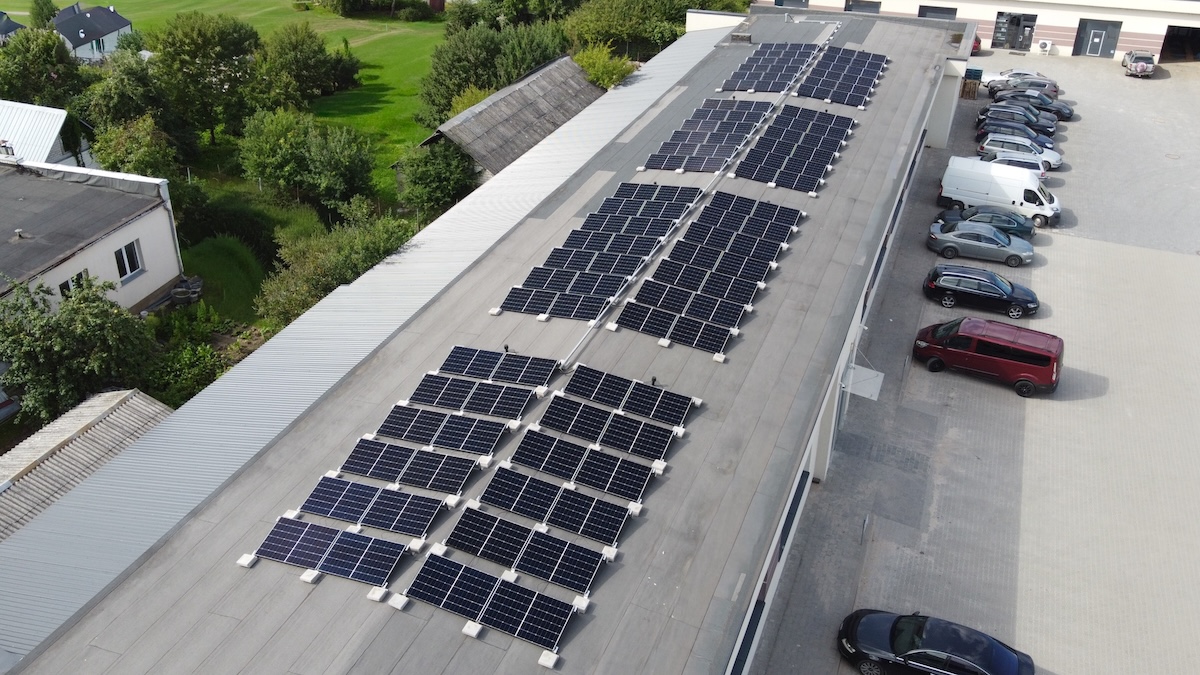

Tom Steyer sees an opportunity in America’s aging building stock. Steyer’s climate investment firm, Galvanize Climate Solutions, launched a real estate strategy three years ago with a thesis that decarbonizing commercial buildings could boost asset value and net operating income.
The strategy targets undercapitalized buildings in high-growth, supply-constrained markets that could benefit from solar installations, electrification of heating and cooling systems, and other energy-efficiency upgrades. The thesis looks prescient as a widening war in Iran drives up oil and gas prices.
“In an environment where the combined impact of rising electricity prices and market volatility is accelerating, there is a large and ongoing opportunity for the team to leverage decarbonization as a driver for value creation,” said Katie Hall, who co-founded Galvanize with Steyer after his brief presidential bid in 2020. The billionaire investor has now taken a leave from Galvanize to run for governor of California (see Steyer’s Q&A on ImpactAlpha).
Grey-to-green financing
The Galvanize Real Estate Fund secured commitments from a diverse group of global pension funds, family offices, foundations, registered investment advisers, banks and other institutional investors. Galvanize allocated $15 million of its own capital to the fund.
The real estate fund has amassed a total of $1 billion, including debt financing it has lined up.
Galvanize has acquired 15 commercial properties, including 150 Milford Road, a 600,000-square-foot industrial complex in New Jersey (see, “Tom Steyer’s Galvanize makes third real estate grey-to-green deal”). An in-house team of scientists, climate technologists and policy experts map out the decarbonization potential of the assets.
Galvanize aims to achieve portfolio-wide emissions reductions of 153% and avoid roughly 8,000 metric tons of emissions per year. About 30% of Galvanize Real Estate Fund’s carried interest is dependent on meeting its impact goals.