With more than 15 million policyholders and $675 billion in assets, Nippon Life Insurance Company sits at the center of Japan’s economic life.
Its balance sheet of nearly 100 trillion yen makes Osaka-based Nippon Life Japan’s largest private asset owner. Its investment decisions affect the financial security of policyholders who make up at least 12% of Japan’s population.
Nippon Life invests in roughly 3,300 companies across Japan, with significant positions in major companies, giving it unusual leverage over the country’s business ecosystem.
With those household savings at stake and that “system-level” responsibility, Nippon in recent years has had to reconsider what its sustainable investing portfolio should look like. The inflation and economic hardships of the last few years has caused the insurance giant to emphasize the “S”, for social, along with the “E”, for environment.
“When financial well-being is under strain, people have to prioritize today’s bills over tomorrow’s sustainability.” Nippon’s Takeshi Kimura tells ImpactAlpha. “Climate policies struggle to gain public support if people’s well being does not improve.”
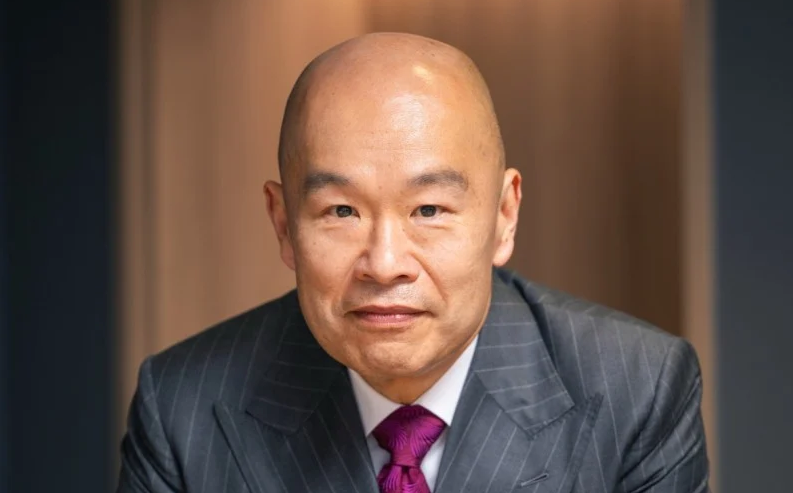
Kimura, a special adviser to Nippon’s board, laid out a new framework for what Nippon Life calls P-squared investing, short for People times Planet. The thesis: Social and environmental outcomes are interconnected and must be addressed together, including through investment policies. P-squared is part of Nippon Life’s broader embrace of “system-level investing” across its portfolio, as outlined this month in a case study produced with The Investment Integration Project.
Nippon aims to invest five trillion yen ($35 billion) by 2030 to investment opportunities aligned with the United Nation’s Sustainable Development Goals. As of the end of fiscal year 2024, the insurer had deployed 3.3 trillion yen toward that strategy.
All told, impact investing assets in Japan reached 17.3 trillion yen in 2024. Most impact investing activity came from venture funds, banks, and large asset owners like Nippon Life.
Japan’s largest pension fund, the Government Pension Investment Fund, or GPIF, last March published a sustainability investment policy that explicitly incorporates impact – and appointed Nissay Asset Management, Nippon Life’s asset management arm, to research Japan’s impact investing market.
People times planet
For much of the last decade, Japan’s institutional investors have been among the world’s most active adopters of environmental, social, governance, or ESG, considerations, spurred by the 2015 decision of the GPIF, to integrated ESG principles (for background see “Hiro’s Journey: Japan’s pension fund chief rallies ‘universal owners’ around sustainable finance”). Nippon Life had embedded environmental and social screening across much of its portfolio. Most of their ESG strategy focused on climate mitigation, with little consideration of social challenges.
Public support for sustainability goals may have reached an all-time high in Japan in 2021. A survey conducted by Dentsu found that more than 85% of respondents were aware of the SDGs, a jump of nearly 30% from the year prior. And nearly 40% said they were committed to taking action on sustainability goals.
Then the winds shifted. In 2022, inflation in Japan, like much of the world, rose sharply and wage growth failed to keep pace. Energy transition costs compounded the strain; the shift away from coal increased demand for natural gas, driving up energy prices. Costs for critical minerals used in clean technologies surged. Those increases rippled through the economy. Today, an estimated 30% of Japanese households are believed to live below a living wage.
Support for a cleaner energy mix stalled along with the strained economy.
For Kimura, the stalled momentum for climate-forward policies exposed a gap in climate investment strategies that emphasized emissions reductions without accounting for the distribution of transition costs across the most vulnerable sectors of society.
“If we fix the planet but fail the people, or vice versa, it’s like multiplying by zero,” Kimura says. “The outcome is zero.”
Traditional ESG integration tends to address environmental and social issues separately, he said, and focuses primarily on risks at the level of the company or fund.
“An environment-only approach can produce inflation and worsen social conditions, because system-level challenges are deeply interconnected,” Kimura says. “Focusing only on entity-level ESG was not enough.”
The P-squared Investing framework was developed by the The Investment Integration Project, which works with institutional investors to take a systems-level view to underpin long-term value. Its partners include Nippon Life, the Rockefeller Brothers Fund, CalSTRS, the Surdna Foundation and Domini Impact Investments.
“TIIP was among the early voices encouraging investors to think beyond portfolio level optimization towards system level outcomes,” says Kimura. “That thinking reinforced our recognition that entity level ESG needs to be complemented by investor collaboration, common standards and market wide norms.”
In the United States, Rockefeller Brothers Fund, the legacy of the heirs of the founder of Standard Oil, divested from fossil fuels in 2014 and has since outperformed its benchmark by more than 100 basis points annually, according to a report that was also prepared by TIIP.
The $200 million Sierra Club Foundation engages companies through equity holdings while using its fixed income positions to deny capital to fossil fuel expansion – and dropped BlackRock’s Aperio unit in June over concerns the asset manager was retreating from climate commitments.
Like some other holders of large stakes in publicly listed equities, Nippon Life has leaned into engagement as its primary tool for driving systems change.
“Until now, the dominant approach assumed society as a given and tried to manage the risks that emerged from it,” Kimura says. “What’s changing is the idea that investors can help shape outcomes, not just respond to them.”
The company works directly with portfolio companies — particularly its highest-emitting ones — on transition plans, and emission targets, governance, and tracking the progress of their overall climate strategy.
“In practice, the dialog is continuous, rather than one off if it typically starts with a clear request for disclosure and strategy, followed by meetings and written follow ups to to understand credibility, timelines and execution,” explains Kimura.
On the financing side, Nippon Life has expanded its use of sustainability-linked loans — loans that tie pricing to borrower performance against environmental and social targets. Recent transactions include transition loans with Osaka Gas and Sumitomo Chemical linking their interest rate with each company’s decarbonization efforts.
The company also has dedicated funds backing Japanese startups and non-listed companies working on climate and health solutions. The Nissay Capital Sustainability Solutions Fund, a first-time fund, invests in decarbonization-focused tech venture funds and startups.
The insurer has remained a member of global climate action alliances, even as many US financial institutions have withdrawn. It joined the Net-Zero Asset Owner Alliance in 2021, is part of the Glasgow Financial Alliance for Net Zero, and more recently became a member of the Taskforce on Inequality and Social-related Financial Disclosure, an investor-led initiative developing standards to push companies to disclose their social and inequality risks.
The insurer also votes its shares. Between July 2023 and June 2024, Nippon Life held 1,168 dialogues with 695 companies on governance and 796 dialogues with 578 companies on environmental and social issues. That included 78 companies with high direct emissions and 43 with high supply chain emissions. Of the 269 cases where Nippon Life flagged issues, 99 were resolved and another 170 led to disclosed improvement measures.
Working with the Principles for Responsible Investment, or PRI, it contributed to recommendations ahead of the G7 Hiroshima Summit in 2023, pushing for closer alignment between sustainability disclosures and international standards. It sent letters to Japan’s Ministry of Finance calling for faster progress on low-carbon transition finance under Japan’s Green Transformation strategy.
Impact ecosystem
Sustainable investing has regained the support of Nippon Life’s policyholders. In a recent survey, over 80% expressed the expectation that Nippon should pursue sustainability outcomes alongside financial returns in its investments.
Japanese regulators have also stayed the sustainability course, unlike their US counterparts, who have reversed years of work on climate-risk disclosure and other rules. European regulators have also softened or delayed some sustainability and reporting requirements.
“Japan’s opportunity is not to contrast itself with other regions, but to demonstrate that steady, pragmatic and disclosure based progress can strengthen both market discipline and long term economic resilience,” says Kimura.
In 2023, Japan’s Financial Services Agency required publicly listed companies to disclose climate-related risks and opportunities in annual securities filings. The Tokyo Stock Exchange reinforced that mandate with a comply-or-explain framework aligned with the Task Force on Climate-related Financial Disclosures standards.
The FSA, the equivalent of the US Securities and Exchange Commission, “not just issuing guidance,” Kimura says. “It is actively building the market.”
In 2025, the Sustainability Standards Board of Japan issued its first disclosure standards, defining how Japanese companies are expected to report climate and sustainability risks in a standardized, globally aligned format.
Public pension funds, however, remain on the sidelines.
“This is not due to a lack of awareness,” Kimura says. “Japan’s public pension funds are already PRI signatories and interested in impact investing and system-level approaches. What needs to change is not commitment, but infrastructure and confidence.”
With clearer frameworks, shared language, and examples that demonstrate how system-level investing can be aligned with fiduciary duty and long-term returns, Kimura says, “I expect more Japanese asset owners, including public pension funds, to engage more actively in this approach.”