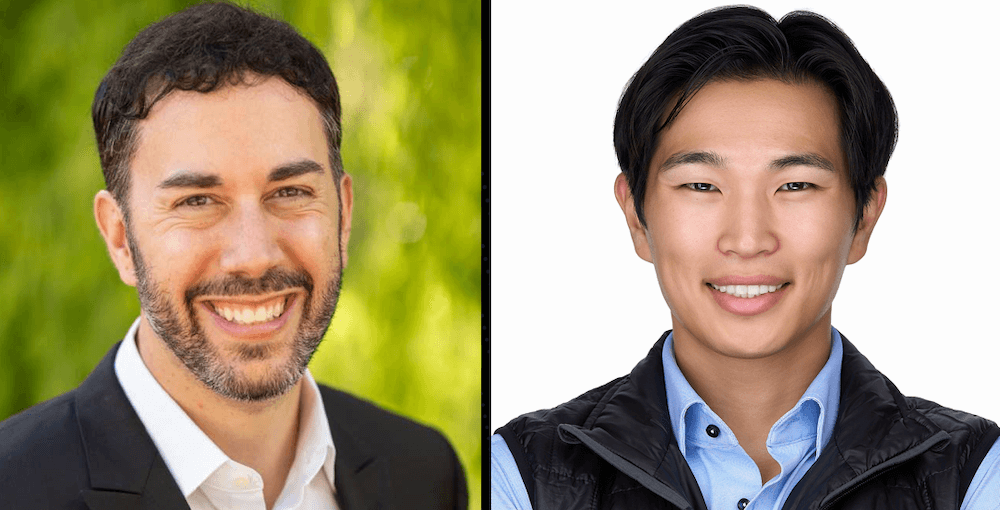

My colleague Andrew Lee and I both served in the US military, deployed overseas in high-stakes environments where American hard power was on full display. As veterans who have seen hard power up close, we’ve also seen its limits. It can compel, but it doesn’t build trust. It delivers presence, not partnership.
I saw it in Iraq, where the United States wielded unmatched military strength to impose stability from the top down. The effort was immense and yet fragile. Force could secure territory but not trust.
Andrew saw the same dynamic in Poland, roughly 20 years later, when he deployed as part of the Global Immediate Response Force supporting Ukraine during the Russian invasion. The mission began with goodwill but soon strained—troops were underused, logistics were stretched, momentum faded.
The lessons were clear: strength alone cannot build trust. Real stability grows from partnership and shared ownership.
That’s why after our military service, we chose a different path: investing in emerging markets. Today, we work at Beyond Capital Ventures, a venture capital firm deploying catalytic capital in Africa and India, two of the world’s most dynamic and consequential regions. We believe that soft power—the ability to shape outcomes through attraction, values, and partnership—is a more strategic, enduring, and ethical tool for global influence.
Hard power, whether military force, sanctions or trade barriers, has a place in world affairs. But in our experience, these tactics often breed resentment or dependency. They rarely generate lasting alignment.
The post-9/11 wars achieved regime change but left behind fragile institutions and eroded trust. In contrast, the Marshall Plan brought prosperity to post-World War II Europe at a fraction of the cost. Soft power works through mutual investment in people, systems and prosperity. It is not weakness; it is strategic patience, creating alignment by building capacity and trust.
Military drawdowns and foreign aid reductions are shaped by complex geopolitical considerations. But the net effect has been America’s retreat from leading on the global development stage. A vacuum has opened, and it’s already being filled: other nations are stepping in, often not with troops but with capital.
Their playbooks prioritize infrastructure, digital networks and bilateral finance, sometimes without transparency or aligned values. This shift is not just economic. It’s a reordering of influence, norms and alliances.
What’s needed to fill the gap left by American withdrawal? Not more embassies or airbases. Not more military force. For Andrew and myself, we see how investment can fill that gap by creating long-term value and earning trust. In emerging markets, influence is now measured not by presence but by partnership. Trust is the currency of influence. It is earned through persistent engagement and shared outcomes.
At Beyond Capital Ventures, we don’t invest for charity, and we don’t lead from above. We invest alongside local founders who are solving urgent challenges: last-mile healthcare, inclusive finance, sustainable agriculture, and climate-smart mobility. These founders know their communities better than any outsider. We back their vision with capital, strategic support and shared risk.
In our view, this isn’t soft power as symbolism; it’s soft power as execution. Our portfolio company Ampersand builds electric motorcycle infrastructure in East Africa, thereby catalyzing a low-carbon transport economy. Clinikk is expanding dignified, affordable healthcare in India, and with that, reinforcing the social contract through reliable service.
These companies generate returns and build resilience, dignity and shared prosperity. That is how trust is built. That is how influence grows.
We’re often asked about risk in emerging markets. The greater risk is failing to seize the moment to lead through partnership. With lagging foreign direct investment in Africa, India and other emerging markets, there is a clear opening for values-aligned investors to lead where governments are constrained. The private sector has both an opportunity and a responsibility to invest in the systems that foster resilience.
This is not idealism. It’s strategic investing rooted in fundamentals. We do this work seeking above-market returns while reinforcing self-determination, shared prosperity and sustainable growth. Thriving economies, empowered citizens and trusted partners are the strongest deterrents to extremism and authoritarianism. Where hard power cannot win the peace, soft power can.
Andrew and I came to venture capital with the view that it is not just a financial tool, it is a vehicle of foreign policy. We feel it’s a way for the US and for American values to show up in the world, especially when traditional levers of power recede.
As two veterans who once served through force and now serve through finance, our mission has not ended, it has evolved. If we want a more peaceful, prosperous and democratic world, we must invest in it. That means deploying patient capital where it matters most and with founders who are already doing the work.
Nicholas Java is a partner at Beyond Capital Ventures and a US Army veteran who served in multiple overseas deployments before transitioning to emerging markets investing.
Andrew Lee is a US Department of Defense Skillbridge Fellow at Beyond Capital Ventures. He brings experience in both national security and emerging market investing, focusing on strategies that blend economic development with global stability.