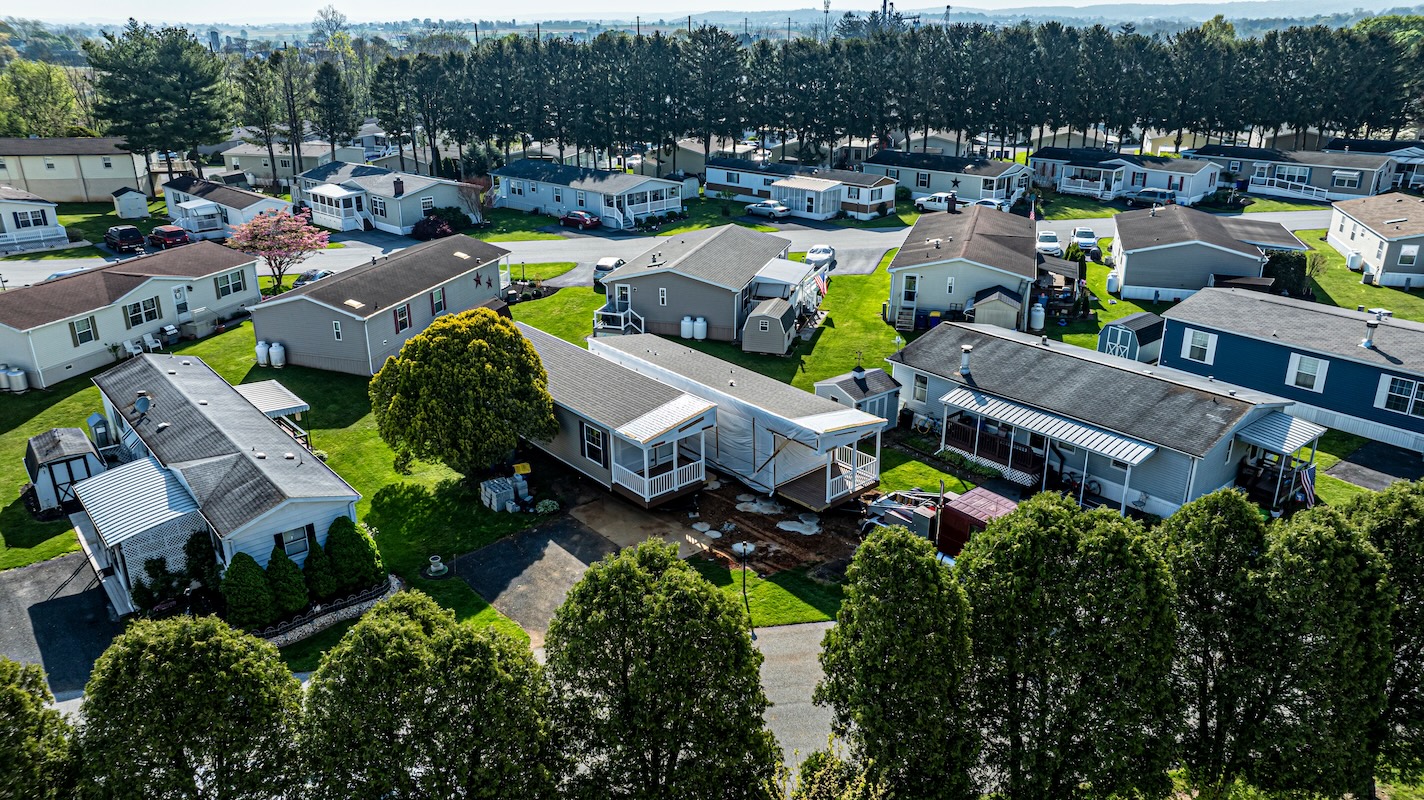
The more than eight million manufactured homes in the US that sit on borrowed land are facing rent increases and displacement pressures from owners looking to sell mainly to private equity buyers.
ROC USA has been working with residents in low-income communities to level the playing field, forming resident-owned cooperatives, or ROCs, to acquire and take control of the land beneath their mobile homes and preserve their long-term affordability (see, “Unlocking and preserving broad-based ownership to make housing more affordable”).
“The whole commitment is about helping residents to be able to organize collectively, purchase and then run their manufactured housing communities as resident-owned cooperatives,” says ROC USA’s Emily Thaden.
Capital injection
ROC USA has raised $47 million for a National Acquisition Loan Pool from investors including Robert Wood Johnson Foundation, JPMorgan Chase, Ceniarth and ImpactAssets. With the funding, the pool will acquire nearly a dozen manufactured-home communities. ROC USA will then provide low-cost, fixed-rate mortgage financing to the ROCs, while holding ownership of the land on behalf of residents for a membership fee that ranges between $100 and $1,000.
“We’re going to be able to enable hundreds and hundreds of residents to run their communities as cooperatives and finally have the housing stability that they have been wanting to have for so long,” Thaden told ImpactAlpha. “Once we can show the level of demand and impact we can have with this fund, our hope is to very much turn around and be able to raise more capital.”
Infrastructure financing
Since 2008, ROC USA has deployed more than $450 million in mortgage financing to 347 ROCs, preserving the affordability of 24,000 manufactured homes in 21 states. By working with local CDFIs and regional banks, the New Hampshire-based nonprofit has helped the ROCs access over a billion dollars in financing to build out infrastructure and acquire more land.
In most manufactured housing communities, some of which are in flood zones, tax-paying residents often get excluded from access to stormwater management and other public infrastructure services.
“When we do acquisitions, we do a full assessment of property conditions and infrastructure needs,” says Thaden. ROC USA offers financing to help with infrastructure upgrades, including improving drainage systems to prevent floods and repairing roads and parking areas.
Right of first refusal
ROC USA works mainly in Colorado, New York, Oregon and Washington, states where local governments have created legislation that requires landowners to give mobile home residents a right of first refusal before selling. “These are laws that say, ‘hey, let’s level the playing field and make sure that the residents get the chance to actually purchase it themselves,” says Thaden.
For places without such laws, ROC USA’s for-profit subsidiary Integrity Community Solutions, led by ROC USA’s founder Paul Bradley, is raising a $30 million fund to compete with PE buyers that have been snatching up mobile home parks in large numbers.
“The whole premise here is to help mobile home communities that would not be ready to become ROCs,” Thaden says. Integrity Community Solutions is “purchasing manufactured-home communities and then doing capital improvements in infill so that they can become ROC ready.”
She adds, “It’s effectively a way of building a new pipeline to help more communities, ultimately, over time.”