As wildfire season intensifies across the Northern Hemisphere, it’s becoming clear: forests are on the front lines of climate change. With proactive, science-based management, forests can play a key role in biodiversity and climate resilience.
In East Texas, our teams at The Nature Conservancy and BTG Pactual Timberland Investment Group are reshaping how private timberland is managed in a changing climate – bringing prescribed fire to commercial forests through a bold and collaborative approach.
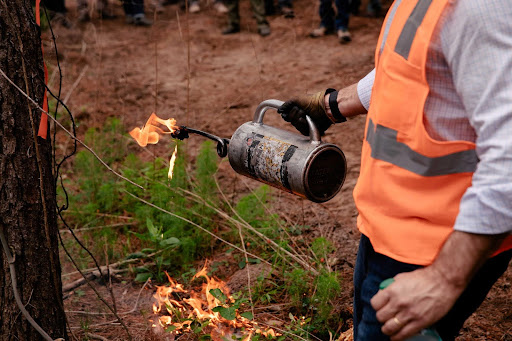
Prescribed fire – also called controlled burning – is the careful, planned use of fire to manage forests in regions where fire is a natural part of the landscape. Trained professionals apply it under the right conditions for a variety of purposes. Forest science recognizes its effectiveness in reducing overgrown vegetation, improving wildlife habitat, and helping to prevent more dangerous wildfires. But it’s not new—Indigenous communities have used fire for millennia, drawing on deep ecological knowledge. And yet according to the U.S. Forest Service and other land management experts, prescribed fire remains underutilized nationwide.
Prescribed fire has long been a common practice on public lands and among conservation groups. However, it’s a less prevalent tool among institutional timberland owners—who manage 20% of all forestlands in the United States. Their hesitation to use prescribed fire persists despite its well-documented benefits.
Burning managed timberland
Departing from typical industry norms, the timberland investment manager BTG Pactual Timberland Investment Group (TIG) is increasing and optimizing its use of prescribed fire on its North America portfolio. This cost-effective forest management strategy delivers both environmental and operational co-benefits.
In 2021, TIG launched a collaboration with The Nature Conservancy, a leading global conservation organization. The Nature Conservancy’s impact investing and conservation finance team, NatureVest, serves as a conservation advisor to TIG’s core North America portfolio. Guided by The Nature Conservancy’s conservation science, TIG prioritizes integrating fire into its forest management practices on acres with the greatest opportunity for ecological impact to improve forest health and promote biodiversity.
In regions like East Texas, fire is used to clear dense, unwanted understory vegetation, such as yaupon holly, within commercial loblolly pine plantations. These thickets crowd out native understory plants, reduce biodiversity, and compete with overstory trees for vital resources like water and nutrients. Prescribed fire offers a natural, effective way to manage this growth and restore ecological balance.
According to the newly released 2024 Sustainability Report on TIG’s core North America portfolio, more than 8,000 acres of Caddo Sustainable Timberlands – TIG’s platform company in Texas – have been treated with prescribed fire, doubling the original target and demonstrating both commitment and scalability.
So far, the results have been promising. A post-burn assessment revealed regeneration of native understory plant communities and documented 14 new patches of the federally endangered Texas Trailing Phlox.
Fire is also enhancing forest management productivity by making harvesting and other field operations faster, easier, and more efficient. And by suppressing competing understory vegetation, prescribed burning can enhance tree growth and long-term yield – at a lower cost than herbicide or other treatments.
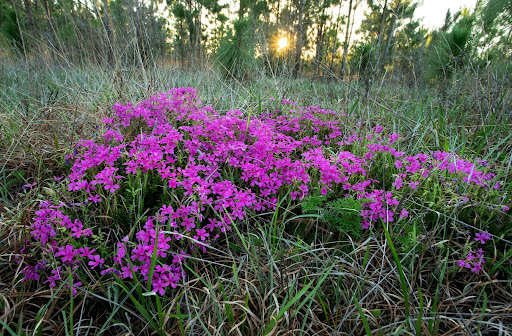
New growth of Texas Trailing Phlox emerges following a prescribed burn—one of 14 newly documented patches of this federally endangered species. Photo: The Nature Conservancy
Investing in fire
While prescribed fire offers clear ecological and operational benefits, it also comes with real-world complexities. Effective implementation requires upfront investment in planning, technical expertise, and close coordination with regulators. Partnerships have been essential to success — collaborating with fire councils, public agencies, and NGOs like The Nature Conservancy has helped TIG navigate requirements, build local capacity, and implement burns more efficiently and safely.
TIG’s experience shows that, with the right partnerships and planning, fire can be introduced safely and effectively into working forests. As an asset manager, every innovation is weighed against risk and return. TIG’s choice to use fire signals that the strategy is not only ecologically sound, but financially viable.
As climate risks intensify and the need for resilient landscapes grows, prescribed fire is emerging as a timely, scalable, and financially sound solution. Fire is not just a conservation tool—it’s a strategic investment in the long-term health and operational performance of timberland assets.
Forests are changing as the climate changes, so forest management needs to change too.
Catherine Burns is the interim managing director of NatureVest at The Nature Conservancy. Charlotte Kaiser is the head of impact finance at BTG Pactual Timberland Investment Group.