The world of investment is constantly evolving, with a growing demand for options that offer more than just financial returns. Impact investing, in particular, has seen a surge in interest from those seeking to align their portfolios with environmental and social benefits. Now, a groundbreaking initiative in the Amazon is offering a unique opportunity to do just that: Amazon nut tokens. This innovative approach, spearheaded by fintech ForestiFi and sustainable product company Zeno Nativo, demonstrates how technology can unlock capital for forest preservation and strengthen the livelihoods of traditional communities.
ForestiFi, a Manaus-based impact investment fintech, and Zeno Nativo, a producer and marketer of forest products working with traditional communities near the Acará River in Pará, Brazil, are two startups deeply rooted in the Amazon. Their partnership, forged through a networking initiative by AMAZ, the largest impact business accelerator in Brazil’s North region, brings together technology and sustainable products to create a powerful new investment vehicle.
From Brazil nuts to digital assets
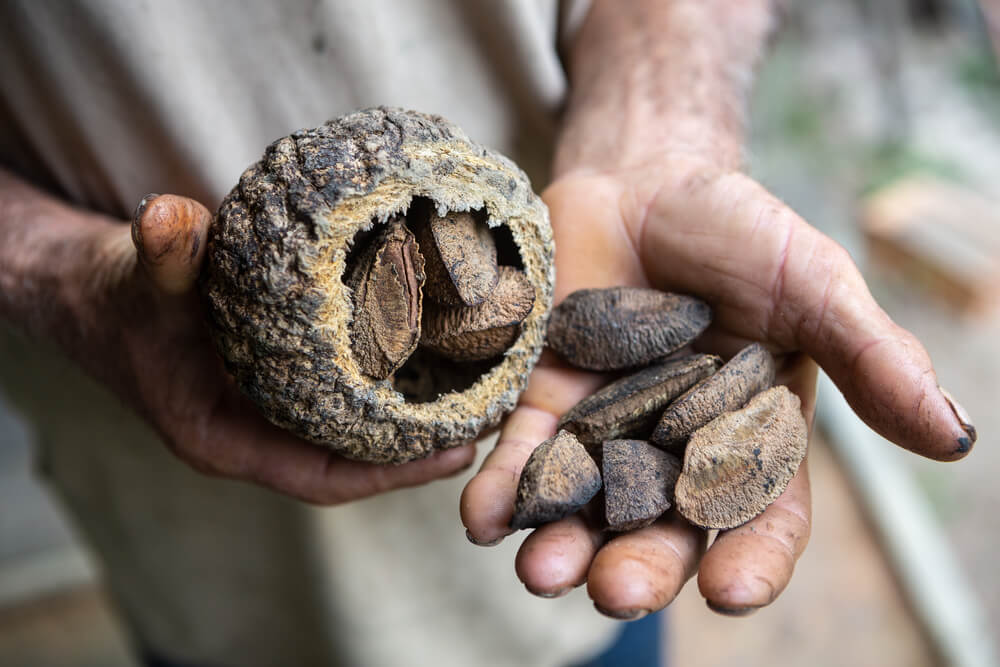
In April of this year, ForestiFi and Zeno Nativo successfully transformed 1,850 kilograms of Amazon nuts into digital assets, raising R$114,700 (approximately $21,000) in investments. The campaign saw 82 participants acquire 4,588 tokens, each sold for R$25. With a projected return in September (five months after the initial investment), each token is expected to be redeemed for R$26.69, an increase of R1.69. This represents an increase of R7,700 ($1,400) on the tokenized harvest and a final price of R$122,400.
The capital raised from this initiative is directly channeled to over 50 extractor families in the Acará River region of Pará, the source of the tokenized nuts. This direct financial injection empowers these communities, who are the stewards of the forest.
Glauco Aguiar, co-founder of ForestiFi, highlights the transformative potential of this innovation. Having worked with other Amazonian socio-biodiversity products like native cocoa, managed pirarucu, and wild guaraná, Aguiar explains that the interest in tokenizing Brazil nuts has always been strong due to their potential to generate income for those involved in the sustainable supply chain.
“This allows small producers, traditionally excluded from the financial system, to access resources,” says Aguiar. “We are demonstrating that the Brazil nuts extracted annually are a legitimate asset, capable of serving as collateral for fundraising.”
Beyond the blockchain
While blockchain technology underpins the tokenization process, the initiative goes beyond simply creating a buying and selling system for digital assets. A crucial element is the rigorous analysis of governance, legal and accounting security for organizations interested in tokenizing their products. This due diligence ensures the success of investment rounds. “This allows us to address the logistical complexities of the Amazon region in a structured and efficient manner,” Aguiar adds.
Furthermore, Aguiar emphasizes that tokenization is a powerful tool for the sustainable development of the Amazon. It encourages the organizational maturity of producer groups, leading to improved management practices, increased productive efficiency and enhanced value for socio-biodiversity products.
Valuing socio-biodiversity
Another key player in this process is Zeno Gemaque, co-founder of Zeno Nativo. The partnership between ForestiFi and Zeno Nativo, born from a networking event organized by AMAZ, led to the idea of transforming Brazil nuts into digital assets. Gemaque celebrates the initiative’s success.
“We will buy raw material, in this case, Brazil nuts, to process and commercialize them,” Gemaque explains. “This will involve an average of 6,900 kilograms of Brazil nuts, benefiting more than 50 extractor families [from the Acará River].” The processing involves selection, shelling, dehydration, packaging, and logistics of the nuts.
Since its founding in 2012, Zeno Nativo has commercialized over 15 tons of Brazil nuts and five tons of fine cocoa, preserving more than 17,000 hectares of native forest. All their products are certified organic by Brazil’s Ministry of Agriculture and Livestock. Currently, Zeno Nativo collaborates with over 300 extractor families in the Amazon, strengthening forest preservation and generating income for the local population.
“We offer socio-biodiversity products to markets that value traceability and sustainable socio-environmental practices,” Gemaque states. “This is fundamental to supporting the standing forest, combating monoculture and river contamination, and strengthening an economy that respects nature and people.”
However, the state of Pará, where this initiative is based, faces significant socio-environmental challenges, including widespread fires and illegal mining. According to the Deforestation Alert System (SAD) of the Amazon Environmental Research Institute (Imazon), Pará recorded the highest deforestation rate in the last year, with 1,260 square kilometers deforested. To counter this, diversifying agricultural practices and valuing other regional socio-biodiversity products is a viable alternative.
“We are interested in tokenizing cocoa in the future, but that will depend heavily on the results of this first experience,” Gemaque concludes. “We are testing the mechanism, seeing how it behaves within the company, and what the results are for our suppliers. From there, we will evaluate and verify the possibility of new rounds.”
Future expansion
This successful Brazil nut tokenization project marks ForestiFi’s sixth initiative in the Amazon, with previous work involving native cocoa, managed pirarucu, and wild guaraná. In just two years, the company has raised nearly half a million Brazilian Reais ($90,000).
ForestiFi’s has earned international recognition as one of the world’s most innovative sustainability startups by Change 100, a campaign by the We Make Change platform supported by major partners like Microsoft Entrepreneurship for Positive Impact and Techstars. The announcement was made at the “Change Now” event in Paris in April.
ForestiFi’s unique contribution lies in strengthening the Amazonian bioeconomy through blockchain technology, connecting small rural producers to sustainable investment markets. The startup is transforming access to financial capital in Northern Brazil, using tokenization as a tool to finance sustainable productive activities, protect forest areas, and generate positive socio-environmental impact.
“This recognition reinforces the relevance of the work we develop and opens doors for new international connections,” Glauco Aguiar affirms. “From now on, we will intensify our expansion strategy, consolidating ForestiFi as a global reference in the tokenization of nature-based assets.”
Daniela Lopes is a communication analyst at AMAZ.