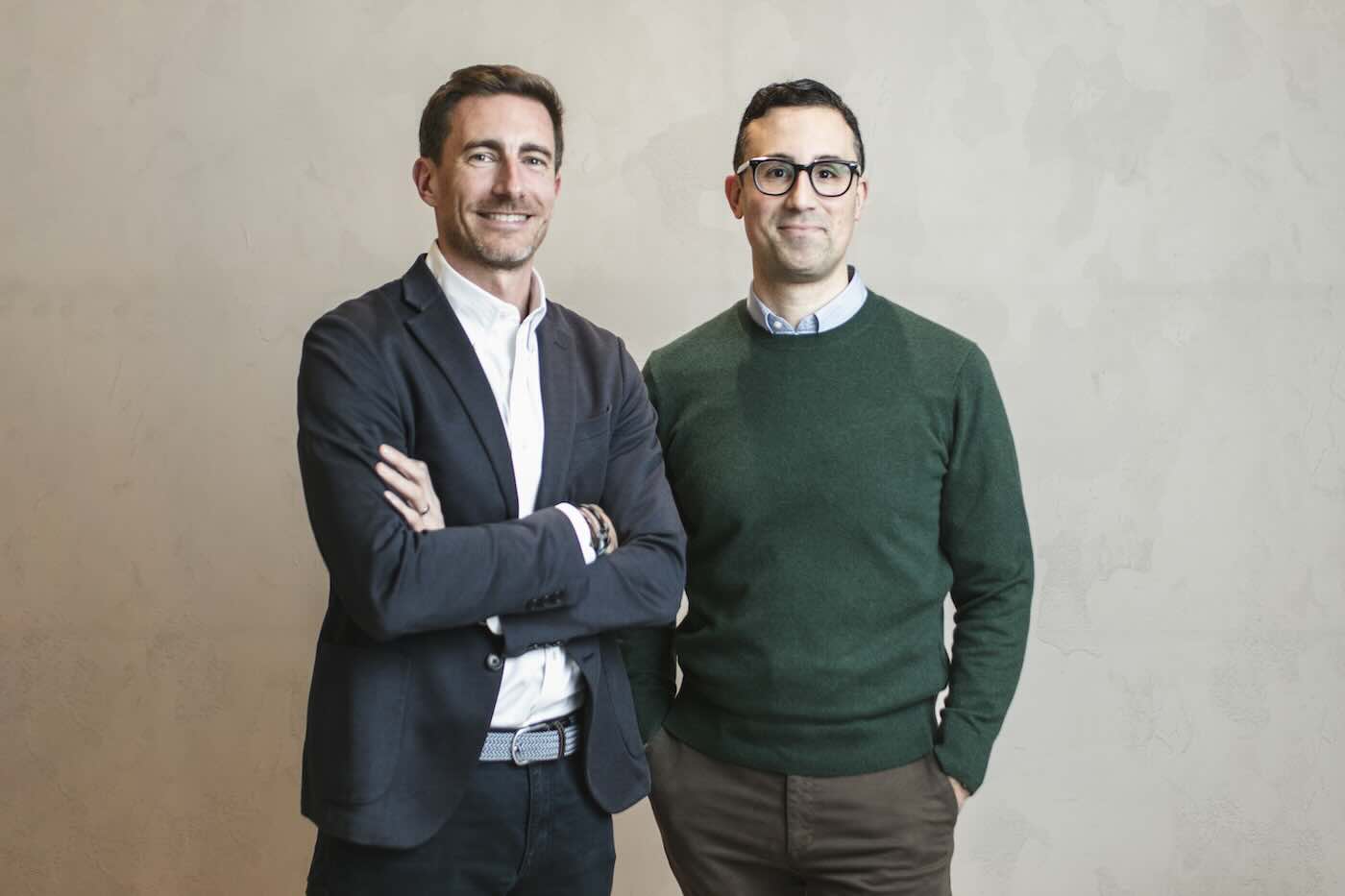

Climate action, racial equity and even systems-change are all fine. But when Liesel Pritzker Simmons starts talking about a global wealth tax, she finds that some of her billionaire peers are apt to say, “Liesel, settle down.”
“Because you’re giving up power,” Pritzker Simmons told ImpactAlpha in a wide-ranging conversation. “But I don’t want anybody to talk to me about systems if they’re not willing to talk about taxes.”
“I would love a little bit more noise from the impact investing family office space around this one,” she says.
With her share of her family’s Hyatt hotels fortune, Pritzker Simmons and her husband, Ian Simmons, have over a dozen years built Blue Haven Initiative into one of the most active family offices in impact investing, with investments with more than 30 private equity, private credits and real assets managers, as well as numerous direct investments. Forbes estimates her net worth at $1.5 billion.
Taxes aside, Pritzker Simmons has found increasing interest among other wealthy families in working together for positive impact, despite – or because of – the current political environment. To take a burden off of the fund managers in Blue Haven’s portfolios, and to lower their risks, Pritzker Simmons has seeded Policy Enhanced Impact Investing to bring her family’s political chops to bear on the environment for achieving beneficial outcomes (for more see, “These investors are raising their lobbying game to enhance their social impact”).
Blue Haven has also joined the Catalytic Capital Consortium, reflecting the family office’s own evolution from seeking strictly risk-adjusted market rates of returns to also deploy in the deeper end of the impact pool. And to help other family offices make such impact-first investments, Blue Haven, via the ImPact, helped incubate Trimtab Impact, which has invested in five impact managers, including Acre Impact Capital, Blue Forest, Common Trust and Mission Driven Finance.
“That’s one thing I’ve found: The more market-rate impact investing that family offices do, the hungrier they are for higher impact stuff,” Pritzker Simmons says.
Other excerpts from the conversation:
ImpactAlpha: You’ve been outspoken about the need for impact investors to be engaged on policy. How is Blue Haven adapting to the current environment?
Pritzker Simmons: The last few years have seen a real rise in people wanting to think of impact from a systems standpoint. Our financial systems – how do we think more holistically about what this capital is doing? Are we changing a system? Does a system need to be changed?
ImpactAlpha: People are talking about ‘market shaping.’
Pritzker Simmons: Exactly. If you are leaving the political environment and ramifications out of your systems map, you are not thinking systemically. That’s just the reality of it. If you’re a climate investor, so much of the climate market is shaped by policy, by incentives, by things that legislators are doing. So if you aren’t in those spaces or in those rooms, you’re going to be on the back foot all the time as a climate investor, as we have just seen. Whether you want to or not, our economic and financial systems are very much shaped by the political world. And so let’s call it like it is and engage in these things.
One of the things that we did was go to our GPs, particularly our US-focused GPs, and say, ‘How are you thinking about the political environment, and not just as a risk, but as an opportunity?’ As an LP, we were saying, ‘Look, we are a politically active family office. Are there things that you are working on from a policy perspective, legislatively, or that you would like to work on? Your day job is running your fund, not writing policy for the state of Illinois. Are there things that we could be helpful with, coalitions we could help build that would enhance your impact thesis?’
That’s not just in 2024 but over the past several years. Ian’s done a lot of work around civic engagement, particularly youth voter turnout and campaign finance reform, things like that. It gets him in rooms with a lot of policymakers and politicians. When I would join him at these various events, I was like, ‘I was just at the annual meeting for this fund, and they were mentioning something about this. We should be better coordinated.’ That’s how this all started, and less specifically in response to a certain election. It was like, ‘Wait a minute, we have partnerships in these different areas that might be helpful if we bring them together.’
ImpactAlpha: So how do you talk to your family office peers about deploying capital in this environment? For example, if solar tax credits go away, does that make solar investments less attractive?
Pritzker Simmons: We have the luxury of being a long term investor as a family office. I’m not going to shift my investment strategy based on a midterm fight. In the long term, I think policies are going to make economic sense, even if they don’t in the short term. I’d rather keep my investment strategy long term focused, and focus a little bit more on our political strategy in those cases. With or without the solar tax credit, solar is pretty cheap. There are bigger market factors that are at play that are going to make these things long term. And so I’m not shifting my investment thesis, because I still think from a long term perspective, it makes sense.
Market reset
ImpactAlpha: What’s the role of private capital right now, with cutbacks in everything from USAID to food stamps to Medicaid? How does private capital play?
Pritzker Simmons: We did a lot of emerging markets investing, and we would come into play with USAID and development financial institutions all the time. One of the things that is interesting is that so much of that market is shaped by DFIs that have slightly different incentives than private investors. With all the goodwill in the world, I do think some of it has slowed down private market engagement, because you can get cheaper debt, you can get a grant. You’re still finding investors now that USAID has stepped back, even though they were doing a lot of granting to early stage incubators and accelerators and things like that – and maybe too much.
I think a little bit of that pullback is helpful for private capital to come in and say, ‘Oh, actually, these are really interesting opportunities. And now that we can actually set better market terms, we’re more willing to play. But if we’re always going to be up against super cheap debt that’s subsidized, we’ll stand back.’
ImpactAlpha: We’ve heard several versions of that in different contexts,
Pritzker Simmons: Where markets are not helpful: humanitarian aid that is never going to be market rate, things like Medicaid and Medicare that are not market rate. Private capital is not going to go there. It’s that stuff on the edge, where I think private capital is flowing into. Then hopefully then we can redirect the public capital to where it really does make sense.
ImpactAlpha: Blue Haven just joined up to the Catalytic Capital Consortium. In its early days, if I recall, was specifically a market-rate investor, not a catalytic one (Blue Haven’s website notes that the family office has deployed $18 million in catalytic capital).
Pritzker Simmons: When we started out, we were pretty clear that what we wanted to focus on as a family office was market-rate, risk-adjusted returns impact investing. That’s really what the bulk of the portfolio is. Regardless of the asset class, we’re looking for risk-adjusted returns, but with high impact, and then we are also happy to give grants when that makes sense. We were certainly, early on, much more wary of this space in the middle and trying to understand what is a really good catalytic or impact-first investment, versus just a market rate impact investment that went south. It was like, how do you determine the difference between those things?
It took us a minute and some testing and being opportunistic to see, ‘Okay, we actually think that is a really interesting deal. The impact per dollar is really high, and we understand why they can’t, why they shouldn’t, be benchmarked against something that’s market rate.’ Over the years, we saw more and more of these opportunities, learning from peers who were better at determining this than us – the Rockefellers, the Fords, the Ceniarths, the Prime Coalitions. And then we started to see where those opportunities fell for us. And we thought, ‘No, this is actually really cool. And we do want to allocate a portfolio for these types of deals that come through.’
And so that’s what we did internally, and also through helping to incubate Trimtab with other family offices as well. They’re saying, ‘We’re very interested in investing impact first or catalytic, not risk-adjusted return money. We just don’t know how to find these deals. Like, how do you find the deals? How do you vet them? What’s the framework?’ And so that’s Trimtab.
ImpactAlpha: What’s the evidence that if that capacity exists, that there is that family office capital? What are your peers saying about that opportunity?
Pritzker Simmons: We’ve raised the pilot fund and we’re finding that there’s increasing family office capital that’s interested in this. There also seems to be a real energy around, like peer learning, as whether it’s the Catalytic Capital Consortium or Ceniarth’s deal makers round table. The case has been made that catalytic capital is useful. Now people want some practical ways and examples of how to deploy it.
We see in different family office surveys that there’s increasing appetite for impact within these family offices. It’s almost like the impact barriers are getting higher and higher, though. People want to see whole system-change with their investment portfolio. Great!
ImpactAlpha: And market rate returns, too!
Pritzker Simmons: The standards are getting higher around the kind of change that people want to see out of their investments. That’s one thing I found: the more market-rate impact investing family offices do, the hungrier they are for higher impact stuff.
Polycapital approach
ImpactAlpha: What are you looking at now? What’s interesting?
Pritzker Simmons: On the deal side, we’re looking for more mental health startups and opportunities, specifically US focus. Everyone’s using the term ‘poly capital approach.’ If you look at the mental health space, there are some private companies that are doing really cool and interesting things with different therapies and delivery. But a huge part of that market has to do with the health care system and how payments are made and what counts and what doesn’t. And it brings up insurance. It brings up policy. There’s research that needs to be done. So we think between the civic engagement work, the catalytic work, the grants and the market-rate investments, we can actually have a really interesting thread through in the mental health space with the kind of capital that we have.
ImpactAlpha: It’s particularly timely now. There was a big surge in the pandemic days that’s now tailing off. Many of the interventions get funded, ultimately, through Medicaid funding (listen to the podcast, “Key to effective investments in youth mental health: Voices of young people themselves”). That’s an example of where the environment has shifted from a couple of years ago.
Pritzker Simmons: And with dire consequences.
ImpactAlpha: So to the point of ‘stroke of the pen risk,’ if a startup was counting on Medicaid reimbursements as one of its revenue streams, and now those revenue streams are going to be impacted, I guess normal due diligence would say, avoid that company now.
Pritzker Simmons: Or that company would pivot upmarket. We’re seeing some of that too. These companies will persist, they will just serve people who are further upmarket, which isn’t number one from an impact perspective. But to have a great company that can then expand the market if those things shift is still important. I am optimistic that history will bend in the right direction, eventually, with a long term perspective. The arc of history bends toward justice, as MLK says. I think he’s right. I think we’re just going to take a lot longer.
ImpactAlpha: Everybody’s talking about Medicaid cuts to pay for tax cuts for billionaires. You’re one of the rare rich people that actually says tax us more (Blue Haven is a founder of Better Taxes for a Better America). What are you saying in this current debate?
Pritzker Simmons: We’re just continuing to beat the drum that we need an actual progressive tax system that taxes people like me appropriately. And it really needs to sit within a broader conversation about a global tax policy so that we can’t just kind of play whack-a-mole in different jurisdictions. Very wealthy people are making out like bandits. They are.
We continue to partner with other groups that are trying to do better global tax policy work. It’s incredibly popular, it is bipartisanly popular: Taxing wealth more is wildly popular on both sides of the aisle, across different demographics. Hopefully one day it will happen.
I would love a little bit more noise from the impact investing family office space around this one. This one gets a little, ‘Liesel, settle down.’ Because you’re giving up power. I don’t want anybody to talk to me about systems if they’re not willing to talk about taxes.
ImpactAlpha: Even if they do want to talk about shared prosperity and wealth inequality and racial wealth gaps?
Pritzker Simmons: The fastest way to take a crack at that would be a global wealth tax, the absolute fastest way. Yes, we continue to push on that one. But the winds are not at our backs at the moment.