Flood insurance in Bangladesh. Irrigation subsidies in India. Islamic finance for clean air in Egypt. “Renaissance bonds” for green buildings in Harlem, New York.
Innovative climate finance was front and center at the 15th annual student Sustainable Investing Challenge, hosted by Morgan Stanley and Northwestern University’s Kellogg School of Management.
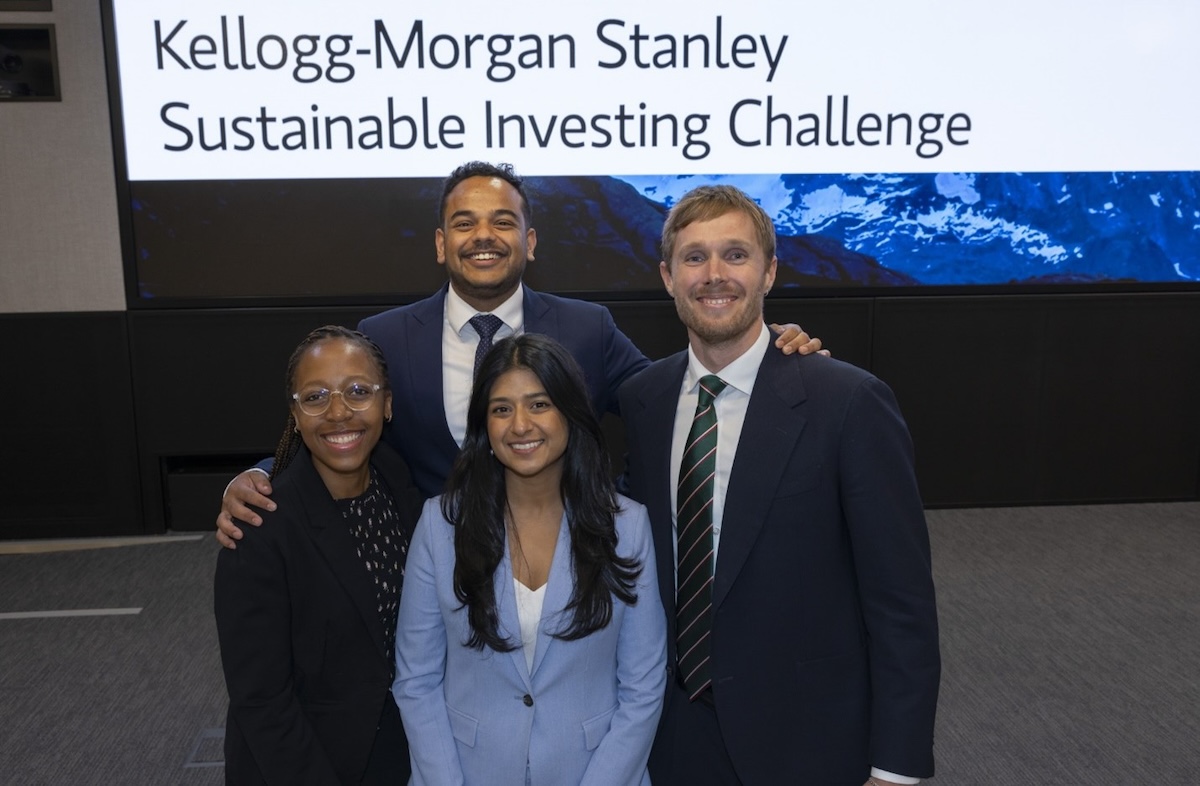
On April 25th, a dozen student teams from around the world gathered at Morgan Stanley’s London headquarters to showcase new ways to design finance to tackle climate, health and equity challenges. The challenge has become a launchpad for emerging talent and new ideas within sustainable finance. The 12 finalists were selected from more than 150 submissions from 65 countries.
I had the opportunity to experience it first hand as one of the finalists, representing Columbia University’s Climate School. We pitched the “Harlem Renaissance Bond,” a bond designed to fund solar green roofs and generate returns through positive health and climate outcomes.
The top three teams all had one thing in common: tackling climate-related challenges in emerging markets.
“The biggest thing that’s changing in the competition,” observed Dave Chen of Equilibrium Capital, who teaches at Kellogg and founded the challenge, is that “now we are getting greater penetration in emerging markets, and it’s one of the greatest things that has happened.”
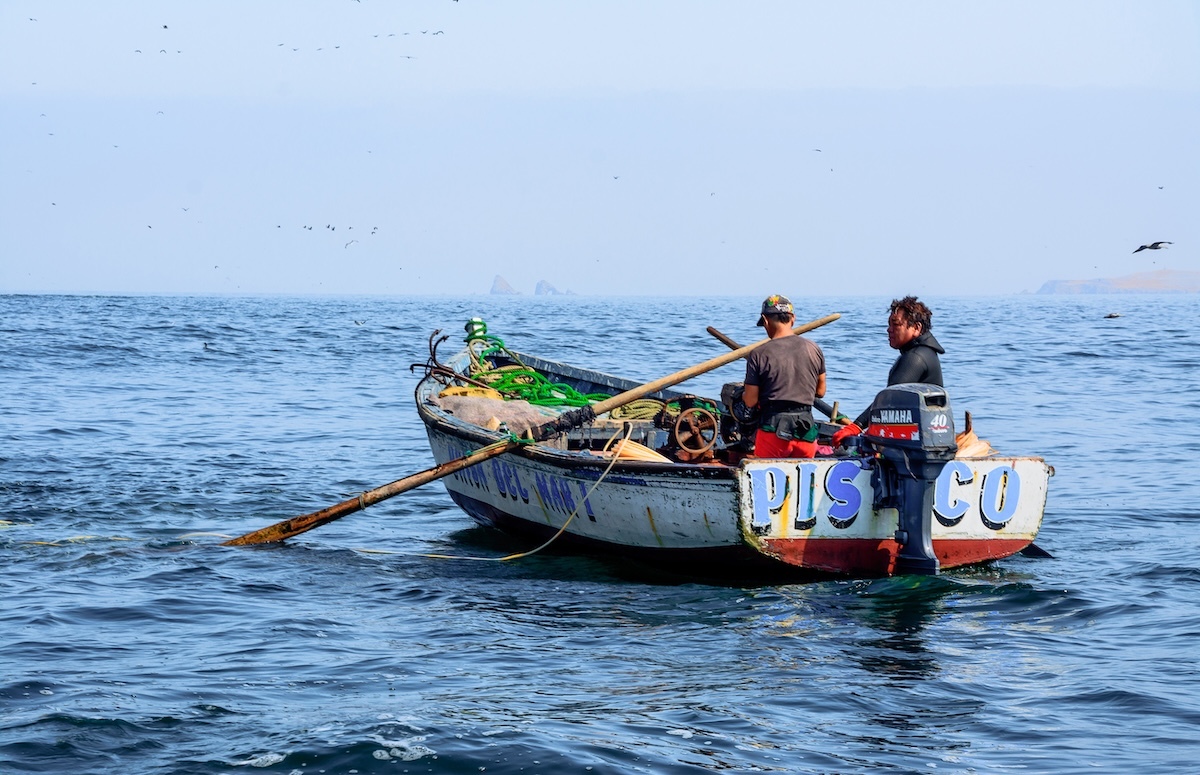
The winning solution, presented by a team at the University of Oxford, was a fund designed to expand access to flood insurance for low-income families in Bangladesh. Monsoon rains caused devastating floods that affected more than 18 million people in the country last year. Such incidents are expected to worsen because of climate change.
“Ninety percent of Bangladesh is flood-prone while less than 1% of households are insured,” said Harry Breidahl, who was part of the Oxford team. “We landed on Bangladesh due to its unique combination of significant flood risk, little government support for disaster recovery, effectively nil household insurance coverage, willingness to pay, and proven cheap solutions,” such as clay pillars for elevating homes.
The team’s solution, called BenglaShield, builds on “parametric insurance” models, which make mass payouts based on specified incident thresholds, by blending insurance coverage with concessional loans to increase affordability and payout speed for low-income families.
“Our biggest takeaway is that when tackling wicked problems: sometimes simple is best,” said Breidahl.
Runners’ up
The second place team, from Northwestern University, also tackled a regional water issue, this one focusing on water-stressed households. In India’s Punjab region, farmers are facing groundwater depletion. The team’s Sustainable Agri-Aqua Investment Fund, or SAIF Fund, would offer financing to farmers for irrigation upgrades and generate returns through carbon credits and energy efficiency subsidies.
“Punjab grows 20% of India’s wheat, but its groundwater is vanishing. Our goal was to design a fund that bridges what’s already available—like government subsidies—with what farmers actually need: upfront capital and assurance,” said team member Shagun Sharma.
Taking third place was a team from York University in Toronto whose financing solution sought to address two environmental problems—air pollution and agricultural waste—in Egypt. Its Pharoah Brick Fund would finance the conversion of rice-straw waste into sustainable bricks, which could be used for construction.
“Growing up in Egypt, I saw the black cloud every year—rice straw burning was something we lived through. This idea came from that lived experience, and a desire to fix it,” said Sarah Amin on the team.
The financing mechanism is designed in accordance with the principles of Islamic finance, aligning local cultural norms with environmental innovation.
“We didn’t just want to clean up pollution. We wanted to address the financing barriers that keep countries like Egypt from scaling solutions,” Sadanand Shenoy said.
Financing a new Harlem Renaissance
My team from Columbia presented a solution to finance green building upgrades in New York City’s Harlem neighborhood.
Harlem is next door to Columbia University. I and other students on my team see day to day residents’ climate vulnerabilities: energy inefficient buildings and lack of green spaces and infrastructure, which create an “urban heat island.” Residents pay for the lack of investment in their neighborhood through high energy bills and by living in uncomfortable spaces: over half of public housing residents don’t have air conditioning; the rate of heat-related deaths is twice as high for Black New Yorkers as white New Yorkers.
We wanted to do something that was grounded in reality and which showed that we truly understood the issues at play and know the people impacted.
Our proposal, the Harlem Renaissance Bond, is a promissory note that funds solar green roofs for residential buildings. These installations help cool buildings, lower energy bills, and reduce emergency room visits during heat waves.
Our bond doesn’t just pay for the infrastructure; it captures and monetizes the public benefits. One source of revenue is from Medicaid value-based contracts tied to reductions in heat-related hospital visits. A second stream would come from carbon credit sales under New York City’s Local Law 97, a compliance market for building emissions.
By converting these avoided costs and emissions into a financially viable structure, the Harlem Renaissance Bond provides a model bringing capital into a space where traditional incentives fall short.
Diverse experiences
Our team at Columbia’s Climate School was one of just two non-MBA teams in the competition. While most teams demonstrated impressive financial expertise and sharp investment logic, our approach to the competition reflected a different lens. We approached the problem from the ground up; we came in thinking through policy levers and community needs and engagement.
My teammate Siddharth Gundala has a background in sustainability in the healthcare sector. Nicole Beremovica’s background is environmental justice and stakeholder engagement. Alexandra Gonzales is studying sustainable urban development and policy. I have a background in renewable energy finance.
These different perspectives helped us incorporate into the model issues like health impacts, local incentives, and how improved outcomes in health and energy savings could be monetized. Most importantly, we engaged directly with stakeholders to understand real-world implementation barriers and how people on the ground would be affected.
Other teams’ solutions highlighted first-hand experience with the issues they were targeting.
“One of our strengths was how different our backgrounds were—architecture, consulting, capital markets. It helped us see the problem from more than one angle,” said Shenoy from the Pharoah Brick Fund team.
Sharma on the SAIF Fund team spoke to his personal experience with water stress and agricultural transitions. As a team, he said, “we all brought something different—finance, farming, groundwater policy. SAFE came together as a real systems solution, not just a product. That’s what made it work.”
These perspectives made clear the value of bringing diverse lenses and experiences into sustainable finance.
Collaborative finance
Exchanging experiences and trading ideas with other teams throughout the day was one of the things I most appreciated about the challenge. I came in expecting a high-pressure finance event, and was struck by how relaxed and collaborative it felt. Judges asked questions from a place of genuine curiosity, while teams were warm and encouraging to each other.
One of the solutions I really enjoyed learning about was from a team at the University of Toronto. They designed an impact bond that blends climate finance with tourism revenues to finance adaptation and long-term development goals on the island of Fiji.
“We’re investing in Fijians as the future—tying youth opportunity to tourism revenue so the benefits stay in-country and build long-term resilience,” said team member Daria Bogatyreva.
Their solution addresses many urgent issues facing small island nations. Such a mechanism could potentially be replicated in other island and climate-vulnerable communities.
We all, in fact, were motivated by the need for replicability and scalability in sustainable finance. Scalability is one of the grading criteria of the competition, but it also reflects a need to meet the urgency of the moment.
“The most important thing you can do is understand how hard this is. But don’t be afraid of that – just recognize the subtleties and lean into it,” Chen told us. “The work that you have done is more important than ever before.”
Standing in front of judges, taking questions, sharing ideas with other students made us think a lot about real world feasibility in our model and sustainable finance more broadly. It was satisfying to see months of preparation culminate in such a collaborative and inspiring moment.