São Paulo-based Vox Capital is taking a second run at financing Brazil’s regenerative agriculture transition.
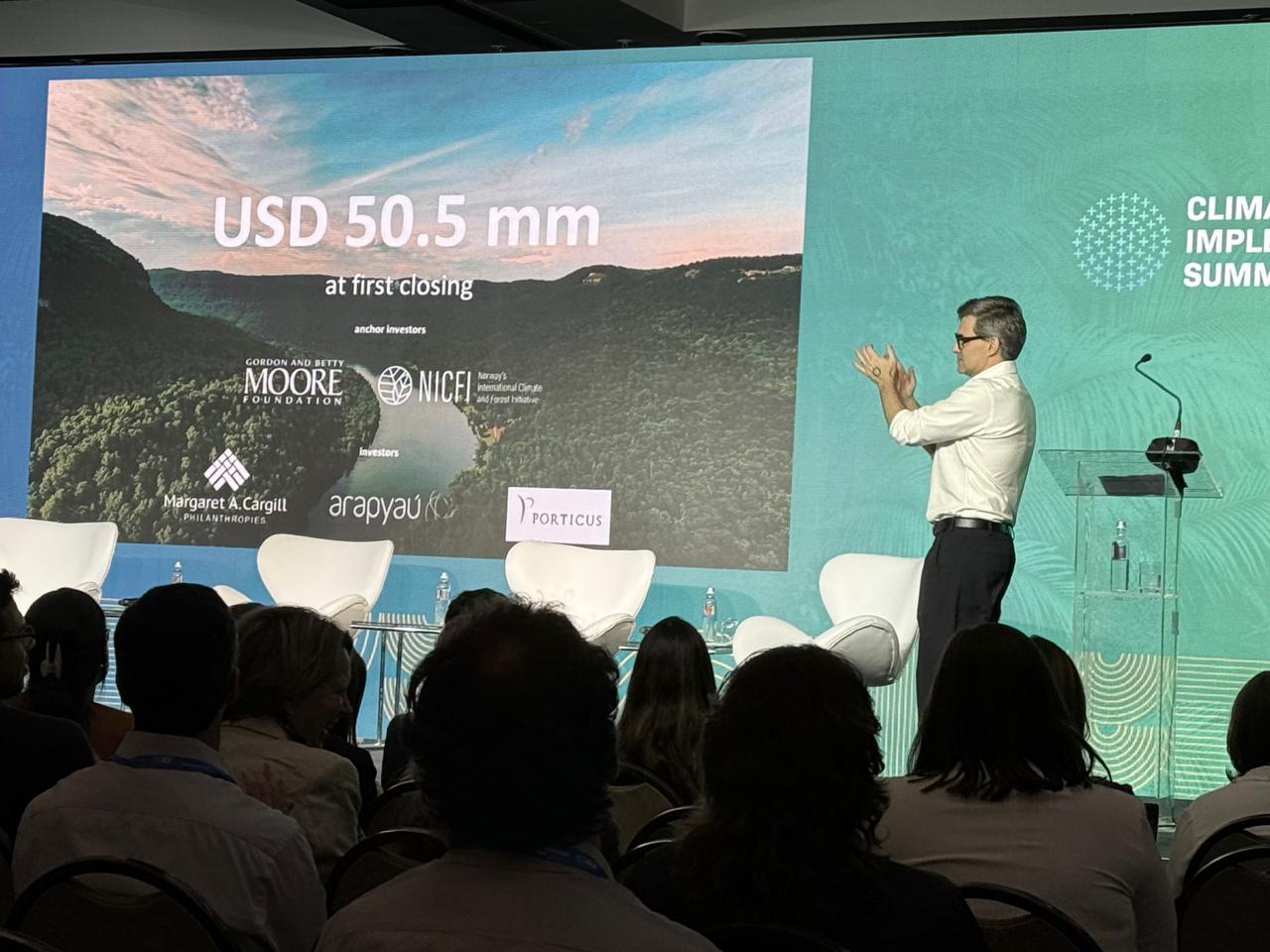
The impact investing pioneer launched the Catalytic Capital for the Agricultural Transition fund, or CCAT, with $50 million in anchor commitments from the Gordon and Betty Moore Foundation, Norway’s International Climate and Forest Initiative, the Margaret A. Cargill Philanthropies, and local funders Instituto Arapyaú and Porticus. Vox hopes to scale the fund to $1 billion by 2028, blending concessional and commercial capital to finance sustainable land use in Brazil’s Amazon and Cerrado biomes.
Announced at Converge Capital’s Climate Implementation Summit in São Paulo, the fund will extend flexible debt to farmers and supply-chain partners to restore degraded pastureland and scale regenerative soy, cattle, and agroforestry production across the two regions.
“The core issue is that restoration takes years, while most agricultural credit lines in Brazil are short-term, tied to a single crop cycle. This mismatch blocks the scale-up of sustainable, deforestation-free production,” Vox’s João Pontedeiro tells ImpactAlpha.
“By combining patient capital and rigorous impact safeguards, the fund bridges the financing gap that has long constrained nature-positive agriculture.”
Blended finance
Vox’s first experiment in regenerative agriculture — an equity fund co-developed with land management firm Regai — sought to acquire degraded pasture land, restore it, and generate returns by selling the farms.
The concept proved too early for investors and failed to attract sufficient capital to launch.
Vox’s new debt-based approach aims to leverage blended finance tools such as subordinated loans and guarantees to de-risk participation by mainstream lenders – and make soil restoration and reforestation bankable.
“Vox is a different asset manager today. CCAT brings not only Vox’s 16 years of consistent work, but also the lessons learned from previous initiatives we pursued in the nature-based solutions space.” said Vox’s Daniel Brandão. “There is a clear momentum. Brazil is increasingly seen as a leading player in sustainable agriculture, and public policy is now strongly aligned with this agenda,”
With a pipeline of roughly 50 projects, Vox expects to help restore or protect 500,000 hectares by 2030, avert 240 million tons of CO₂ emissions, and directly benefit more than 1,000 farmers.