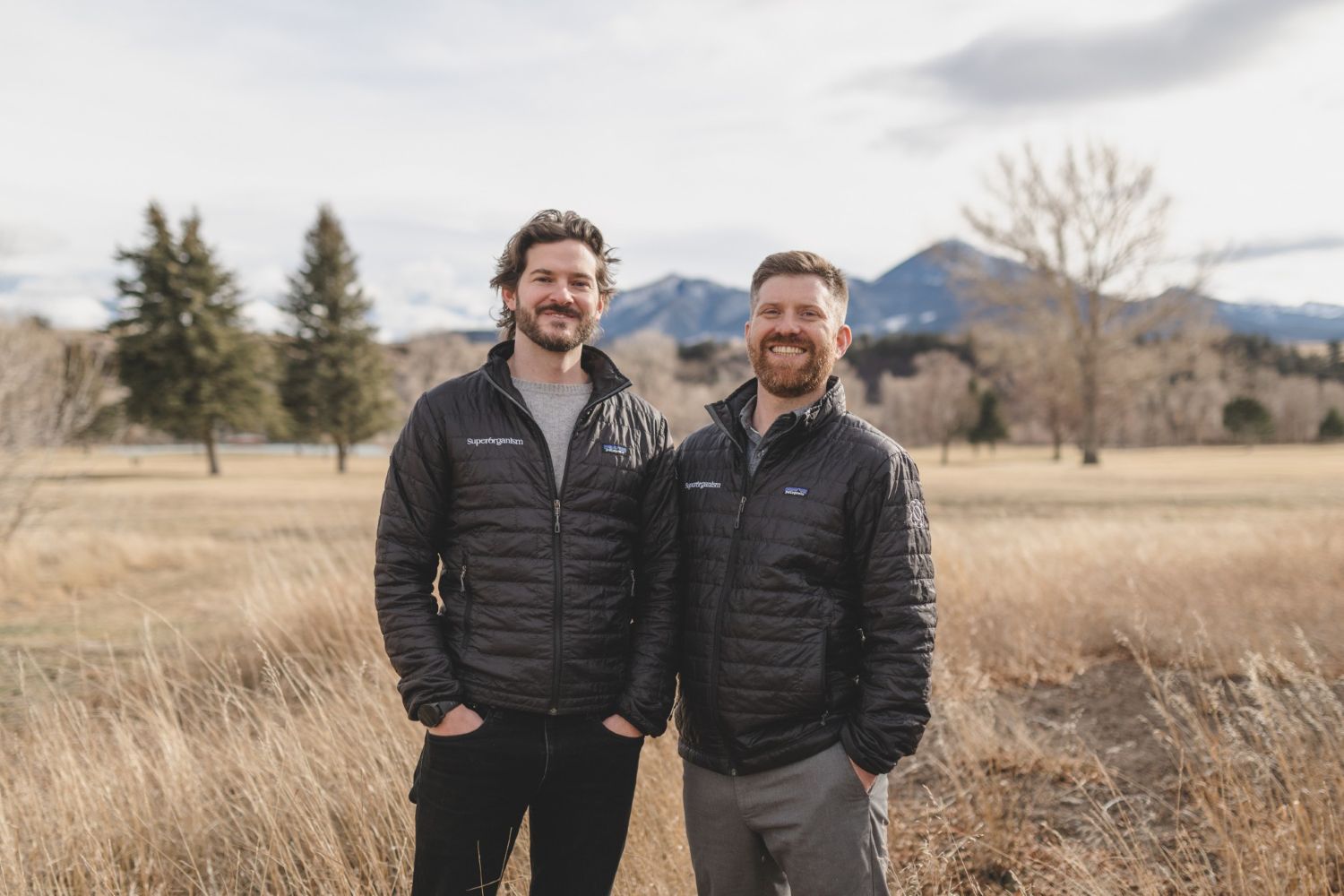
Kevin Webb worked in tech and venture capital before feeling called to climate studies at Columbia University. Tom Quigley worked as a conservationist in Australia, Madagascar and the Cayman Islands before entering the startup world. The two have now found a niche investing in pre-seed and seed stage tech startups addressing the urgent issue of biodiversity preservation.
“We spoke with many founders and learned that biodiversity was a compelling reason why they were doing the work, but they didn’t have VCs around their cap table giving them that specific support,” Quigley told ImpactAlpha. “Nature tech” startups raised just $10 billion between 2018 and 2024.
Webb and Quigley’s firm, Superorganism, which they launched in 2022, has closed its debut fund. With backing from Lukas Walton’s family office Builders Vision, AMB Holdings, Cisco Foundation, Understorey Ventures, Wedgetail and Mark Tercek, the former president and CEO of The Nature Conservancy, Superorganism raised $25.9 million to make pre-seed and seed-stage equity investments in companies developing technologies for industries to curb biodiversity loss, to address dual climate and biodiversity issues, and to improve conservation work.
Biodiversity is “the next frontier of risk management and value creation,” Chris Wu of Builders Vision, which anchored the fund, told ImpactAlpha. “Biodiversity underpins every strategy pursued by investors focused on planetary health.”
Indeed, more than half of global GDP is moderately or highly dependent on nature, yet few investors have dedicated allocations for nature-based solutions, much less nature-based venture capital. “It’s not about convincing people,” Quigley said. “It’s about finding people that are excited about what you are building.”
Novel thesis
Venture capital firms have had a brutal few years fundraising. First-time fund managers have been especially disadvantaged, as investors have gravitated toward larger managers with longer track-records. But a segment of investors are placing a premium on specialized strategies.
“It’s fair to say that biodiversity is not an obvious answer for everyone, or else there would be more biodiversity focused funds out there,” said Webb.
Few investors have dedicated allocations for nature-based solutions, much less nature-based venture capital. “We got to work with a lot of LPs who had to figure out how to get creative and back this, because they saw the vision,” Webb said. “It’s not about convincing people, it’s about finding people that are excited about what you are building,” added Quigley.
‘Secular momentum’
Superorganism has invested in 20 companies, which have collectively raised over $100 million in additional capital. Cecil curates nature and biodiversity datasets. Funga is focused on restoring soil health in forests. Inversa makes leather products from invasive species.
The firm expects to write up to 15 more checks with its fund. “There’s secular momentum that we did not anticipate,” Webb said.
The annual Conference of Parties, or COP, climate summit has been a key driver, despite limited success at mobilizing the volume of capital and action needed for the climate crisis. Last year, more than 140 countries pledged $200 billion per year by 2030 to reverse biodiversity loss. “COP has been beneficial. EU regulations have been beneficial. The Taskforce on Nature-related Financial Disclosures has been beneficial,” said Webb. “There’s an awareness there.”
Builder’s Vision sees biodiversity as central to risk adjusted investing.
“We see biodiversity not as a standalone category, but as a critical pillar of a resilient investment portfolio” they explained. “As the space continues to mature, the funds and companies that stay closest to the underlying environmental risks while maintaining disciplined execution will be best positioned to deliver strong performance – both in financial returns and impact outcomes.”