Wind power. EVs. Trains? Along with renewable energy, public transportation finds itself in the Trump administration’s sights.
This week, the Department of Transportation revoked federal approval for New York City’s congestion-pricing plan to cut traffic and pollution in midtown Manhattan and to raise billions of dollars to upgrade the city’s aging transit infrastructure.
Across the country, the agency announced a review of a long-planned California high-speed rail line between Merced and Bakersfield that was promised $4 billion in funding by the Biden administration.
New York Gov. Kathy Hochul has already begun legal proceedings to preserve the congestion pricing program, which she says has dramatically lowered congestion since it went into effect, helping commuters get to work “faster than ever.” “Public transport is the lifeblood of New York City and critical to our economic future,” she said in a statement.
Amid the political fray, mobility startups are pursuing solutions for congested cities and corridors.
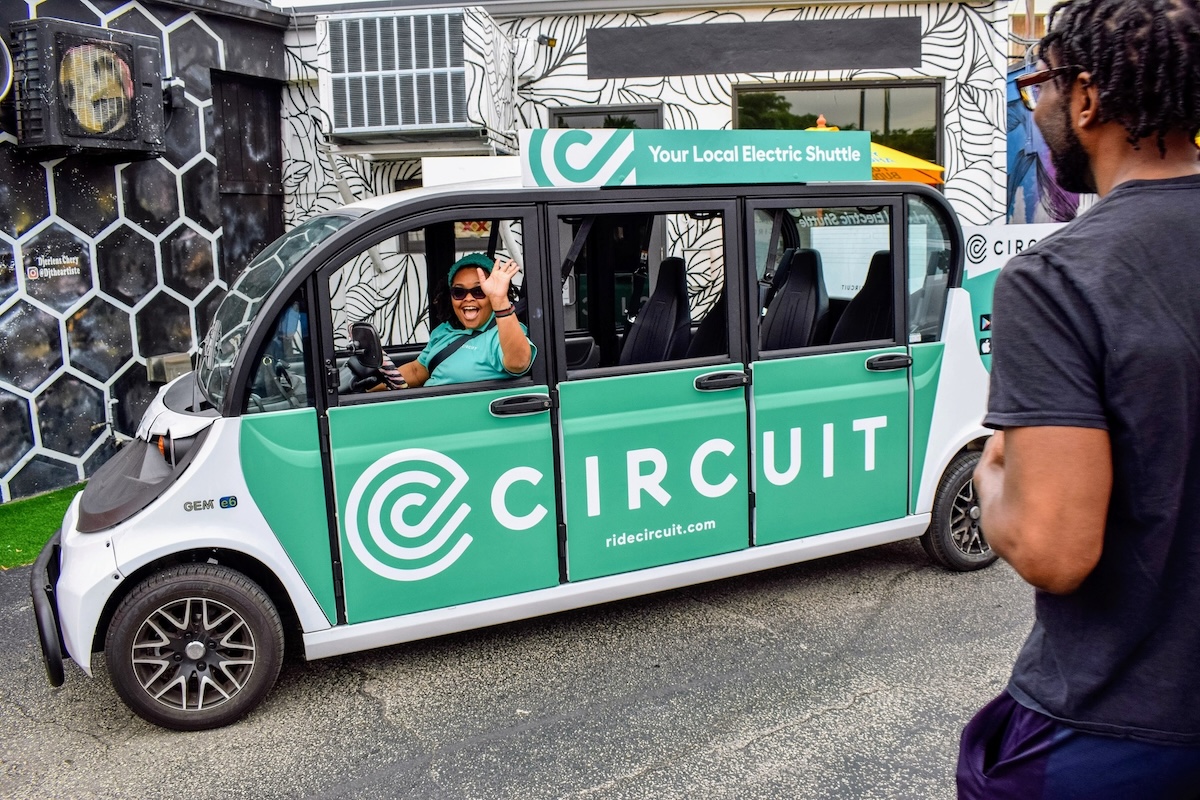
“Congestion isn’t a political issue. It’s bad for the environment, it’s bad for local economies, it’s also bad for our quality of life and for public health,” says Alex Esposito of Circuit, a green mobility startup that works with city and local government leaders across the US to reduce congestion in crowded downtown areas via on-demand and last-mile electric public shuttle minibuses.
Traffic congestion is a significant driver of vehicle emissions and air pollution in densely-populated urban areas. New York sits second behind Turkey’s Istanbul in the ranking of the most congested cities in the world. City governments around the world have been experimenting with congestion pricing, electrifying public transportation and implementing other traffic management solutions in recent years to improve the quality of life.
West Palm Beach, Fla.-based Circuit raised $17 million last week from investors, including energy transition-focused growth equity investor MKB, Impact Engine and Tribeca Venture Partners. Circuit also counts the Los Angeles Cleantech Incubator, Citi Impact Fund, Third Sphere, Gaingels and Forefront Venture Partners as earlier investors.
Circuit’s green EV shuttles moved nearly two million passengers in more than 40 US cities last year, helping to avoid over 1,100 tons of emissions. The company has expanded to cities, including Orlando, Boca Raton and Avalon and Long Beach in California, while growing existing footprints in San Diego, New York, West Palm Beach, Fort Lauderdale and Huntington Beach.
Circuit is part of a Mobility Innovation District in southwest Washington, DC, which offers electric cargo bikes and public EV charging in addition to Circuit’s free electric shuttles.
Most of Circuit’s rides are free, but some charge as much as $2 per passenger. Riders can download an app to request a ride. Circuit generates most of its revenue from advertising on its shuttles and via partnerships with governments, real estate developers, hotels and businesses.
The Series B funding “marks an important step forward as we execute on our vision to electrify downtown transit systems,” says Esposito. “We’re delivering the right solutions at the right time, as cities look for ways to efficiently address congestion and emissions while improving access and mobility.”
Trump’s move to quash the pricing plan, created through the New York State government’s MTA Reform and Traffic Mobility Act of 2019, seems to run counter to his stated desire to reduce the role of the federal government. From his experience, Esposito says these programs are best mandated by city government leaders who have a closer view on the kinds of issues they’re trying to address.
“One of the things we’ve realized as we’ve grown is that all these cities are different, and a lot of times there are federal rules and laws around what cities can and can’t do, and those get in the way of them deploying more efficient and more cost-effective services,” Esposito told ImpactAlpha.
Legal challenges
The Biden administration had approved NYC’s Central Business District Tolling program late last year. It went into effect on January 5, charging tolls as high as $9 to drivers entering the city’s busiest borough during peak traffic hours.
The first such program in the nation, it has not been without controversy. A federal judge had blocked an attempt by New Jersey Gov. Phil Murphy to stop the plan just two days before it went into effect.
“The congestion pricing scheme is a disaster for working and middle-class New Jersey commuters and residents who need or want to visit lower Manhattan and now need to pay a big fee on top of the bridge and tunnel tolls they already pay,” Murphy wrote in a letter to Trump asking for the tolls to be terminated late last month.
NYC’s Metropolitan Transportation Authority, or MTA, says the program was working in reducing traffic congestion in the tolling zones and boosting foot traffic. The MTA, which is also a B Corp., projected that the program would reduce traffic-related pollution by 10%, not just in New York City but also across 12 counties in New York and New Jersey. The agency was hoping to secure revenue from the congestion tolls to fund $15 billion in capital improvements to its network of buses and subway trains, including adding a fleet of 250 electric buses and charging infrastructure in all five boroughs.
The MTA has a commitment to replace its diesel and natural gas-powered buses with 100% zero-emission buses by 2040. NYC transit, the agency says, helps riders avoid at least 20 million metric tons of greenhouse gas emissions annually that would have otherwise been pumped into the atmosphere had they taken a vehicle instead.
Zero-carbon mobility
Electrifying public transit has been a key statewide objective of Hochul. She launched a $100 million zero-emission transit funding program earlier this year to support non-MTA transit providers in electrifying their fleets.
“Transportation is an important front in our battle against climate change and we must explore every avenue to reduce greenhouse emissions from this vital sector,” she said.
The NY Green Bank, the state’s clean energy investment fund under Hochul’s New York State Energy Research and Development Authority, or NYSERDA, this week provided a $60 million loan to Brooklyn-based Revel, which offers all-electric ride-sharing via its blue mopeds and cars, and builds public EV charging infrastructure. The funding will help Revel to triple its network of public fast-chargers in the city this year, including at New York’s JFK airport.
BlackRock’s Global Renewable Power group, alongside Shell Ventures and Goodyear Ventures, led Revel’s $126 million funding in 2022.
NYSERDA, through a Clean Transportation prize competition, has backed solutions like Dollaride, which is electrifying a small network of dollar vans in Brooklyn and Queens (see, “Electrifying ‘dollar vans’ to boost livelihoods and cut carbon in New York’s transit deserts”).
Circuit was also a winner of Hochul’s 2022 Clean Transportation program, and has since used the funding to expand its service in underserved communities in Williamsburg, Southampton, New Rochelle and Montauk.
Through its continued partnership with NYSERDA, Circuit in September last year launched fleets of its last-mile EV minibuses in Brentwood and the Rockaways.
“The work we’re doing in places like the Rockaways, we’re making sure that our services are connected to existing transit hubs, because if you live 0.6 miles away from public transit, that’s a transit desert,” Esposito said.
“There are hundreds of more communities around the New York metro area that can benefit from shared electric mobility services that help reduce emissions, create jobs and provide access to public transit so that we’re not all stuck in cars complaining about congestion pricing.”