
Editor’s note: The shareholder representative nonprofit As You Sow has borne the brunt of the coordinated backlash against corporate and investor action on climate, diversity, and ESG. At stake is the future of fiduciary duty and the understanding of material risks. ImpactAlpha has invited As You Sow CEO Andy Behar to chronicle the action in Fiduciary Future, a series of dispatches from the front lines. Have a reaction, or a dispatch of your own? Drop us a note.
Imagine receiving a letter from the government asking for all of your documents over the last eight years without a clear reason or legal justification.
That’s what happened to our nonprofit, when the House Judiciary Committee sent a letter asking As You Sow and 13 other mainstream investor organizations to turn over all documents related to our work representing shareholders looking to reduce climate risk in their portfolios.
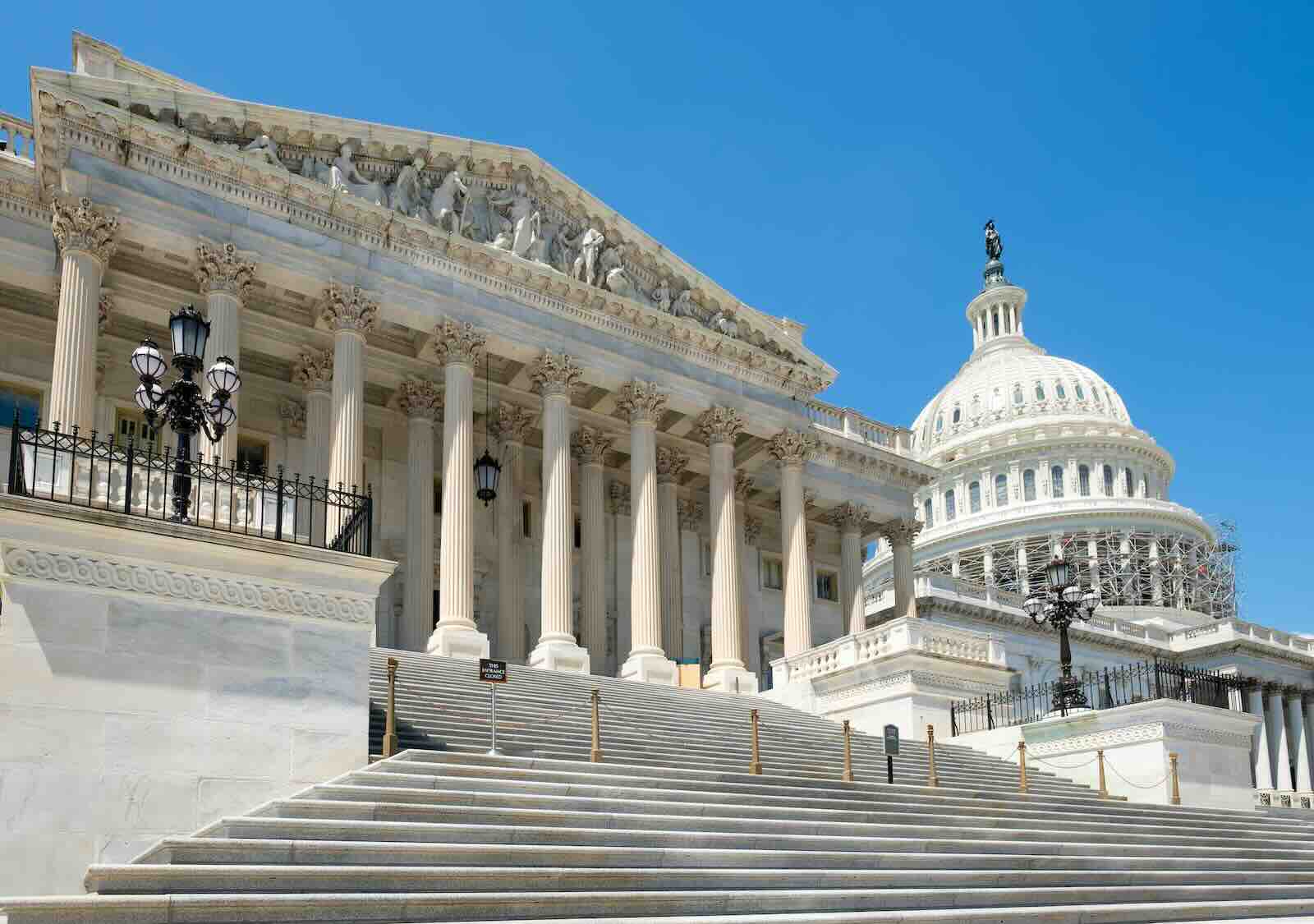
Like anyone who passed high school civics, we had fundamental questions. What happened next was a trip down the rabbit hole of polarized politics. The nearly two-year misadventure, involving subpoenas, document productions, and hours of voluntary testimony, came to a head last week in a public hearing and a congressional report meant to vilify our work and the basic tenets of capitalism.
It backfired spectacularly.
Unsurprisingly, given numerous analyses showing there is no merit to this made-up “antitrust” theory, the hearing featured very little discussion from the majority about actual antitrust violations, the law, or the Department of Justice’s enforcement efforts.
Instead, as Representative Mary Scanlan (D-PA) explained, “There is no illegal collusion by these investors — it’s just a made-up controversy so our colleagues across the aisle can complain about climate change.”
Sure enough, the most intense moment of the hearing came when Rep. Harriet Hageman (R-WY) said that affordable energy was the main reason for American prosperity. “Every single one of you and your organizations wants to destroy that.”
“You are evil,” she concluded.
Rep. Hageman was talking to the witnesses — Mindy Lubber, CEO of CERES (a nonprofit that convenes shareholders, companies, and NGOS), Dan Bienvenue, Interim Chief Investment Officer of CalPERS (the nation’s largest state pension fund) and Natasha Lamb, Chief Investment Officer at Arjuna Capital (a boutique wealth fund focused on impact investing). But she was referring to the entire supposed “cartel” to which the majority continuously referred, including As You Sow.
Respectfully, however, she had it backwards: shareholders are working relentlessly to unleash American ingenuity and competition on the energy transition. There are tremendous opportunities to reduce the cost of energy and unleash American prosperity by investing in renewables like wind and solar, as I detailed in my last dispatch. Meanwhile, actual oil cartels allegedly do collude to set prices, increase inflation, and reduce prosperity.
Material risk
Politics is a brave new world for our organization. As a 501(c)3, we keep an arm’s length from policy and politicians. We work within the free market to engage big corporations on behalf of their shareholders to reduce material risks for all stakeholders, including from climate change. Our work, important as it is to protect the overall economy, is sometimes perceived as a thorn in the side of some short-sighted oil, gas, and coal executives who, rather than transition to account for a carbon-constrained world, are determined to stick with the status quo regardless of the harm.
Instead of preparing for the future, part of their gameplan is to influence politicians.
In its initial letter to its targets, the Committee asserted that we took part in “collusive agreements” that potentially violated the antitrust laws. Antitrust violations happen when a few industry players collude to control prices and kill competition.
Specifically, the Committee appeared concerned about Climate Action 100+, an investor-led initiative that educates shareholders on financial risks to their portfolios from the world’s largest polluters. Some 700 investor groups, collectively representing virtually the entire global economy, had voluntarily signed on and promised to do what they could — independently, and consistent with their fiduciary duties to their own investors and clients — to reduce emissions within their portfolios.
Apparently, the entire free market was “colluding” to protect itself from the risks of climate change.
‘Improper purpose’
While the Committee’s factual basis and antitrust theory were each unclear from the start, the issues with the investigation did not stop there.
To begin with, Congress has investigative power only to the extent necessary to help it draft legislation; thus, any investigation must have a legislative purpose. The Committee’s letters made it apparent from the start that it was engaging in a law enforcement investigation into whether antitrust violations had occurred. Despite multiple letters asking for clarification, the Committee has yet to articulate a true legislative purpose for its inquiry.
In the words of the minority report released by Committee Democrats, the investigation constituted “an abuse of the Committee’s oversight authority,” because it was a “fishing expedition” launched “with an improper purpose; namely, to impose a cost on investors and financial institutions that take seriously the threat of climate change and to chill legitimate business activity.”
Second, was how the investigation was carried out. Don’t take our word for it: the Democrats’ report noted that the Committee “issued broad and sweeping demands,” “imposed unreasonably short return dates,” and refused to engage in “good-faith negotiations” about its onerous demands.
Despite this, the Committee received more than 2.5 million pages of documents from the 14 organizations it had targeted. And when it was apparently dissatisfied with As You Sow’s over 12,000-page contribution to that total, both our President and Chief Counsel Danielle Fugere and I traveled cross-country for voluntary all-day interviews with the Committee. Oddly, the Committee issued a subpoena for my interview even though I had already agreed to come on that date weeks earlier.
I must say, the interview made for a fascinating day at the Capitol. Questions ranged from basics on capitalism and corporate governance (yes, the board reports to the shareholders) to patently absurd suggestions that I was some kind of puppet master with hypnotic power over the most powerful people on Wall Street, or that As You Sow was capable of bullying these titans of capitalism into breaching their fiduciary duties.
Having spent millions of taxpayer dollars for untold numbers of staffers to comb through 2.5 million pages of documents from the 14 organizations over 18 months, last week the Judiciary Committee finally released its majority report outing a “climate cartel” imposing “left-wing” extremism on American corporations.
If you ignore all the nasty accusations of “muzzling” and “colluding,” the majority report is actually a pretty good description of the necessary actions taken by the free market to limit portfolio risks from climate change and unleash American prosperity.
One thing the report did not do is make the case for any antitrust violations. In fact, the report only mentioned “antitrust” 10 times (versus “As You Sow” being referenced 23 times). There was no real effort by the majority to defend what the minority report rightly referred to as “the flimsiest of legal theories” and “a total sham.”
Given that the report was written and published by a congressional committee, we were proud to see that they described our impact at bringing important ideas to the leaders of Fortune 500 companies. Also, they were right that, if the 14 “alleged co-colluders” under investigation did work together, we could go a long way in protecting the economy — and the American people — from the worst impacts of climate change.
Fossil fueled
All of this led to what the majority hoped would be a damning public hearing last Wednesday. It was clear from the start that the majority had no interest in antitrust law. Instead, their purpose was to grandstand and appear to have accomplished something.
Public debates about sustainable investing tend to be awkward for conservatives who follow Milton Friedman’s economic theory of shareholder primacy. On the one hand, Friedman despised the idea that corporations should have any “social responsibility.” On the other, he despised government intervention even more.
In the case of Friedmanites that want to write laws to outlaw sustainable investing, they must awkwardly overcome that inherent contradiction. It’s why the majority of conservative voters are against such draconian laws.
Minority members of the committee seemed genuinely confused: “I don’t understand why we’re here,” said Rep. Eric Swalwell (D-CA) to the Republican lawmakers. “You believe that Democrats regulate too much, but you call these three here because you don’t like how they’re investing in the free market?”
“Mr. Chairman,” said Rep. Hank Johnson (D-GA), “we are here because MAGA Republicans are doing the bidding of dark money groups with ties to former Trump administration officials, the oil and gas industry, and far right donors like Leonard Leo and the Koch brothers.” He may have been referring to the $2 million that the members of the majority on the Committee received in donations from fossil fuel firms.
“I’m really sorry that you had to witness some of this,” Rep. Becca Balint (D-VT) told the witnesses. “It’s frankly embarrassing.”
As You Sow took no offense. We welcome every opportunity to have this discussion in a public forum because we are confident in our work. We strongly believe there’s an important role for policy to provide guardrails for markets – we just don’t believe it is the proper use of governmental power to intimidate, or propose laws that restrict competition, freedom, and limit shareholder rights.
Andrew Behar is CEO of As You Sow, a non-profit leader in shareholder advocacy. Founded in 1992, As You Sow harnesses shareholder power to create lasting change and align investments with values.