Fund managers had been beating a path to Dubai, Abu Dhabi and Riyadh in recent years to tap into the oil-rich region’s enormous pools of sovereign wealth.
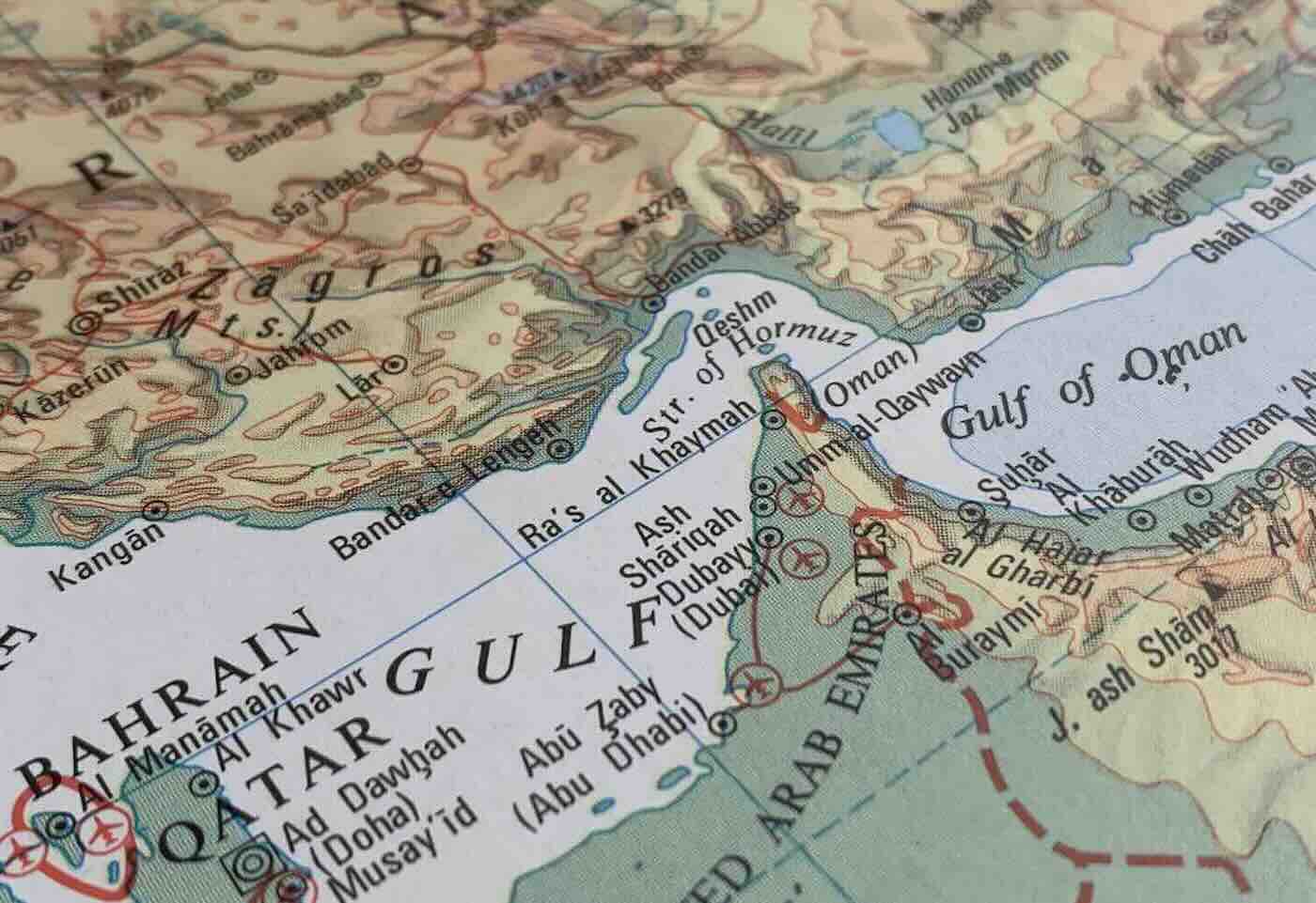
Now, many investors and bankers are among those fleeing the escalating attacks from Iran, which increasingly target economic and financial infrastructure.
Also at risk: the capital pipeline that has increasingly funneled the region’s oil wealth to AI data centers, energy transition funds and emerging managers around the globe.
Anyone waiting on a check from the region’s big investors had better be patient, Rob Day of sustainable infrastructure investor Spring Lane Capital told ImpactAlpha. “The uncertainty around [the war] is just so overwhelming that they’re pencils down,” Day says.
Paul O’Brien, former deputy chief investment officer for the Abu Dhabi Investment Authority, told ImpactAlpha, “Those looking to raise capital in the region should probably allow for some slow responses for a while, but deal flow should resume soon after the Strait of Hormuz opens.”
Last year, banks, private equity funds, hedge funds and wealthy family offices were rushing to set up shop in the region.
“You’re seeing capital flows coming in at a basis and rate that we have never seen before,” Waleed Al Mokarrab Al Muhairi, of the $330 billion Mubadala Investment Company at the 2025 Milken Global Conference.
The conflict is not likely to put a dent in the $5 trillion of wealth held by sovereign funds in the region, at least for now. A protracted and escalating war could shift the calculus. Reuters this week reported that the three major sovereign wealth funds in the region are rethinking their commitments and investment pledges as they look to offset the financial costs of damaged infrastructure and halted oil shipments.
“The longer this goes on, the more consequences there will be in terms of fund flows,” said one executive at a major US-based climate fund who asked not to be named.
Already, road shows and meetings in the region are being cancelled for safety concerns. Several events for impact investors have been put on hold, reports Sana Kapadia, an impact investment professional based in Dubai. It’s unclear whether the region’s marquee event, the Future Investment Initiative in Riyadh, known as “Davos in the desert,” will go ahead in the fall.
Green gold
As the Middle East has remade itself as a global finance center, it has recycled its oil wealth to become a critical source of funds for global decarbonization initiatives.
The United Arab Emirates, which hosted COP28 in Dubai in 2023, used the occasion to stand up a $30 billion climate fund, among the largest such funds in the world.
Altérra, as the fund is called, invested $6.5 billion to anchor climate and transition funds from Brookfield Asset Management, TPG’s Rise Climate platform and BlackRock. A $5 billion catalytic tranche, Altérra Transformation Fund, provides risk-mitigation capital, such as first-loss reserves, to incentivize private climate investment in least-developed countries and small island states. It has seeded new initiatives such as TPG Rise Climate’s Global South Initiative and Brookfield’s Catalytic Transition Fund, also earmarked emerging economies.
The UAE last year promised to invest $1.4 trillion in the US over 10 years, in AI, semiconductors, manufacturing, and energy as it diversifies its economy away from oil.
Much of the activity has centered around Mubadala, the $330 billion sovereign wealth fund of Abu Dhabi, the emirate’s capital. Mubadala has anchored a multi-billion-dollar investment alliance with TWG Global, which owns Guggenheim Investments and Guggenheim Securities (as well as the Los Angeles Dodgers, the Lakers and Chelsea FC). It also anchored first-time manager Bicycle Capital’s $440 million funds for companies serving Latin America’s small and mid-sized businesses.
Mubadala executives have been ubiquitous at global events like the Milken conference, in part as they have sought outside capital for the first time for Mubadala Capital, the group’s alternative asset management arm with $27 billion in assets under management.
Last March, ADQ, Abu Dhabi’s infrastructure-focused sovereign fund, forged a joint venture with Energy Capital Partners, a Summit, NJ-based energy transition investor and owner, to invest up to $25 billion in sustainable energy infrastructure in the US to power data centers and other intensive sectors.
The Qatar Investment Authority this month teamed up with BlackRock’s Global Infrastructure Partners, EQT, and the California Public Employees’ Retirement System in a take-private deal for global sustainable energy company AES.
Saudi Arabia has also been active. The Saudi pension fund, Hassana, in 2024 committed $1.5 billion to TPG’s TPG Rise Climate II and its new TPG Transition Infrastructure Fund.
“Large and sophisticated investors like Hassana are essential to meeting the growing capital demands of the new climate economy,” TPG’s Jim Coulter said at the time.
The main vehicle for Saudi Arabia’s ambitions has been the $1 trillion Saudi Public Investment Fund, or PIF. It staked $1.5 billion to US-based EV startup Lucid Motors in 2024. On a visit to the White House last November, Saudi crown prince Mohammed bin Salman pledged to invest $1 trillion in the US.
However, PIF is said to be low on liquidity in the wake of expensive bets that have not paid off, such as the Kingdom’s clean-powered city of the future, Noem, which has been significantly scaled back in recent months.
As a PIF board member told The New York Times, “You stop, you assess what went right, what went wrong, and then you improve.”
Fundamental realignment
That may be what’s happening now across the Gulf’s wealthy enclaves. “The scale of damage and economic disruption in the region may look big, but is tiny compared to a $1 trillion or more sovereign wealth fund,” said O’Brien, the fund advisor. “That could change if things get much worse, but right now there is no reason to fear a shortage of cash.”
Still, he said, “it would be prudent for those big funds to slow down their deal funding for a month or two to see how things play out.”
The bigger obstacles for impact capital seekers may be competition from the Gulf’s other interests. “Funds in the region over the past decade have increased their funding of local economic development, and growing interest in AI has accelerated that trend,” says O’Brien. “This could limit their scope to embrace impact investments.”
The impact community that has taken root in the region seems undeterred, for now. “I don’t see a retrenchment from impact investors or family offices, or shifts in strategies,” Kapadia told ImpactAlpha from Dubai.
The chaos, however, could lead to fundamental realignments. “Acts like this will continue to create a destabilized global order, with more protectionism,” Kapadia says.
“This might mean much more local capital flows and cross-regional flows,” she says, noting the corridor from Africa through the Middle East to Asia. “Ultimately, a new world order will take shape.”