
Editor’s Note: This article was co-published with Climate Proof, a publication on climate adaptation tech and policy.
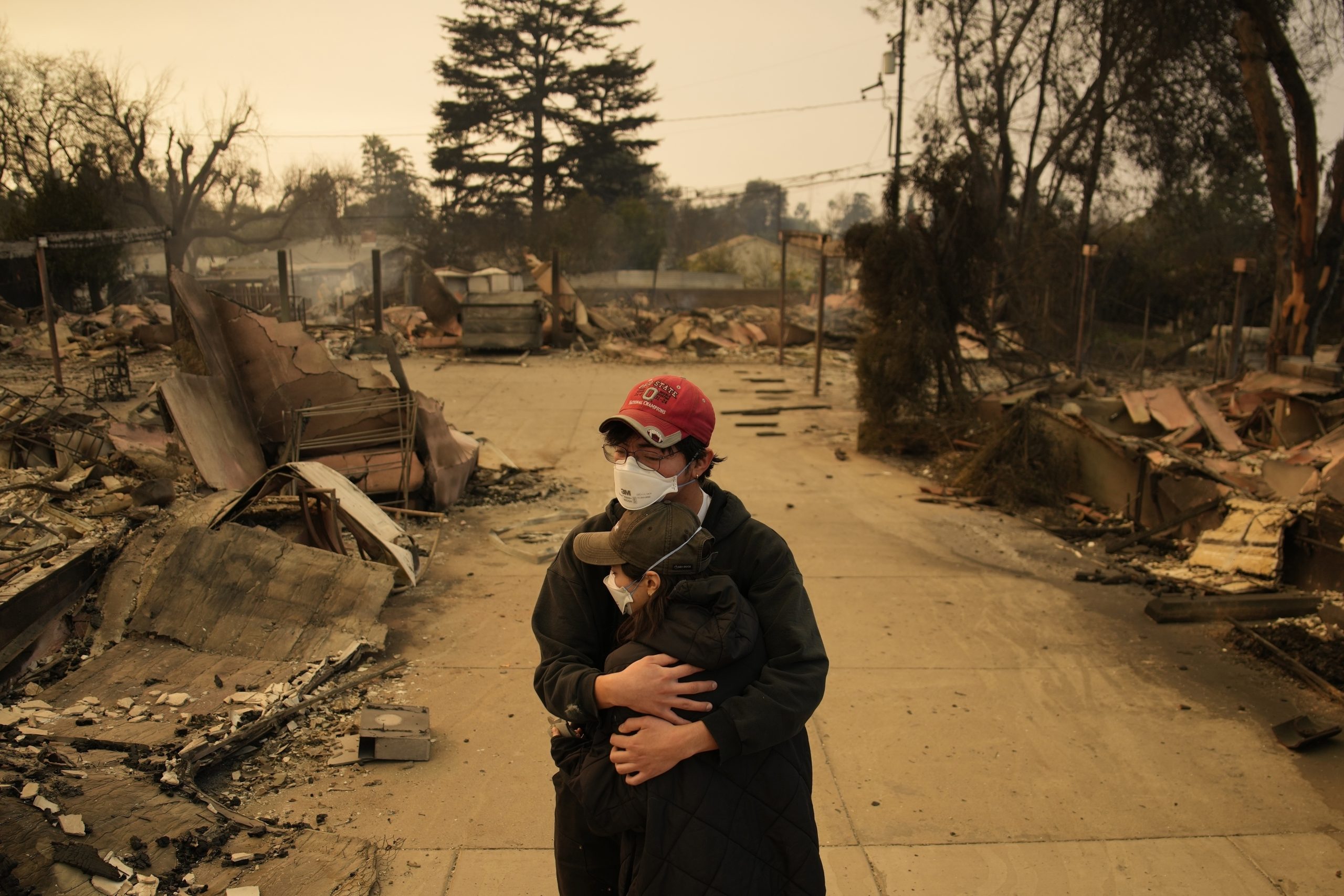
Los Angeles is burning, as it has been for 10 days.
The fires have brought destruction, homelessness and more than two dozen deaths. The flames also threaten to burn down California’s insurance market.
Insurance coverage in the state was already buckling in the wake of the flight of private carriers and the vast increase in the wildfire exposure of the state’s insurer of last resort. JP Morgan estimates insured losses will top $20 billion. Insurance broking group BMS puts them at $25 billion. For now, it appears property will be paid for their losses – this time.
“I believe we are continuing to march steadily towards an uninsurable future in this country,” says Dave Jones, California’s insurance commissioner from 2011 to 2019 and now director of the Climate Risk Initiative at Berkeley Law School. “Rates are definitely going up across the board in California, and and more acutely in the high wildfire-risk areas.”
Around 100,000 Californians lost their homeowner’s insurance from 2019 through 2024, in part because private insurers couldn’t stomach the rising wildfire risk. Allstate, State Farm, and Farmers Insurance are among the major firms that have, at one time or other, either stopped writing new business or “non-renewed” existing clients.
Many households, including thousands in Los Angeles County, now rely for coverage on the state’s backstop insurance pool, known as the FAIR Plan. About three dozen states have such pools to cover homeowners that might otherwise be unable to obtain policies. In California, this safety net is itself under strain given the current infernos. The state’s FAIR Plan has only about $377 million in capital and had $2.5 billion in reinsurance capacity as of last year – while its exposure to losses in the Pacific Palisades alone is $5.89 billion.
Seminal event
If the FAIR plan exhausts its available resources honoring claims to those caught up in the fires, it can impose an “assessment” on private carriers, forcing them to stump up the difference, which could cost policyholders across the state. While this should ensure all policyholders are covered, the fallout would ripple through US insurance markets.
Under new rules enacted last September, insurance companies can charge existing policyholders 50% of the first $1 billion of a FAIR Plan assessment, and 100% of any amounts in excess of that, subject to the commissioner’s approval. This means that if an assessment were triggered, it could force rate hikes and make coverage even more expensive for tens of thousands of policyholders, even those untouched by the fires.
“That’s going to be a seminal event in California economic history, because that hasn’t happened before,” says Jones, referring to an assessment that levies a surcharge – possibly for thousands of dollars – on existing policyholders.
Across the country, insurance rate hikes are starting to have an impact on mortgage foreclosures, as premiums become unaffordable, particularly for low-income homeowners. The inability to get insurance at all would have even more dramatic impact on the housing market, as homeowner’s insurance is required for nearly all mortgages.
The tragedy is that before the LA fires, there was some optimism that the California insurance was about to turn the corner. After years in which private carriers pared back their coverage, new regulations enacted in December by Insurance Commissioner Ricardo Lara promised to expand access to policies throughout the state, including in fire-prone areas.
“It was possible that before Los Angeles, you were beginning to see the insurers really try to move into that space in a different way and give some of those signals back to communities and individual property owners [on fire risk],” says Stephen Collier, a professor of city and regional planning at the University of California, Berkeley. “I think it’s quite possible that the insurers are just going to decide there’s too much risk in the system.”
The new regulations are technical, but potentially transformative. Put simply, they allow private insurers to use forward-looking, probabilistic models to inform pricing of the “catastrophe adjustment” in insurance rates. These “catastrophe models” factor in how wildfires are evolving because of climate change, and thus are supposed to offer a more realistic view of the risks. In return, the regulations require insurers to offer “comprehensive policies” in 85% of wildfire-prone areas.
Another reg, issued in December, allows insurers to pass the costs of reinsurance – an essential, but often pricey, safety net used by primary carriers – to policyholders (up to a cap) in return for honoring the 85% standard. This again is supposed to expand access to insurance in wildfire-risk areas.
However, even before the LA wildfires broke out, the rule changes were projected to increase rates. Now, they may rise even higher. Add on to that the potential effects of a FAIR Plan assessment, and policyholders could be in for a world of pain.
Experts, though, argue that this ‘right-pricing’ of the rising risk is essential: “They see losses and increased reinsurance costs, which erode their surplus – and then they’re less able to continue writing at the same level, much less grow,” said Nancy Watkins, a specialist in climate resilience, insurtech, and catastrophic property risk at actuarial consultancy Milliman on an episode of the Climate Proofers podcast last year.
“There’s a reason that insurance has to be priced to reflect the actual underlying risk and that is because the system has to stay solvent in order to function properly,” Watkins says.
Insurance prices also send an important signal to would-be property developers in fire-prone areas, and to homeowners in harm’s way. “If it’s right-priced according to true actuarial risk, then that is a disincentive to build in wildfire-prone areas,” says Robert Olshansky, professor emeritus of urban and regional planning at the University of Illinois.
Resilience efforts
The distribution of these higher insurance costs could weigh heavily on lower-income households, who may have seen their wildfire risk rise through no fault of their own, but because of a buildup of ignition-friendly fuel in public lands, private developments and climate change.
This explains calls for insurers to offer relief to certain vulnerable populations, like the elderly and those struggling to make ends meet. It’s something Olshansky is in favor of: “We need to have some means of some income-based subsidy that’ll defray the impact on those people.”
Spiralling rates also explain the push to make insurers factor in homeowners’ wildfire risk mitigation and reduction efforts when charging premiums. Under Commissioner Lara’s new regs, insurers’ catastrophe models have to account for resilience efforts by homeowners, businesses, and communities.
While Jones says the change is “terrific”, it doesn’t help in areas where insurers aren’t underwriting at all. “You don’t get the rate discount, and you don’t get the reflection of the mitigation in the catastrophe model for the catastrophe load, if they won’t write you the insurance,” he explains.
Others argue that mitigation efforts aren’t resulting in meaningful premium reductions. “We need the risk models used by the insurance industry for pricing and underwriting to better account for risk reduction measures that are made by communities — and in a timely way,” says the Environmental Defense Fund’s Carolyn Kousky, founder of the nonprofit Insurance for Good. “We need clear guidance from insurers on what investments are needed right now to make sure rebuilding is done in a way that reflects our climate future and better protects residents.”
The challenges addressing higher rates and growing insurance “deserts” has opened space for bolder solutions to the insurance crisis to take root. Dave Jones argues it’s time for the federal government to step up – in a big way.
“A federal reinsurance program [providing] nonprofit reinsurance for FAIR plans to help reduce the cost of reinsurance I think would be a sound policy approach,” he says. He’s also in favor of a federal premium subsidy, to help out poorer households using these state-organized insurance pools.
Another federal intervention, floated by Andrew Salkin of the nonprofit Resilient Cities Catalyst, concerns creating “predictability” around potential loss levels from wildfires. “The idea is we’re actually managing the forest in a way that allows us to have a predictable model, that allows for the insurance industry to have a sense of what the loss will be in the community, so that they can continue to decide to write there and charge it and price it correctly,” he says.
“Insurance only works when there’s predictability and models work, and when insurers can’t really figure out the models, the easiest thing for them to do is get up and leave,” he adds.
The final toll in lives and dollars from the LA wildfires is yet to be determined. It’s as yet unclear whether the FAIR Plan will impose an assessment or not. There won’t be clarity on the pricing effects of Commissioner Lara’s regulations until later this year.
“As with each of these events, the hope is that it’ll be a wake up call to policy makers to make the changes we need, to transition from fossil fuels and greenhouse gasses and do a whole host of other things,” Jones said. “But the evidence has not been good with regard to these catastrophic events causing policy makers to wake up.”
One way or another, the experts agree, the burning of Los Angeles represents a turning point.
“Everything’s changed now,” says Collier.