The World Bank’s Multilateral Investment Guarantee Agency, or MIGA, issued a guarantee of almost $180 million to Koko Networks, a provider of clean cooking technologies in East Africa. The capital is aimed at securing and expanding Koko’s carbon credit and financing work.
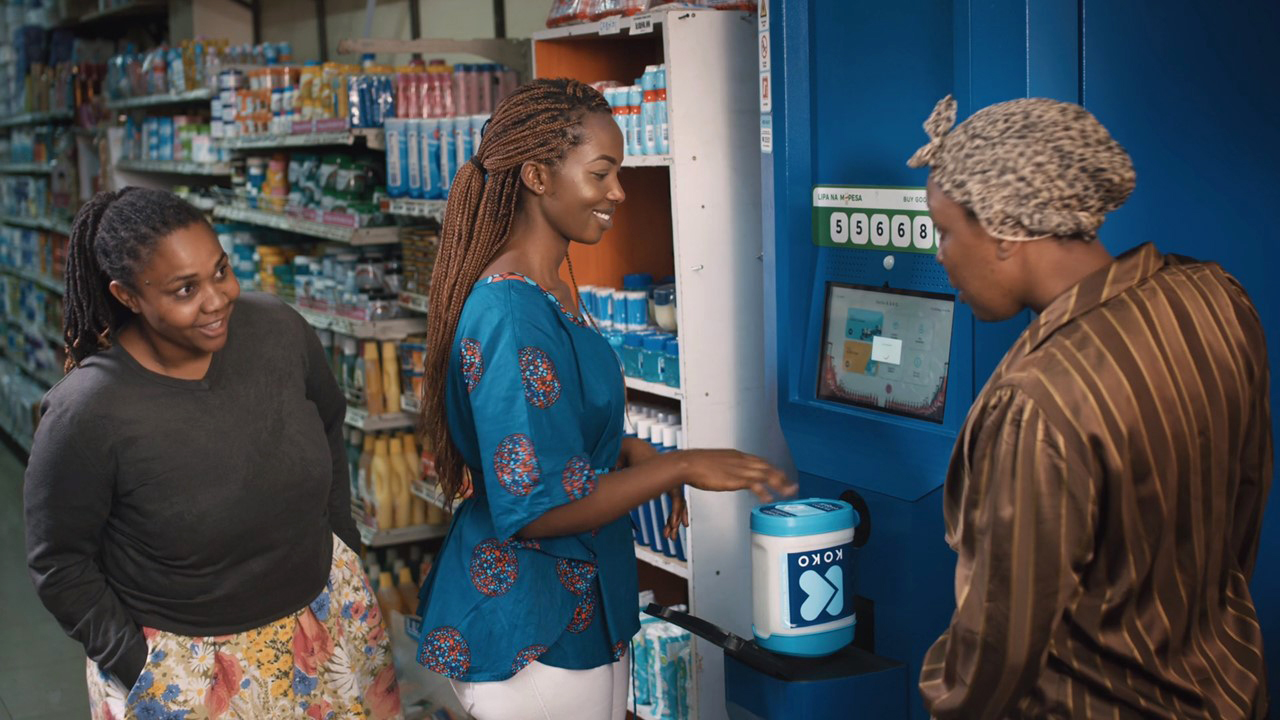
Koko designs and sells cookstoves and bioethanol cooking fuel, made from sugar molasses, to more than 1.3 million households through more than 3,000 “fuel ATMs” in Kenya and Rwanda. Cooking over charcoal and firewood has negative health impacts and is a significant driver of deforestation in the region.
Koko sells carbon credits through the carbon trading mechanism created under Article 6 of the Paris climate agreement, based on the amount of charcoal and firewood displaced.
Carbon credit revenues get passed on to Koko’s customers in the form of lower prices for its products (see, “Leveraging the carbon markets for clean cooking, climate justice and social impact”).
Credit credibility
Koko has chosen a more difficult path than other social enterprises looking to tap the carbon markets for additional revenue streams. Most sell credit into the voluntary markets for corporate buyers. The Article 6 trading mechanism requires more rigorous accounting, verification and compliance. Koko has joined up with Japan’s Mizuho Bank in 2023 to sell carbon credits to the bank’s clients, and secured funding from ITOCHU Corporation, also in Japan, to market its credits in Asia.
MIGA’s guarantee protects Koko in the event that host countries fail to honor their legal commitments. “We operate in the highly regulated energy and compliance carbon sectors and are therefore exposed to significant political risk,” says Koko’s Greg Murray.
The agreement with MIGA covers political risks including “expropriation, war and civil disturbance, transfer restriction, and breach of contract” over the next 15 years. Murray noted Koko is “the first MIGA policy covering the unique political risks associated with the Paris Agreement carbon markets.”
Financing expansion
Separately, French asset management company Mirova provided debt financing to help Koko scale its residential energy services in Kenya and Rwanda. The funding came through a carbon finance facility from the Mirova Gigaton Fund, a $500 million fund providing medium and long-term debt for clean energy and other climate solutions in emerging markets.
The Gigaton fund has also supported solar companies SunCulture and Solar Panda in Kenya, ManoCap Energy in Ghana, and Solar Africa in South Africa.