
As the world grapples with the escalating consequences of climate change, some of the most significant contributors to the fight against it have been foundations.
These asset-owners, which have long played a crucial role in funding innovative solutions and driving systemic change, are in a unique position to continue leading the charge on climate action.
We, along with many others, believe that investing in climate is nothing short of a fiduciary duty.
In fact, business as usual when it comes to greenhouse gas emissions is an extremely risky economic strategy. Global warming not only poses an existential threat – it is predicted to result in a decline in global GDP. Both the physical risks of climate change (e.g., damage to infrastructure caused by extreme weather events) and transition risk (e.g., stranded assets as the economy becomes less carbon-intensive) can translate into investment risks across a portfolio.
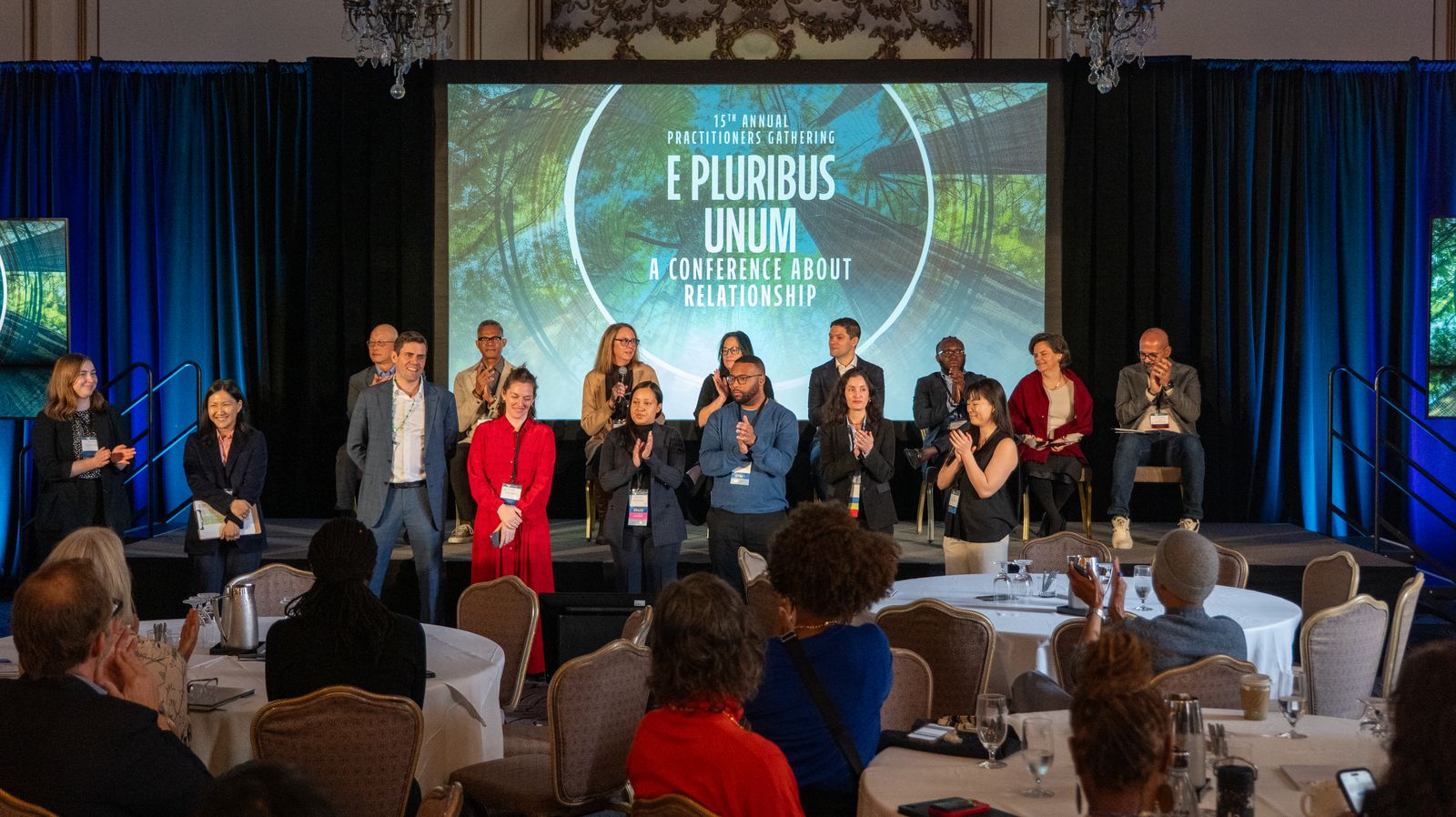
This spring, Confluence Philanthropy, a membership organization of over 270 values-aligned investors and their advisors, held its 15th-anniversary Practitioners Gathering in San Francisco. A recurring theme was the urgent global need – and the strategic opportunity – for foundations to invest more of their endowments to advance solutions to the climate crisis, particularly as the new U.S. administration and many of the world’s largest banks are pulling back on their climate commitments.
Several of our mainstage speakers reflected on the current state of values-aligned investments in climate, including: Capricorn Investment Group’s Kunle Apampa, Generation Investment Management’s David Blood, Oweesta Corporation’s Chrystel Cornelius, Generate Capital’s Scott Jacobs, Elemental Impact’s Dawn Lippert, Amalgamated Bank’s Nicole Steely and Helen Mountford of ClimateWorks Foundation.
To support values-aligned investors in driving climate solutions and mission-driven impact in myriad other sectors, Confluence levied a new call to action at this year’s Practitioners Gathering. This call to action urges our network to focus its efforts on:
- Sustaining investor morale;
- Deploying capital and leveraging influence to protect the most vulnerable Peoples, places, and important practices;
- Galvanizing a community of safety, support, and coordination; and
- Uniting investors and allies to spark vision, belief, and innovation.
Bridging funding shortfalls
Foundations can help bridge funding gaps for climate solutions, which are likely to widen as government funding recedes. The annual climate funding shortfall is now $1.1 trillion for developing countries.
More funders might consider the example of organizations like Bloomberg Philanthropies – which, alongside other climate funders, are stepping in to cover the amount the U.S. owes each year to the United Nations Framework Convention on Climate Change after the U.S. withdrew its international climate funding.
We also heard during the Confluence Practitioners Gathering that some foundations are exploring ways to step up to bridge funding shortfalls resulting from the freezing of the federal Greenhouse Gas Reduction Fund.
Investors are investigating funding opportunities in the development of climate adaptation strategies, supporting initiatives that reduce emissions in hard-to-decarbonize sectors like agriculture, and investing in the education and empowerment of local communities to build leadership, mutual aid, and long-term resilience.
A modest family foundation, the Russell Family Foundation launched its Catalytic Climate Finance program to reimagine how capital is deployed to accelerate emissions reductions, support grassroots leadership, and support a just transition. The foundation invests in companies that prioritize low-carbon solutions as a strategic imperative; funds early-stage grassroots; collaborates with partners to drive large-scale transformation; and invests in communities disproportionately affected by the climate crisis.
Mission alignment
Climate is a multiplier of other crises, from poverty and economic inequality to health disparities and displacement. Rising global temperatures, extreme weather events, and changing ecosystems exacerbate existing vulnerabilities, disproportionately affecting marginalized communities. The poor, the elderly, and people of color are often the hardest hit, facing the brunt of rising food insecurity, loss of livelihood, and worsening health conditions.
An increasing number of foundations that are committed to social justice, equity, and human rights recognize that the climate crisis is intertwined with their mission. All the ways that investment capital can help reach Net Zero also advance other mission-driven goals, such as achieving a just transition and making alternative energy affordable to everyone.
One of the primary reasons for foundations to leverage their endowments to expand their investments in climate action is the unique opportunity they have to drive bold, transformative solutions. Unlike government agencies or corporations, foundations can take risks, fund innovative and untested approaches, and support grassroots movements that are working at the intersection of climate change and social change.
From developing and operating well-planned, efficient, and long-lasting infrastructure to integrating nature-based solutions, foundations have the power to catalyze change in ways that traditional players cannot – and support resilience to make sure no communities or Peoples are left behind.
First movers
Continuing to invest in climate is not just good for the planet – it’s an opportunity to drive innovation, unlock new markets, and earn significant returns. The global transition to a low-carbon economy is well underway, and those who leverage their portfolios to continue to advance it stand to reap enormous benefits.
From clean energy technologies to sustainable agriculture practices, the market for green solutions is growing globally. There is no stopping the expansion of clean tech and renewable energy. Both are cornerstones to the advancement of technology and human evolution.
Foundations can help seed this transition by funding research, supporting emerging industries, and ensuring that disadvantaged communities are included in this new economy, creating a safer, stable, and more enjoyable world for everyone.
With their flexibility, long-term vision, and commitment to equity, foundations are uniquely positioned to address the climate crisis at its roots. Thankfully, despite current headwinds against climate investments, what we have heard at our Practitioners Gathering is that foundations are planning to stay all-in.
David Bowermaster is the founder and CEO of Fireside Strategy, a strategic communications consultancy that helps philanthropists, family offices, donor collaboratives, and nonprofits tell stories that spark interest and motivate action.
Dana Lanza is the co-founder and CEO of Confluence Philanthropy, which convenes a private, membership-based network of over 270 foundations, family offices and their investment advisors to support values-aligned investing.