Less than a decade ago, a day in Nepal included up to 16 hours without electricity. The instability of the Himalayan country’s energy supply was crippling to businesses operating in the country, and to potential investors.
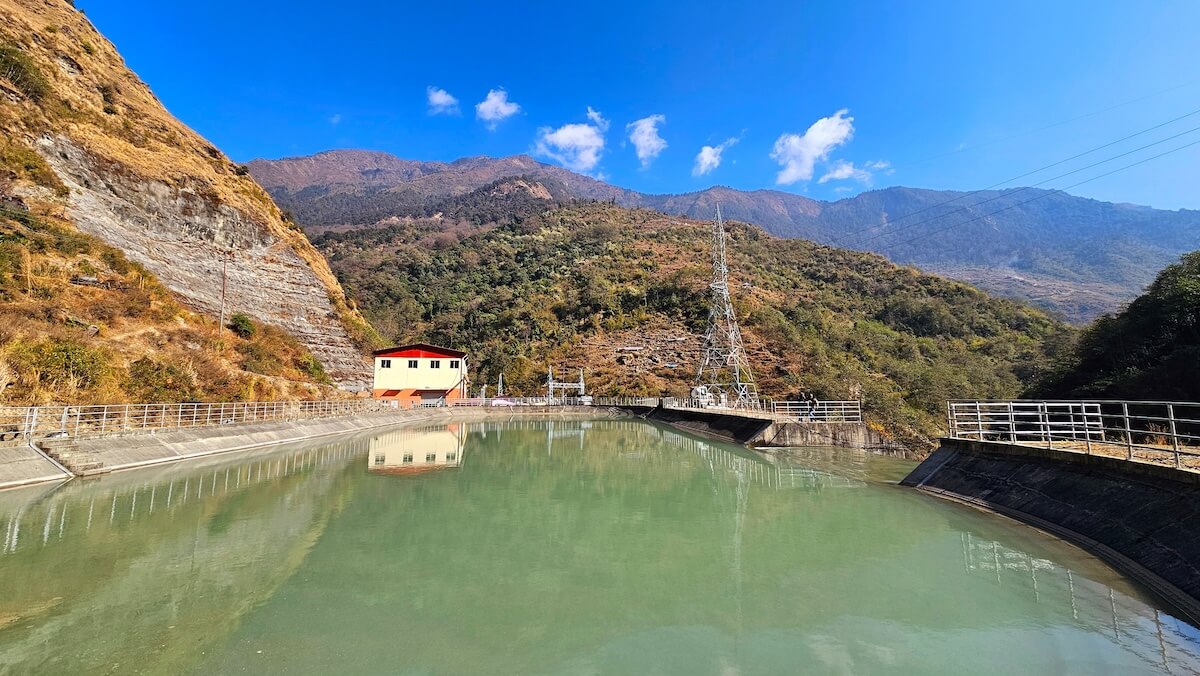
Massive investment and favorable policy-making for Nepal’s ample hydropower resources has turned the country into a net exporter of electricity, and effectively eliminated scheduled blackouts. Nepal now boasts one of the greenest energy sectors in the world.
The success of Nepal’s energy transition is giving private capital an entryway into the small, landlocked country, and helping foster investor confidence in core economic sectors that are key to Nepal’s sustainable economic development. A nascent private equity sector is emerging to invest alongside development finance institutions in renewable energy, manufacturing and small businesses.
“The ecosystem is really evolving — really fast,” says Siddhant Raj Pandey of Business Oxygen, one of Nepal’s longest-standing private equity investors.
The case for green development is strong for Nepal, given its high vulnerability to climate change. The country is nestled amid the Himalayas and the Hindu Kush mountain ranges, which, outside of the poles, together store more ice than any part of the world.
Nepal’s ample hydropower potential means the country’s clean energy transition is vulnerable to the same climate risks it aims to address. Rising temperatures pose the risk of accelerated glacier melting, which is intensifying flooding incidents and risk. Already there have been reports of deadly flooding and mudslides in the current monsoon season.
Most of the increased flow of private capital is focused on renewable energy. Firms like Business Oxygen are seeding a pipeline of wider sustainable investment opportunities. Business Oxygen, which since 2015 has made 16 investments in and serving Nepal. Its portfolio includes Bakas Renewable Energy, which makes biomass pellets, and vaccine-maker Meera Biotech Pvt. Fusemachines, based in New York, is an AI-powered edtech venture serving Nepal. Business Oxygen has exited five of its portfolio companies.
Dolma Impact Fund, one of the country’s first impact investment firms, has invested in the Chirayu National Hospital and Medical Institute in the healthcare sector, and WorldLink Communications, Nepal’s largest internet services providers. The firm, which has $100 million in assets under management in two funds, is looking to expand into agriprocessing and other types of manufacturing.
“Now that we have electricity, slowly the manufacturing is also picking up,” observes Dolma’s Shabda Gyawali.
Ripple effect
Private investors in Nepal tend to gravitate to the renewables sector because there is still significant untapped opportunity and because it’s one of the most mature investment sectors. In hydropower alone, Nepal could increase its current capacity as much as 20 times over, estimates Shivanth Pande of NIMB Ace Capital, a Nepalese investment bank.
“We have a huge exploitable power base,” he says.
NIMB has financed many of Nepal’s hydroplants, and its private equity group recently invested in a 44-megawatt, run-of-the-river project on the Bhote Koshi River. In July, local private equity firm National Fund invested in a 23-megawatt hydropower project in the Solukhumbu district. Dolma also has three hydropower projects in its portfolio.
“There is a clearer path to exits on hydropower,” says Gyawali.
Nepal now has more than 90 listed hydropower projects on its local stock exchange. Local individuals are some of the biggest participants in hydro project IPOs, says Pande. That’s to a law that requires hydro project developers to offer 10% of shares to local communities.
“There is a sense of ownership,” Pande says.
The success of one green sector is spurring green economic development and resilience in other parts of the economy. Changes to vehicle import and ownership taxes by the Nepalese government have made electric vehicles cheaper than many gas-powered cars. The state-owned electricity agency is using various incentives to encourage the development of charging stations.
Last year, more than three-quarters of all passenger cars and half of light commercial vehicles sold in Nepal were electric, behind only Norway, Singapore and Ethiopia, The New York Times reported last month.
Such developments are spurring the rise of green finance in Nepal’s banking sector. In April, NMB Bank raised $60 million in what was touted as Nepal’s first green bond. Capital from the International Finance Corp., British International Investment and MetLife will fund electric vehicles, solar installations and other sustainable projects. Nepal Infrastructure Bank followed in June with a $36 million green bond, listed on the Nepal Stock Exchange.
Siddhartha Bank secured $20 million last October from Swedfund and Finnfund for clean energy projects and small business and agri-business lending.
With two-thirds of the labor force dependent on agriculture, Nepalese livelihoods are highly exposed to climate risk. Private investors like Dolma are focused on bolstering the resilience and opportunity in local economic sectors.
“One of our top priorities is to create jobs within Nepal,” to prevent a brain-drain, says Gyawali.
Local private equity fund Team Ventures recently invested in a company that makes fish feed products, Annapurna Machha Dana Udyog, as part of its mission to curb dependence on pricey imports and build “resilient domestic industries that uplift livelihoods across the agricultural value chain,” Team Ventures’ Bikash Chandra Bhandari said in a statement.
Building blocks
To be sure, private investment is still a small market in Nepal. The country of 30 million people has an economy of $43 billion — just 5% of Walmart’s market capitalization. It’s too small for most commercial private equity players and doesn’t yet have enough pipeline for international venture funds.
Much of the capital is coming from foreign development finance institutions, or DFIs. Dolma has raised most of the capital for its funds from European DFIs, including British International Investment, Swedfund and Netherlands-based FMO. Also participating are International Finance Corp., the US International Development Finance Corp. and the Japan International Cooperation Agency.
Business Oxygen, which is in the market with a $50 million second fund, is struggling to find non-DFI backers.
Between 2008 and 2023, DFIs collectively invested $1.1 billion in Nepal. Most of it was debt; even with DFIs, most are reluctant to make riskier and longer-term equity investments.
“In a market like this, if you’re trying to move the needle, you need equity,” says Pandey. “The market has proven that returns are there for your investment and impact is there. What more do you want?”
For that too, the Nepalese government is stepping up. The securities regulator in 2019 allowed the creation of the local version of private equity or venture funds called “specialized investment funds.” More than a dozen such funds have been launched since, many with capital from local banks and other institutions. The country now has a private equity association, which is holding forums to raise awareness of private impact investing opportunities.
DFIs have also been supporting Nepal’s private capital ecosystem building. In 2021, British International Investment, the Netherlands’ FMO and the Swiss Agency for Development Cooperation created the advocacy body Invest for Impact Nepal, which has worked with Nepal’s regulators to ease the rules for foreign investors to enter Nepal.
Pop culture is giving the investment environment a boost too.
“Now Shark Tank has entered the living room of Nepalis,” says Gyawali. The popular business pitch show debuted in Nepal last month.
Suman Rayamajhi, founder of Kathmandu-based logistics startup Upaya is hopeful the show will encourage more young people in Nepal to pursue their own business ideas.
“The spirit of entrepreneurship, especially on the startup side, had died down a bit,” he says. “Now the buzz has again started coming back.”
The threads of a promising entrepreneurial sector and private capital market are coming together. Navigating the ecosystem remains a considerable challenge, however. Private equity is there but fund managers often think like lenders.
“We faced that problem,” says Rayamajhi. Upaya successfully raised early funding from Dolma. It was turned down by other local PE funds when it went back to the market last year. The company ended up securing 275 million Nepalese rupees ($2 million) from friends, family and other individual investors.
Upaya has since grown rapidly, and is looking to build its own warehouses. It’s seeking more equity financing, but has finally reached a stage where banks are willing to offer debt. Rajayamajhi hopes Upaya will be ready to go public within two years. Moreover, he hopes to be a model for other startup founders.
“From a startup, it became a bankable company,” says Rajayamajhi. “Once you become a bankable company then the access to finance is not so bad.”