Amid the Covid-related disruption of global supply chains, an agriprocessing company in Nicaragua seized a high-value opportunity to build a sustainable business around a home-grown crop that gives the country’s farmers a livelihood boost.
Alcasa, short for Almidones de Centroamérica, has expanded to help Nicaragua’s smallholder farmers boost their incomes and weather climate shocks.
Alcasa is leveraging corporate contracts, off-take agreements, and low-cost financing to build a domestic production market for cassava, a high-value starch that is used in everything from sauces to processed meats to industrial adhesives. Despite a struggling economy, Nicaragua produces more cassava starch than any other country in Central and North America.
Cassava demand is high: Alcasa’s corporate buyers are major food companies like Cargill and Ingredion, as well as regional players like Sigma Alimentos, who otherwise depend on imports from Asia.
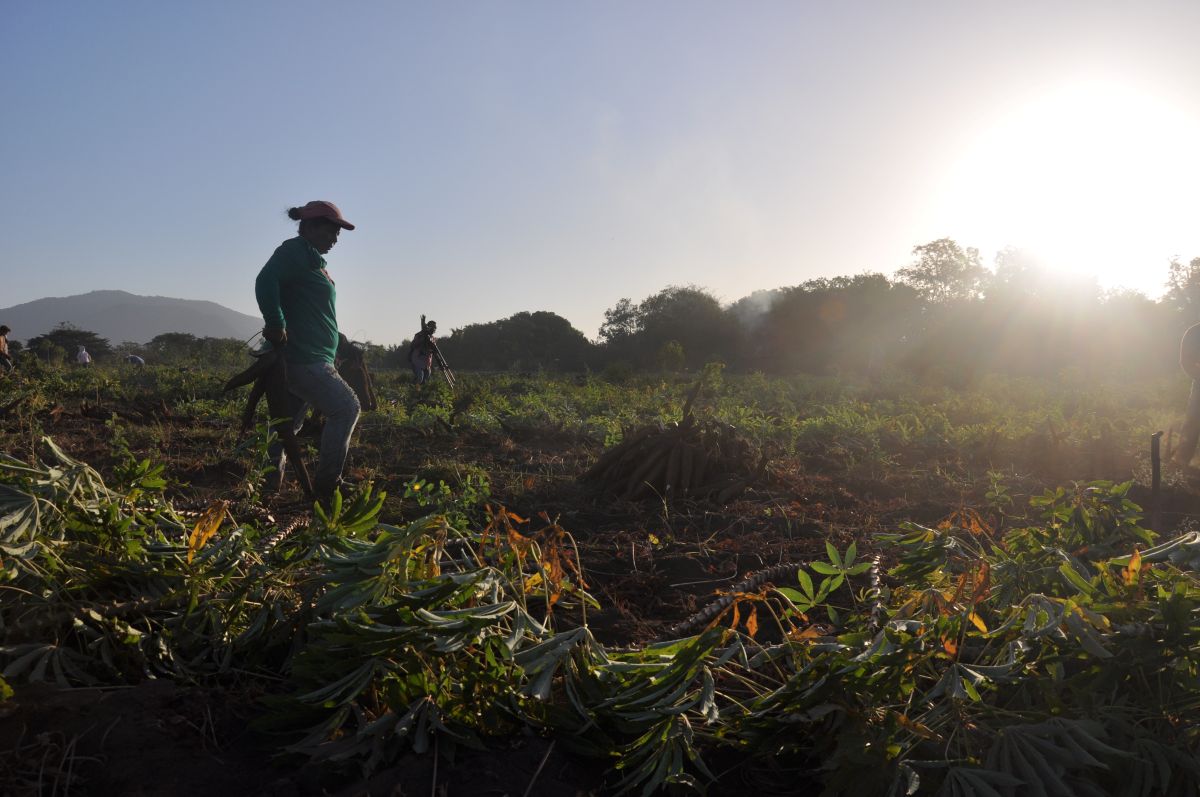
To guarantee its cassava supply, the company has built its business model around its relationship with Nicaragua’s farmers. Cassava’s drought tolerance and ability to grow in poor soils, and on small plots of land, make it an attractive prospect for farmers in a country more commonly known for commodity crops like sugar, coffee and bananas.
“Being in Central America, we can serve as that channel through to connect this side of the world, which is probably one of the largest consumers in the world in terms of starch,” says Alcasa’s Raúl Amador Somarriba.
“Cassava lets us work with small farmers because you can do it on one acre. That’s what makes the impact possible.”
Offtake contracts
Alcasa was founded in 2012 with backing from Amador’s family holding company, Grupo Invercasa, to build Nicaragua’s first industrial-scale cassava processing facility. Invercasa, a Managua-based investment company, aimed to put Nicaragua on the map as a competitor to heavy-weight Asian cassava suppliers in Central and North America.
The world’s 500 million smallholder farmers remain a stubbornly undersupported, underfinanced demographic, even though they’re the primary suppliers of fresh foods for their communities and the key to local food security. The changing climate is dialing up the urgency of supporting farmers — with capital, with insurance, climate-smart technologies and training.
Farmers’ circumstances on Alcasa’s home turf are exceptionally difficult. Nearly 40% of Nicaragua’s residents live below the poverty line of $8.30 per day (in 2021 dollars). Agriculture employs about a third of the workforce, but chronic underemployment and high-cost credit keep farmers stuck in low-return cycles. One of the few types of capital available to them – microfinance loans – often come with interest rates of 25% to 45%, making it prohibitively expensive for farmers to invest in improved seeds, equipment and other resources.
Cassava growers face unique challenges. The crop has an extremely short shelf-life when harvested; it begins to spoil in 24 hours, so processing must begin almost immediately. That means Nicaragua’s farmers often get short-changed by local buyers.
“Before it was very difficult to sell the cassava,” says Reyna Guido, one of Alcasa’s cassava producers. “They had no choice but to sell it at whatever price they would get” Added Amador Somarriba.
Alcasa cuts out the middlemen and acts as a primary financier and buyer for about 350 farmers. It signs off-take contracts with farmers before planting to give them security of being able to sell a certain quantity at a decent price. It then provides low-interest loans so farmers can buy the inputs they need and provides technical assistance during the growing season.
At harvest time, Alcasa arrives on the farms to weigh the crops on site. The harvest is then washed, milled and separated into starch, fiber and water at Alcasa’s facility in León. The company pays farmers based on their crop’s starch content.
Its farmer network covers more than 3,500 hectares of farmer land. Alcasa says its support has helped double yields per acre.
The result, says Amador Somarriba: “You’re talking about a family that was living off $30 a month [now earning] $300, $400. That literally takes you out of the poverty line.”
Nearshoring
The pandemic gave Alcasa’s mission a boost. Cassava starch bound for North America sat for months on cargo ships from Thailand and Vietnam. Shipping costs surged and delivery schedules collapsed, forcing to buyers look for more proximate suppliers.
“The word everyone is talking about is nearshoring,” says Alcasa’s Alvaro Guerra. “Most manufacturers in the US, Central America and Mexico are looking to move away from dependencies on Asia.”
To make the financials of its model work, Alcasa signs contracts with large buyers, then takes those contracts to local banks to secure capital to on-lend to its farmers. Because it’s able to take on relatively low cost, collateralized debt, it can offer credit to farmers at as low as 12% — much lower than microfinance lenders.
Its operations are designed to be circular, minimizing both crop and financial waste. The company has the capacity to process 15,000 tons of cassava starch annually. It produces two types of starch for its buyers: native cassava starch and modified starches that are engineered for specific industrial uses, such as yogurt stabilization or high-heat canning. Those formulations can take months to develop but sell at a higher margin.
The plant fiber is converted into feed for livestock. And the extracted water is pumped into biodigesters to generate biogas. Alcasa is able to power 85% of its plant operations with the biogas while avoiding an estimated 34,000 tons of carbon dioxide emissions annually.
Shared value
Grupo Invercasa has created at least seven other companies in addition to Alcasa. The group initially worked in Nicaragua’s coffee industry, before concluding that export margins were too thin to deliver meaningful improvements in farmer livelihoods. In contrast, cassava production is so lucrative that some of Alcasa’s technical staff have left the company to become cassava farmers.
In total, its operation supports 250 direct jobs and more than 1,100 indirect jobs. Women make up 42% of the workforce.
Instead of paying dividends, Alcasa reinvests profits to expand its farmer network and processing capacity. The approach reflects Grupo Invercasa’s philosophy of broadly sharing created value.
“Whatever we get into, we have to add value,” Amador Somarriba says. “If we can’t do that, there’s no purpose. We won’t be able to transfer value to our producers.”