Al Gore, the former vice president and current impact investor, is a high-tech guy (and board member of Apple). But Gore was in San Francisco this week to champion a low-tech carbon sequestration solution.
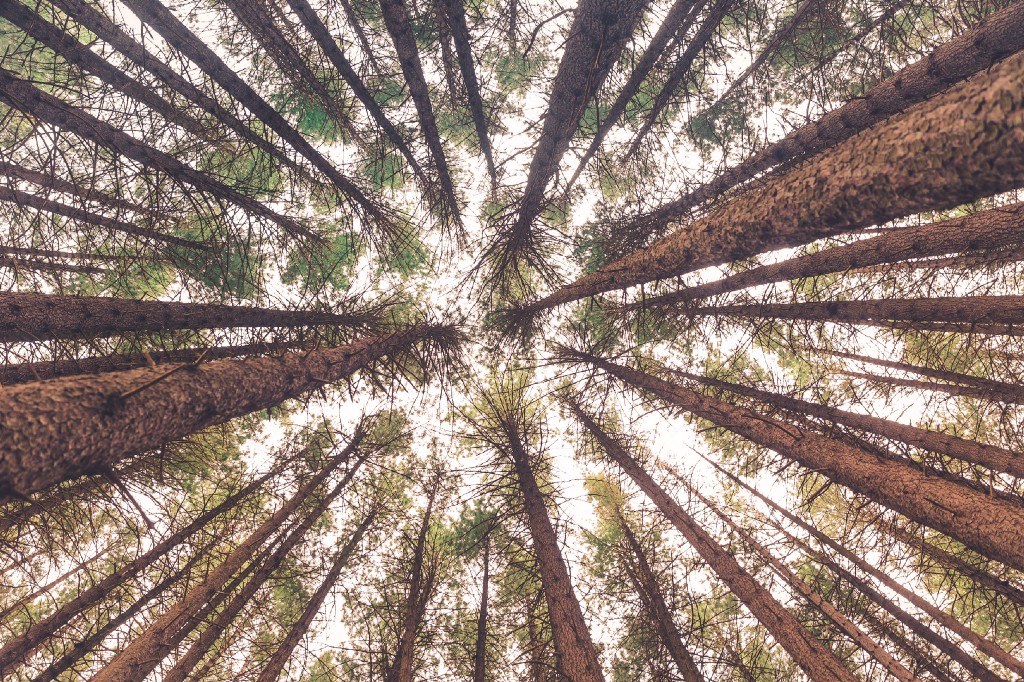
“The most efficient technology for taking CO2 out of the atmosphere is a tree,” Gore said. “When you take it to scale, it’s a forest.”
Investors at an event hosted by New Forests, the Australia-based manager of about $2.7 billion in assets, saw healthy and growing forests as not only a key to meeting 2030 and 2050 decarbonization goals, but as a portfolio diversifier. Timber values are largely uncorrelated to broader markets and forests have a natural inflation hedge — growing trees.
“Our investors are there for the financial returns,” said Celine Claudon of International Woodland Co., a Danish firm with $3.5 billion invested in timber in the U.S. and Australia as well as Europe.
Chris Larson, who heads New Island Capital in San Francisco, said market-rate returns are difficult to find in sustainable forestry. “It drives us into niche strategies,” such as conservation easements, carbon credits and loans to small-scale forest-product companies, to enhance core timber returns.
The Packard Foundation, with more flexible, mission-driven investments, can come in early or for lower returns to make deals work, said Packard’s Susan Phinney Silver.
Kevin de León, president pro tem of California’s state senate and the author of SB 100, which would drive the state toward 100 percent renewable energy by 2045, said California has the clout to shape national, and even international markets. “We know we don’t have to choose between a healthy economy and a healthy environment,” de León said.
The California carbon offset market has become one of the largest sources of capital for forest conservation projects, and has potential value of $1.5 to $3 billion through 2020, according to New Forests. New Forests has registered four projects in the system, generating two million offsets. Some of the projects generate income for Native American tribes that enroll their forests, including the Yurok in California and the Chugach in Alaska (see, “Chugach Alaska, New Forests and Nature Conservancy strike forest-carbon deal).
Gore’s Generation Investment Management has been an investor in New Forests since 2008. David Brand, CEO of New Forests, said investors are increasingly looking to understand “how timber in their portfolio can decrease emissions and play a role in the growing bio-economy.”
Larson said, however, that sustainable land-use investment not kept up with the surge of venture and other capital into low-carbon energy, electric vehicles and smart grids. The key is a stable, and rising, price on carbon.
“Even in California, land-use is a stepchild in climate solutions paradigms,” Larson said. “Mid-century decarbonization is all about land use.”