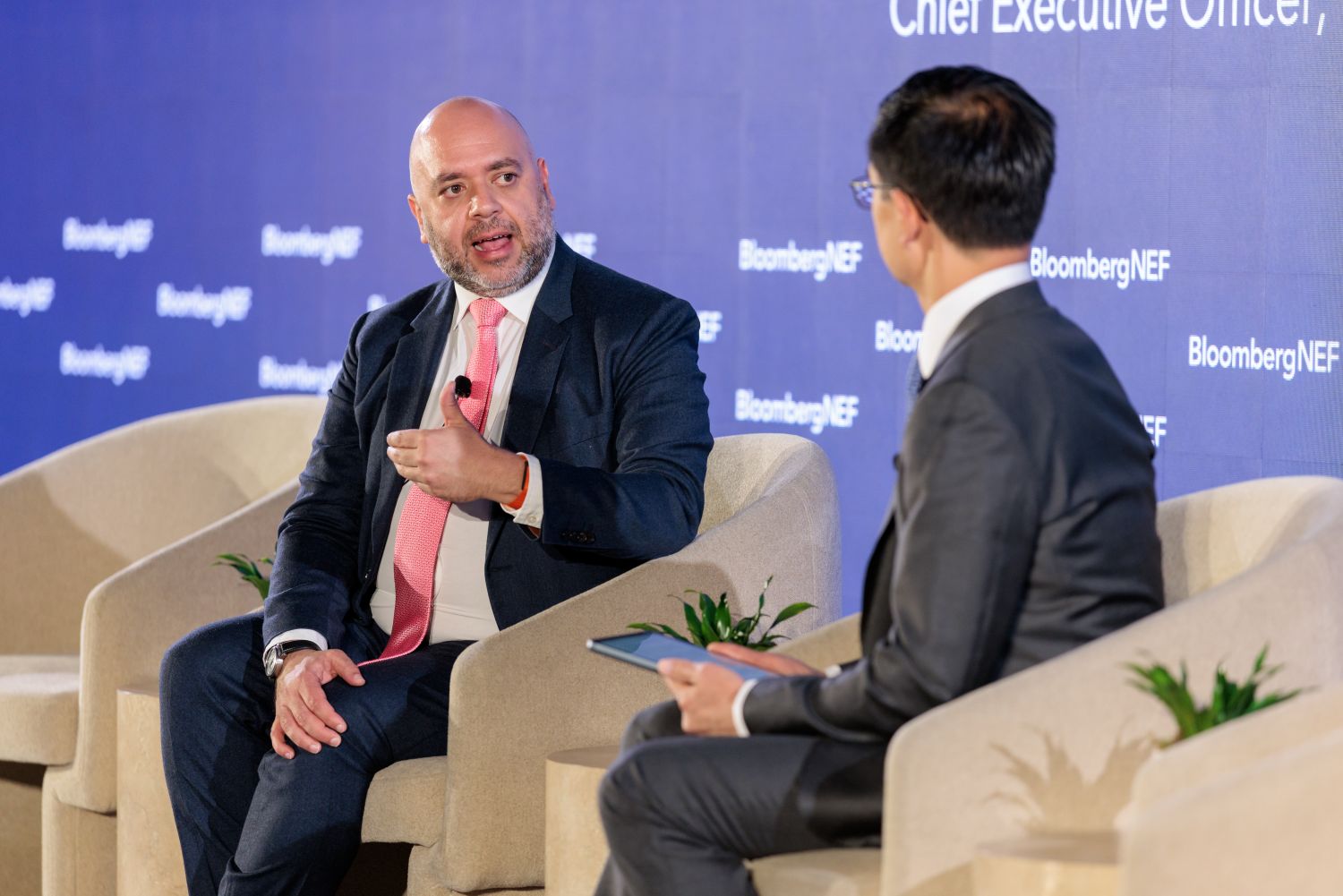
Chris Larson has sat on both sides of the fundraising table.
As the chief investment officer, and then the CEO, of New Island Capital, a well-heeled single family office in San Francisco, there was “a line out the door of funds, and direct deal sponsors, pitching things to you,” Larson says on the latest Agents of Impact podcast.
Now, as co-founder of Alder Point Capital Management, Larson is the GP who is pitching prospective LPs on the firm’s thesis around investments in sustainable real assets such as forests and farmlands. “It was slow, like you might expect,” he admits.
Diplomatically, he adds, “The opportunity to engage in diligence processes with some of the biggest impact investors globally has really sharpened us up in a lot of ways.”
Alder Point, formed with other veterans of New Island, has reached a second close on $126 million for the firm’s strategies, according to a filing with the SEC (see profile on ImpactAlpha Edge).
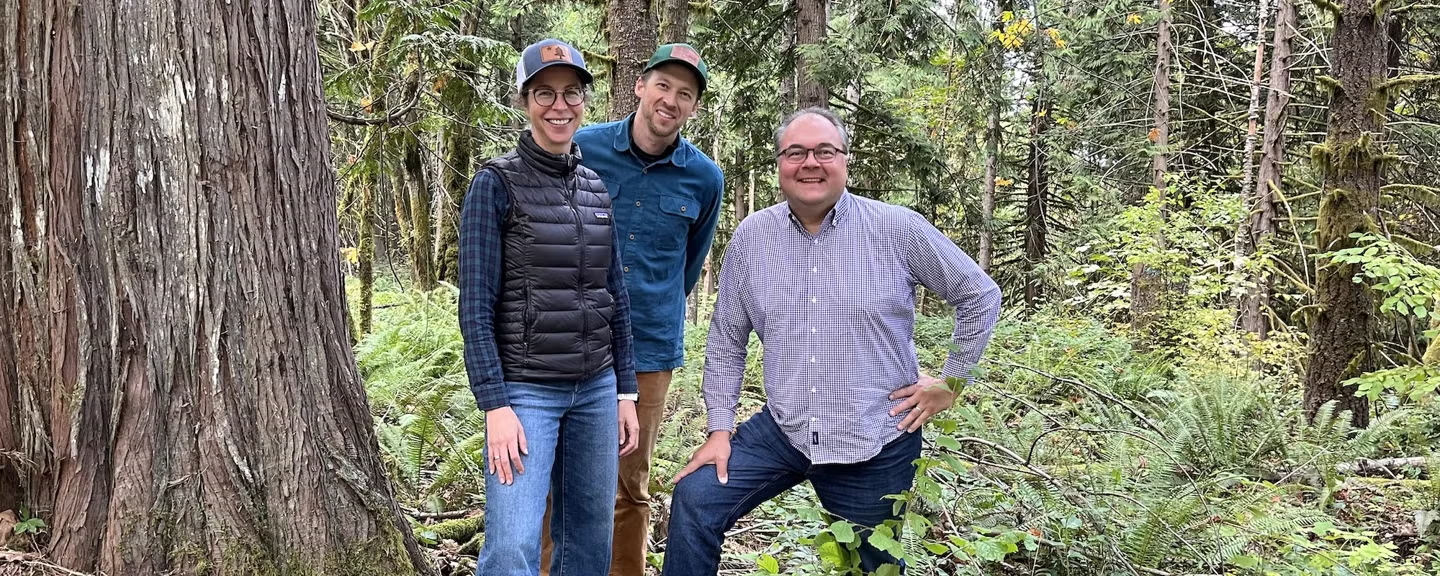
The team already has completed several deals. On California’s rugged north coast, Alder Point has stitched together a patchwork of neglected timber parcels. Roads, logging and years of underinvestment had taken a toll on forest health and salmon streams upstream from Redwood National Park. By pulling those lands into one parcel at Cold Springs Forestlands, Larson says Alder Point can implement sustainable management practices that are good for the forest, for local workers and for investors’ pocketbooks – a recipe, he says, for “impact alpha.”
In Oregon’s Willamette Valley, Alder Point has acquired a blueberry farm to combine regenerative agricultural production with conservation goals aimed at permanently protecting farmland from development pressure.
“In rural communities across the United States, there are lots of opportunities for impact interventions,” Larson tells ImpactAlpha’s David Bank. The opportunities include moving properties from conventional management to ecological, organic and regenerative practices; conservation transactions that permanently protect working lands with biodiversity values enshrined; and deploying renewable energy, electrification solutions and resource efficiency strategies on farmland.
“These impact interventions not only are delivering good from a climate, biodiversity, worker, health and safety perspective, but they’re also driving returns,” says Larson on the latest Agents of Impact podcast. “We feel like that’s a scalable strategy.”
Getting operational
Larson has worked as an operator as well. Early in his career, he headed the Mattole Restoration Council, rehabilitating salmon habitat on California’s Lost Coast.
At New Island, Larson spent nearly a dozen years deploying capital into both direct deals and impact funds across natural capital and sustainability strategies. Larson reviewed managers across sectors and asset classes, assessing everything from conservation finance and regenerative agriculture to climate-tech and real-assets strategies (New Island wound down its activities in 2022).
The experience gave him a broad view of the impact-investing landscape, and convinced him there was room to take a more operational approach to natural assets .
“It was a really unique career opportunity to have visibility into a lot of different strategies in the market. It was an accelerated learning to have such a lens as an LP,” Larson says. “But it can be hard to go deep and develop the specific execution capabilities that you need to ultimately be an effective GP.”
That lesson shaped Alder Point’s investment model. The firm acquires and actively manages working lands that produce food and fiber while integrating regenerative and conservation practices. The sustainable real asset firm seeks commercial, community and environmental outcomes.
The strategy is not a pure conservation play. On the timber side, that means consolidating fragmented forest parcels into ecologically functional landscapes managed for long-term forest health, watershed restoration and sustainable timber production. On the agricultural side, the firm is investing in regenerative organic farming systems designed to improve soil health, reduce inputs and preserve biodiversity.
In Oregon’s Willamette Valley, “We’re going to be able to use that property to both grow regenerative organic blueberries, but also achieve some conservation outcomes in terms of the permanent protection of the farm and the ecological resources on that property,” Larson said. “Give us about five years and we should be in markets all over the country.”
Climate appetite
Despite political backlash against ESG and climate investing in the US, Larson says investor appetite for climate and biodiversity strategies remains strong, particularly among international allocators.
“We’re seeing a pretty sustained interest in climate and nature, despite what’s going on with climate-hushing in the United States,” Larson said. “Hushing” is the practice of downplaying investment strategies or practices that may have fallen out of political favor.
Larson points to growing interest from institutional investors in Europe and Asia, especially Japan, Korea and Singapore, where allocators are increasingly looking to natural-capital strategies as part of broader climate and resilience portfolios. The US offers such investors the kind of scale they are looking for in natural-capital strategies.
“This is one of the few places in the world where you can buy, as a fee-title interest in property, an asset that’s worth $500 million or a billion dollars. It just doesn’t exist in many places,” he says. “There’s a lot to do in the United States around these themes, and I think private capital is well suited to do so.”
Larson says his LP experience sharpened his understanding of how institutional investors evaluate risk, especially around climate exposure. While many nature-based investment managers emphasize carbon sequestration and sustainability upside, Larson believes the industry has often underappreciated the physical risks climate change poses to land assets themselves.
“The downside to our forests and agricultural lands from climate change is significant. Wildfires, drought, the aridification of the western United States – these are all things that are driving crop losses and loss of forest land.”
At Alder Point, climate resilience drives decisions about geography, land selection and operations. The firm evaluates not only which regions may remain productive under future climate conditions, but also how individual properties can be managed to “future-proof” them against more volatile weather patterns.
“These assets are becoming more scarce,” he says. “The number of acres that we’re going to be able to grow corn and soybeans on in the United States, in 2060, are going to be in different locations. There’s going to be fewer of them. And a lot of the choices that we make about how to manage land are going to play into that.”
“We are big believers in managing climate risk and investing in resilience.”
LP = Leadership Potential
Managing assets for a wealthy family gave Larson an appreciation for the human dynamics that overlay spreadsheet analytics.
“I think we see individual leadership within asset allocators and asset owners is a very significant determinant of how effective their strategies are,” he says.
The LP-to-GP journey informs Larson’s advice to younger professionals entering impact investing. The field has matured significantly since he entered it in 2008, he says, making specialization increasingly important.
“When I got into impact investing in 2008, it was so niche that you could be an impact investing generalist,” Larson said. “The space has gotten so big, and the folks involved are so thoughtful, that it really does pay to become more of a specialist.”
He says, for example, that he would be temperamentally ill-suited to venture capital.
“I don’t have the risk appetite for it,” he says. But he says he is happy as an investor in sustainable real assets with the chance to get closer to the land, operations and communities behind the outcomes impact investors increasingly want to finance.
“I am having the most fun of my career doing what I’m currently doing,” he says. “The opportunity to work with a diverse set of investors, to have control over the investment strategy and to be accountable for the results, is a great recipe for really hard work, but also really rewarding and really fun.”
Get the podcast in your feed by subscribing on Apple, Spotify, or YouTube.