A 77-acre site on Atlanta’s riverfront was set to become a rail terminal for fossil fuels. Neighbors opposed it. Environmentalists opposed it. The city of Atlanta opposed it.
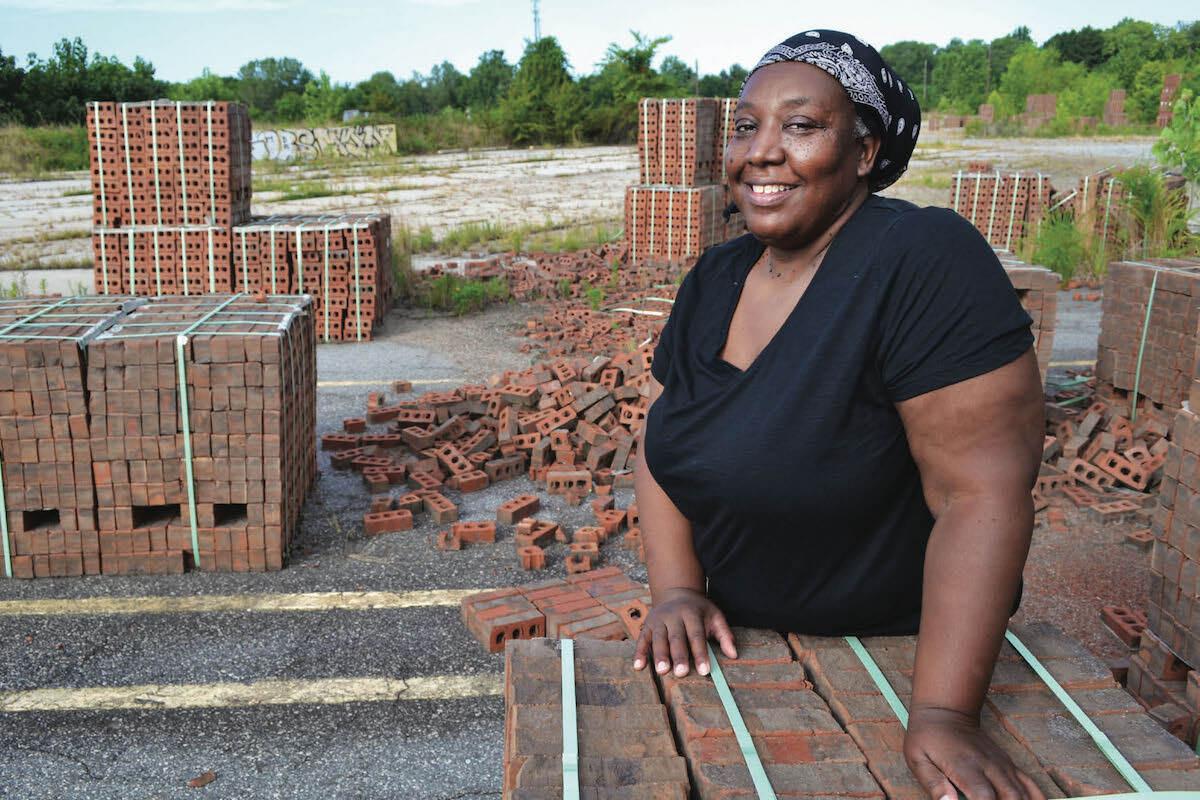
But it was not until a coalition of descendants of workers at the Chattahoochee Brick Company unearthed the hidden history of the site that a $26 million deal could be cut to preserve the site as a city park – and as a memorial to the factory’s workers. Thousands of people, mostly Black men, labored at the plant under horrific conditions in one of the starkest examples of the convict lease labor system that developed following the end of the US Civil War.
After lead removal and other remediation, the site will provide the northwest Atlanta with trails, river access and green space, as well as living history in a city with a rich civil rights tradition. After the 13th Amendment outlawed slavery, many factory owners, aided by local law enforcement and politicians, developed the convict labor system to use petty or baseless offenses to conscript workers against their will. Author Doug Blackmon has called the system “Slavery by Another Name.” The Chattahoochee Brick Company, founded by a former mayor and Confederate officer, deployed convict lease labor from 1878 until the practice was outlawed by the state in 1909.
“It’s one thing to put it in a book or have it as a marker in a museum, but to be able to preserve the site where that happened and tell the story of what actually happened during that era in American history is way more powerful,” says Stacy Funderburke of The Conservation Fund, which cut the 2022 deal to purchase the site and then transfer it to the city.
“I grew up in Georgia. I’ve lived in Atlanta for 25 years. I’ve raised my kids here. I had no idea that this site even existed and I also had no idea about this whole convict lease labor system that was happening and how widespread it was across the South at that time,” he tells ImpactAlpha. “And it was happening right here, in the city of Atlanta.”
As part of this week’s Mission Investors Exchange conference in Atlanta, ImpactAlpha is co-hosting a dinner at the site with the Robert Wood Johnson Foundation, which has supported our coverage of Muni Impact, home ownership preservation and shared prosperity more broadly. The foundation’s Kimberlee Cornett is a member of the board of The Conservation Fund.
“Saving the places that tell America’s full story requires diverse coalitions, blended capital, real estate expertise, and relentless perseverance,” Cornett tells ImpactAlpha.
Hidden history
Over 40 years, the nonprofit Conservation Fund has completed nearly $10 billion in transactions by recycling capital through several revolving funds for urban and wilderness parks and working farms and forests. A $2 million revolving fund for Atlanta, for example, has helped finance $70 million in acquisitions which, along with another $30 million in philanthropic capital, has helped acquire about 1,000 acres, making the fund the main acquisition partner for the city’s parks department. In 2019, Goldman Sachs helped the fund float a 10-year, $150 million green bond to expand its financial base.
“Surprise, surprise – government doesn’t move at the speed of real estate,” Funderburke says. “We are stepping out in front, acquiring those properties and then transferring to them when the public funding comes through.”
The Chattahoochee Brick Company site was in industrial use through about 2010. In 2016, it was purchased by the Lincoln Terminal Company, part of Lincoln Energy Solutions based in Greenville, South Carolina, to transfer oil and gas to Atlanta’s extensive rail network.
“There was a huge outcry against it,” Funderburke said. When the city denied the company’s application for a special-use permit, Lincoln Terminal formed a joint venture with Norfolk Southern railroad, exempting it from the requirement. “I thought the game was up and there wasn’t much that could be done to prevent this.”
That’s when Donna Stephens, a neighborhood leader, got to work. Stephens created the Chattahoochee Brick Company Descendants Coalition and documented the history of the site. The convict lease labor system exploited an exception in the 13th Amendment, which had barred slavery and involuntary servitude, “except as punishment for a convicted crime.” Blackmon’s book, published in 2008, recounted the origins of this “industrial slavery.”
A state law passed in 1866 allowed the state to lease convicts to private industry; the system included payoffs to local officials along the way. The Chattahoochee Brick Factory supplied many of the bricks to rebuild Atlanta after the Civil War, with more than 150 convict laborers, including some children, at any given time. One guard at the brick factory reported two to three hundred whippings per month. Many workers died; some were likely buried on the site.
The publicity forced Lincoln Terminal into negotiations. “I spent almost a year in one on one negotiations with the head of that company,” Funderburke says. “They weren’t going to do it for free. They weren’t going to donate the property.”
Stephens again played a key role. Under a non-disclosure agreement, Funderburke couldn’t discuss the negotiations. “But she said, ‘I trust Stacy, I trust The Conservation Fund, let them do their thing,” he recalls. “And so she helped kind of hold everybody in place.”
In 2022, the fund cut a deal, bringing $22 million to the table along with $4 million from Atlanta-based Kendeda Fund. About six months later, the Conservation Fund transferred the land to the city, which had earlier passed a parks bond measure. The city is also assembling funds to complete the cleanup and design work. The site is expected to open to the public in three to four years.
Revolving funds
The Conservation Fund typically completes 100 to 125 transactions each year. “Our biggest constraint is capital,” says Funderburke, a former corporate securities attorney. “We’re always thinking of new ways to bring different types of capital to the table.”
Foundations seeking to align their endowments with their philanthropic missions are an obvious target, as are donor-advised funds from which clients can make investments as well as grants. The green bond underwritten by Goldman Sachs pays interest at a rate of just under 3.5%.
“It’s not a market-rate return. We have people who give us 0% program-related investments at scale, because they want the outcome. They trust us,” Funderburke says. “They know every dollar is coming back, and the fact that they can roll it again is a way to expand their impact. we have a very proven track record in that our ability to return capital over a 40 year period is unblemished.”
The Conservation Fund is working to acquire other “legacy” sites across the south, including along the route of the 1965 Selma to Montgomery civil rights march. Community activists and historians like Donna Stephens are key to documenting such sites and rallying support.
“They brought those stories forward, and in a kind of miraculous way that ended up saving the day, after all the other legal and regulatory hoops had been lost,” he says. “That actually gave me the leverage to get back in the conversation with the sellers and figure out a deal that would work.”