Merida, Mexico – When Chicago options trader Hans-Christian Lauer built a data-driven model to identify the strongest markets for early-stage venture investing, Latin America ranked top of the list.
Lauer ditched trading options, stood up Zenani Capital and launched a pilot fund to invest in impact ventures across the region. Late last year, Zenani backed BioPlaster Research, a Yucatán-based startup that turns sargassum, the brown seaweed piling up on Caribbean coastlines, into biodegradable packaging materials.
“The level of adaptability and tenacity that founders have in the region is bar none,” Lauer told ImpactAlpha at last week’s Latin American Impact Investing Forum, or FLII, in Mérida, Mexico (video).
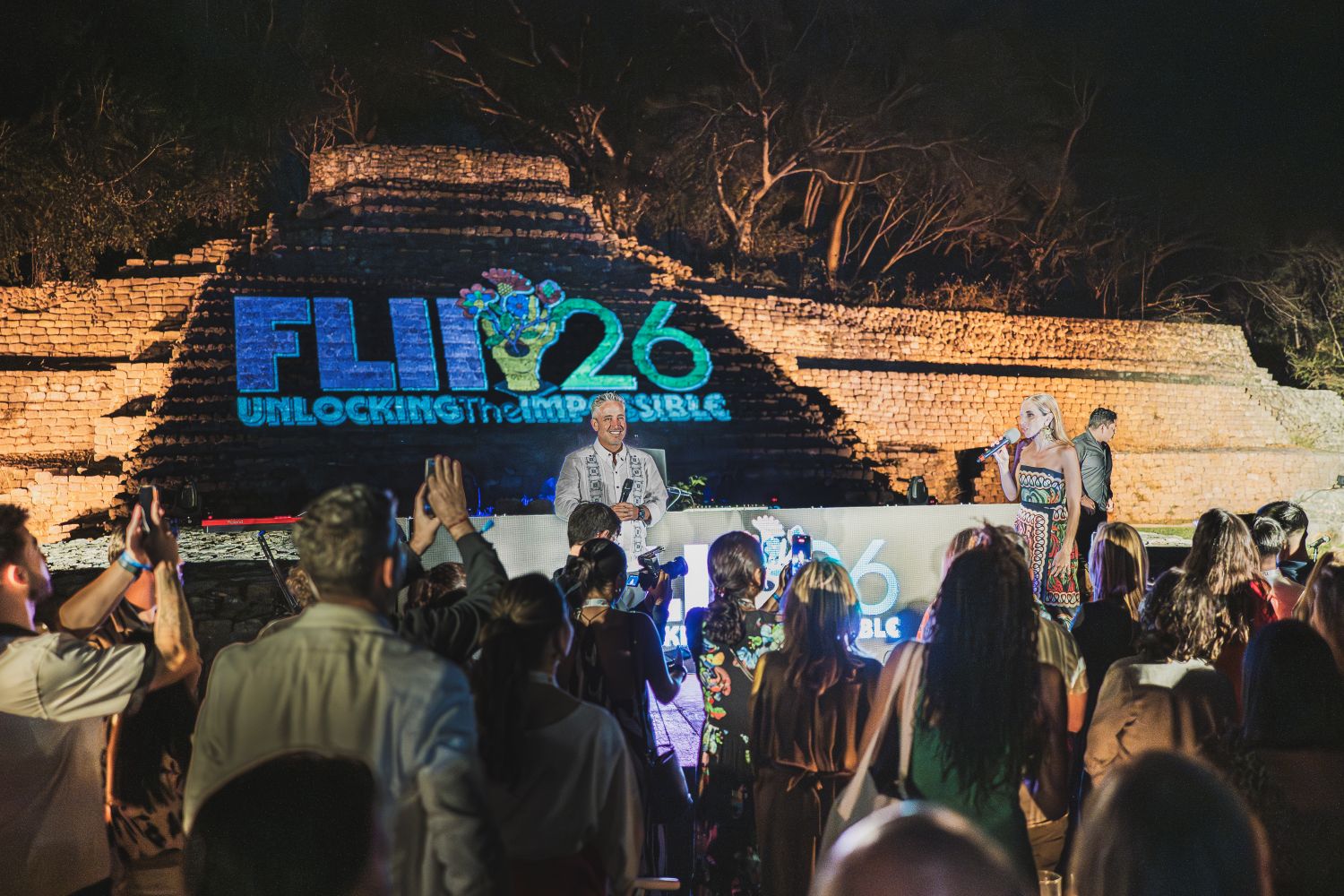
Lauer was among more than 1,000 capital allocators, founders and ecosystem builders that converged on the Yucatán Peninsula, and embodied the forum’s mandate: move more money, more effectively, across the region.
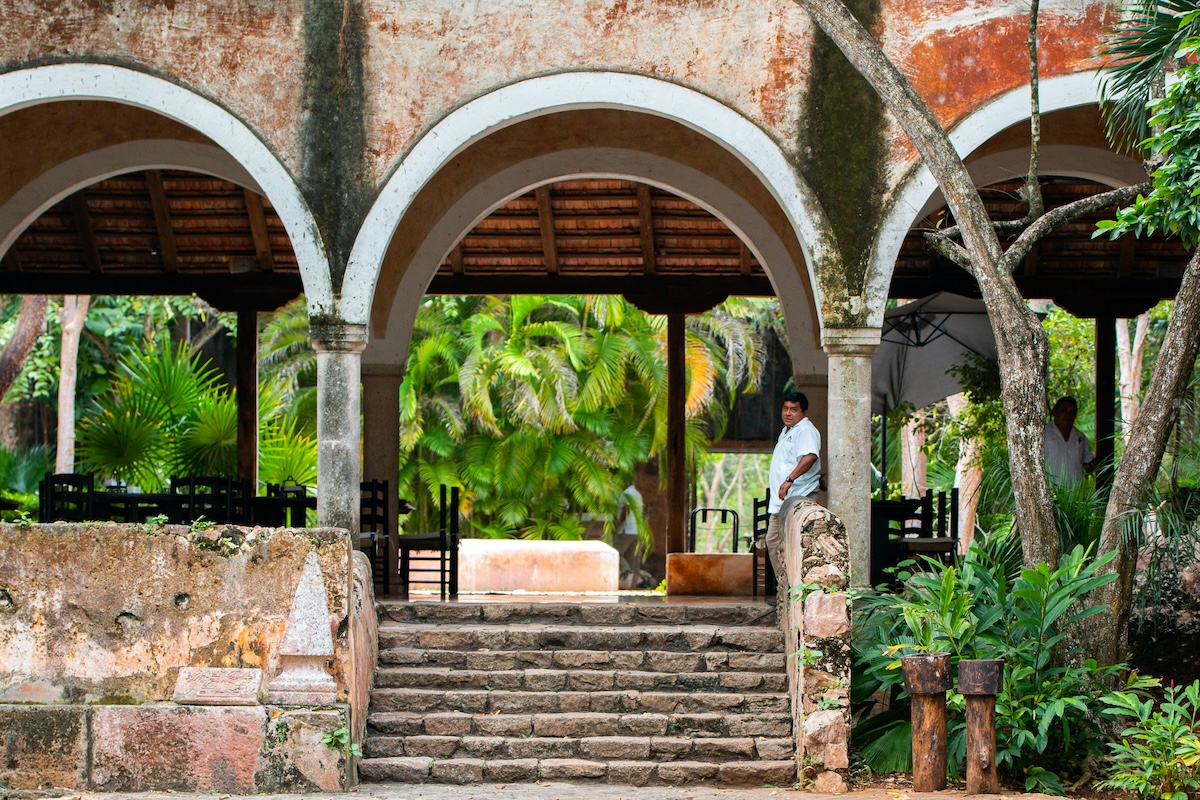
FLII, now in its 16th year, is more than a conference. It’s often where checks like Zenani’s are written. Attendees often prefer one-on-one meetings in the networking lounge or at the haciendas outside the city to to the panels and formal agenda.
“That’s intentional,” Natalia Leon, FLII’s new CEO, tells ImpactAlpha. “We see ourselves as a marketplace where we help participants get to the funding they need, to the person they need, and then, of course, to the impact that they wish to have.”
ImpactAlpha joined the action in Mérida as a FLII media partner – and co-hosted a Brazil-focused LP-GP cocktail event with Aliança pelo Impacto, Toniic and other partners. In the room (er, on the rooftop): IDB Lab, New Ventures, Timke Ventures, The Aspen Institute, Community Investment Management, Mercy Corps Ventures, Meraki Impact, Deetken Impact, Mexico’s Fund of Funds, Trimtab Impact, Confides, Latimpacto, Pro Mujer, UNICEF, and 60 Decibels.
Impact marketplace
In Merida, dealmakers were making (and announcing) deals.
Abundance Circle, a newly launched fund of funds, is deploying catalytic capital into impact funds across Latin America, Asia and Africa. The firm is rolling out an evergreen vehicle with plans to raise $100 million over the next two years. Members of the Buffett family are anchor investors.
“We’re building a permanent bridge between philanthropy and conscious capitalism so every donated dollar can unlock a multiple of private impact capital,” said Luis Javier Castro of Abundance Circle, who is also the founder of the Latin America-focused M&A advisory firm Mesoamerica.
The goal is simple, he adds. “Turn catalytic, first‑loss capital into a system that makes impact the default, not the exception, in emerging markets.”
Sonen Capital, Mexico’s Fondo de Fondos and the Development Bank of Latin America and the Caribbean, or CAF, announced a partnership to catalyze impact capital across Latin America and the Caribbean.
The announcement came the same week Fondo de Fondos received an additional $233 million from the Mexican federal government, ending a prolonged stretch of limited public funding to the program.
On the eve of the conference, the Inter-American Development Bank, in partnership with Colombian bank Banco Davivienda, issued an $80 million social impact bond to improve access to affordable sustainable housing in Colombia.
New Ventures and the IDB Lab launched a fund focused on Latin America’s silver economy (see, Solutions for healthy aging in Latin America’s ‘silver economy’). New Ventures also partnered with Spain’s Ship2B Ventures to launch the New BSocial LatAm Fund, a $60 million vehicle targeting climate and quality-of-life startups across the region, with a focus on Mexico and Colombia. Cooperación Española is the anchor investor.
The Switzerland-based impact investor Blue Earth Capital has raised just over $100 million toward a $300 million target for its first dedicated secondaries vehicle and has already completed one secondary deal in Latin America — and a separate transaction with British International Investment, the UK’s development finance institution.
“The ability to come in and see a seasoned portfolio and give that liquidity back to a DFI — which can then deploy it elsewhere — is a nice way to close some of those gaps and work together across different parts of the capital structure,” Blue Earth Capital’s Clara Sanchez.
Reciprocal, a new impact fund based in Santiago, Chile is investing in bioeconomy startups in the region.
The firm was founded by two Stanford University graduates, and earlier partnered with Bill Gates’ Breakthrough Energy Ventures to publish a 50-plus-page report outlining climate investment opportunities in the region. Co-founder Benjamin Zehr wrote up a much shorter recap of the report for ImpactAlpha that you can find here.
The team has since transitioned from research to capital deployment and is now actively investing through its first pilot fund.
Building ecosystems
For more than a few social entrepreneurs, FLII is where they land that critical first check to launch their ventures.
Marco Mendieta arrived three years ago without a scheduled meeting, and left with a lead investor. The founder of Misión Ecuador, an ecosystem builder based in Quito, connected with IDB Lab at the conference. Misión Ecuador has since raised more than $2 million and supported over 1,300 early-stage entrepreneurs across the country. “It was the fastest negotiation in my life, and I couldn’t believe it,” Mendieta recalls.
Joselyne Rosario, founder of DREX, a commercial solar developer serving medium-sized enterprises, met her target investor Exagon at last year’s FLII. The investment will finance the company’s first project, providing a commercial solar installation for one of Latin America’s largest shrimp producers.
The forum closed with an awards ceremony recognizing the ecosystem’s standout builders and dealmakers.
Anna Vanessa Gonzales of Fomento Social Banamex, the philanthropic arm of Citibanamex, took home the Legend award — a recognition of two decades spent quietly scaffolding Latin America’s impact ecosystem. Gonzales backed FLII in its inaugural year and has sponsored every edition since.
Beyond the forum, she channeled support to Disruptivo, a social impact media platform; Mujeres de Cambio, an accelerator for women founders; and Navegador, an ecosystem-mapping initiative developed in partnership with SVX Mexico. She also played a central role in launching the GSG Mexico chapter, La Alianza por la Inversión de Impacto.
“Her leadership has always been quiet, always at the service of the ecosystem, never centered on ego,” said Laura Ortiz of SVX Mexico and Regenera Ventures. “She consistently handed over the spotlight and the microphone to the causes and entrepreneurs who deserved to be heard.”
Gonzales reflected on two decades of ecosystem building.
“I have come to understand philanthropy not only as an act of generosity, but as a strategic responsibility to transform realities,” she said. “Promoting impact investing in Mexico has meant building bridges between capital and the causes that need it most, planting the opportunities that allow our communities to prosper with dignity and sustainability.”