
It’s been a record year for issuances of municipal bonds, a low-cost source of capital for community infrastructure. Some state and local governments are taking additional steps to ensure the proceeds contribute to health and prosperity for all residents.
Chicago this summer financed the replacement of lead water service lines through a small allocation of the proceeds of $695 million of general obligation bonds. Connecticut’s green bank issued more than $18 million in “climate bonds” to support green infrastructure and climate-resilient businesses in the state.
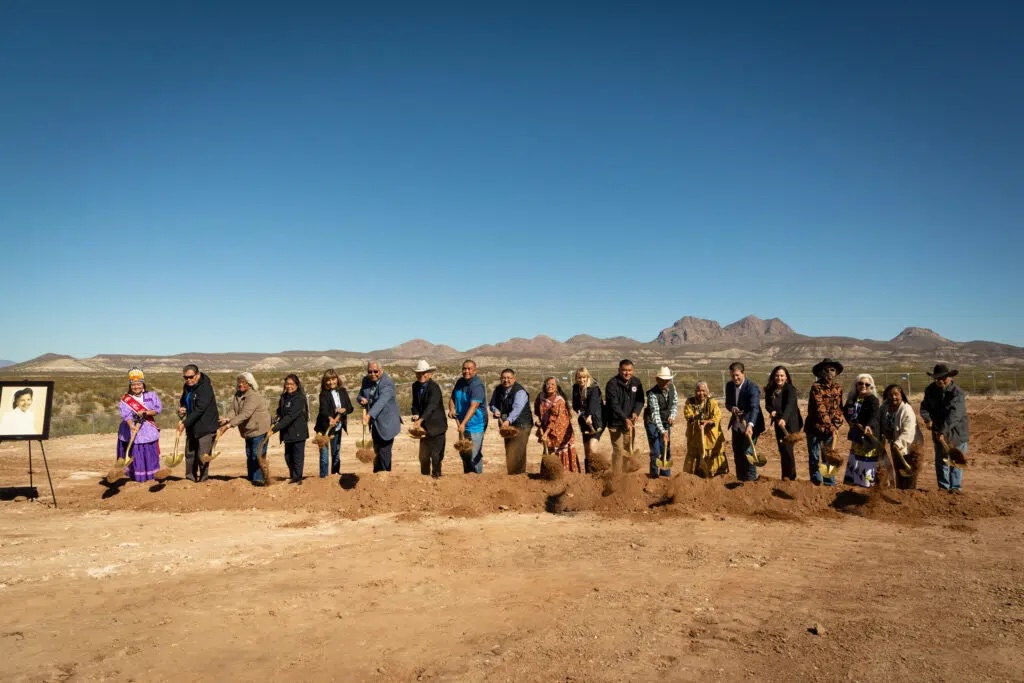
In Arizona, the San Carlos Apache Tribe issued $46.5 million in bonds for its healthcare nonprofit, the San Carlos Apache Healthcare Corp., to finance the construction of a 100-bed long-term care, hospice care and nursing facility on their tribal lands.
“What does it take to have a healthy community? You need to invest in these assets, but invest differently in a way that’s not extractive,” Lourdes Germán of the Public Finance Initiative tells ImpactAlpha.
Germán will join Michael Gaughan of the Vermont Bond Bank, Damon Burns of Finance New Orleans, Eric Glass of Clarion Call Capital and Brian Boland of Delta Fund, this week’s Agents of Impact Call, Wednesday, Dec. 17, at 10am PT / 1pm ET / 6pm London. RSVP here.
Pooling risk
All told, cities and states, along with universities and non-profits have issued more than $500 billion this year in municipal bonds, a record, tapping the public markets for financing for roads, bridges, sewers and school construction.
But many smaller cities and public agencies that serve rural areas have been boxed out of the municipal bond market because of the perceived risk of their smaller tax bases, absence of a track record and lack of a top-tier credit rating.
Germán’s Public Finance Initiative is working with half a dozen state and county-level, rural-serving organizations in Maryland, Vermont, Arizona, Hawaii, Illinois and other states. In Vermont, for example, The Public Finance Initiative is working with the state bond bank to scale its post-disaster lending program in a way that will encourage more risk reduction and resilience.
Bond banks help smaller more rural municipalities overcome deficiencies in scale by aggregating loans and splitting issuance costs across the larger deal size.
“The bottom-line result is a low cost of borrowing for users, which ultimately means lower long-term tax bills in rural and urban areas with a history of underinvestment,” Gaughan of the Vermont Bond Bank wrote with Brookings Metro’s Adie Tomer.
Integrated capital
Germán sees further opportunity to grow municipal access to lower-cost finance by joining public finance and philanthropic dollars.
The Public Finance Initiative’s Rural and Small Cities cohort of a half-dozen entities is testing whether a program-related investment in the form of a guarantee from a philanthropic foundation with a AAA credit rating can provide access to the capital markets on more efficient terms.
Foundations have deployed similar guarantees to help lower borrowing costs for CDFIs and charter schools.
One member of the cohort, the East Maui Water Authority, is working with the Public Finance Initiative to advance community priorities and long-term stewardship goals in a part of Hawaii under severe water stress and increasing climate risk. The authority, created by charter amendment in 2022, is exploring how public finance tools can be integrated with philanthropic investments to “create stepping stones toward greater local control,” the authority’s Gina Young says in a video case study of the project.
Such innovations in municipal finance are attracting the attention of family offices and other investors on the hunt for credible, place-based strategies that channel capital into resilient infrastructure and shared prosperity.
Eric Glass, who previously ran the $1.5 billion municipal bond portfolio at AllianceBernstein, has stood up Clarion Call Capital to direct fixed-income investments “toward municipal infrastructure that delivers real value, without extraction or exploitation,” he says.
Among the investors who have signed on to the strategy is Delta Fund, the family office of Katie and Brian Boland, who will join the Call to offer an LP perspective.
Risk capital will be necessary to stand up some of the new lending programs and standardized financial products, says Damon Burns of Finance New Orleans, the city’s longtime housing finance agency.
Burns has sought to infuse climate resilience across all of its lending. After Hurricane Katrina, many of the agency’s mortgage borrowers saw their homes wiped out, and its $400 million single family mortgage portfolio decreased by 90%.
Finance New Orleans has been rebuilding its mortgage business as a green program, and creating green bond programs for multi-family properties and community infrastructure such as community solar, water treatment projects, and resilience hubs, Burn said on an Agents of Impact Call last year (for background see, “How green banks are blending finance for community infrastructure and greenhouse gas reduction”).
“Our community demands this type of investment right now, so we don’t have time,” he said at the time.
Disclosure: Robert Wood Johnson Foundation, which supports Public Finance Initiative, supports ImpactAlpha’s Muni Impact coverage.