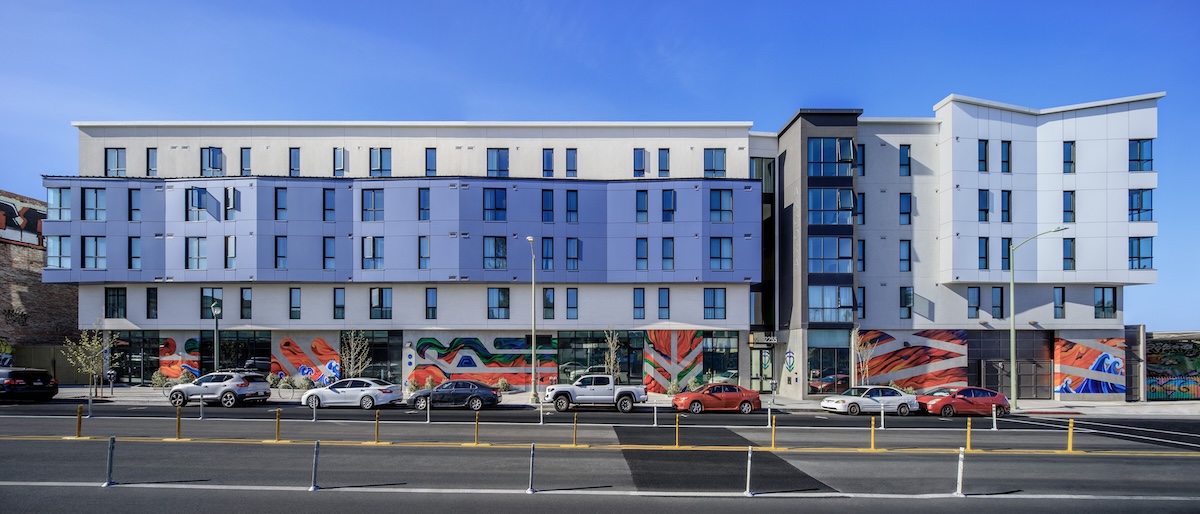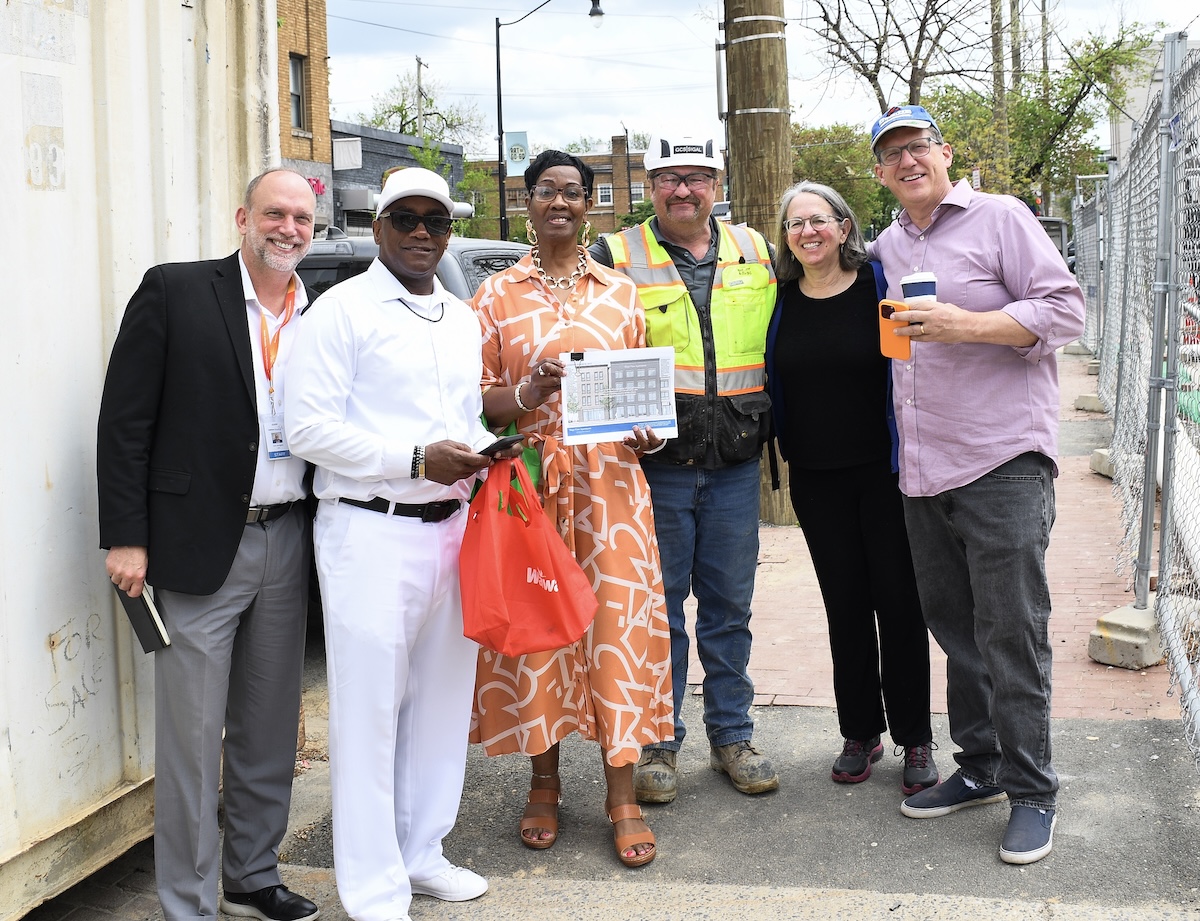
On a sunny spring afternoon in the Anacostia neighborhood of Washington DC, a dozen construction workers are laying the foundation for a four-story building with a ground-floor commercial kitchen for local food businesses and 42 affordable housing units that will mostly go to renters that are formerly homeless and recovering from substance abuse.
The project will be anchored by the DC Recovery Cafe, part of a national network of nonprofits that offer community support for individuals recovering from homelessness, addiction, mental health challenges and other traumas in more than 80 US cities.

When it opens next year, the center plans to tap a novel financing mechanism to support the recovery of about 300 individuals each year: Outcomes-based financing agreements with local Medicaid insurance providers that would support the program as a way of keeping recovering addicts out of emergency rooms and hospital beds.
“Once we get the building open, that’s gonna be the headquarters, but that’s just the starting point,” says Donald Conerly, himself a recovering addict, on a visit to the block where the DC Recovery Cafe building is under construction near a methadone clinic and a service center for women experiencing homelessness.
Conerly and his wife, Jacqueline, developers of the project and founders of the DC Recovery Cafe nonprofit, were among Washingtonian Magazine’s Washingtonians of the Year last year.
He told ImpactAlpha, “The vision that God gave me was to build a community.”

Outcomes-based financing
The mixed-use development has secured $31.5 million in philanthropic grants from foundations, including the William S. Abell Foundation and Margaret Willard Harrington Trust, and federal and state low-income housing tax credits. To reach its $33.2 million goal and finish the project by year’s end, DC Recovery is looking to raise another $1.7 million.
For its first year of operations, the nonprofit is raising $4 million in charitable capital to subsidize programming costs.
Through the outcomes-based agreements, DC Recovery Cafe is looking to build a sustainable stream of revenue over time. DC Recovery Cafe plans to ink outcomes-based financing agreements with local Medicaid insurance providers like AmeriHealth Caritas, AmeriGroup and MedStar Health, which collectively manage roughly $8.8 billion in Medicaid funds on behalf of the District government.
“Because we will save them money, they’re happy to share those savings with DC Recovery Cafe,” says Eric Letsinger, a board member of DC Recovery Cafe and a founder of Quantified Ventures. Quantified Ventures has facilitated billions of dollars in outcomes-based financing agreements for stormwater management in Atlanta, reforestation in Appalachia and soil and water conservation across dozens of states. Its Health Outcomes Fund has developed ways to finance substance use disorder treatment for pregnant and parenting mothers and medical respite for individuals experiencing homelessness.
Medicaid patients account for the second largest share of all hospital readmissions, costing state governments almost $4 billion combined annually. Medicaid enrollment is also on the decline and state governments are requiring more from insurers to win managed care mandates.
Hospital readmissions and emergency room visits are costly for Medicaid insurers, “when that homeless man or woman gets discharged from the hospital and they go right to the emergency room,” Letsinger says.
Letsinger, who is working with Recovery Cafe in his individual capacity, says DC Recovery Cafe is working with AmeriHealth to establish the outcomes-based financing model once the building is complete early next year. The organization will then approach other Medicaid insurance providers.
“Kicking away all the fancy words, we just created new revenue streams,” Letsinger told ImpactAlpha. “In this case with DC Recovery Cafe, it’s the revenue for the ongoing general operating budget.”

He says the reduction of avoidable costs for Medicaid insurers aligns with the cost-cutting goals of the Trump administration. Blocks away from Anacostia, Congress is getting ready to vote on the president’s “big, beautiful bill,” which includes deep cuts to Medicaid spending.
“As the ‘big, beautiful bill’ decimates federal funding for our social safety net programs like Medicaid, now is the time for taking giant steps forward with outcomes-based financing,” Letsinger says.
Community support
East of the city’s Anacostia River, Marion Berry Ave. runs through a predominantly Black and low-income community that in the late 1800s was home to thriving Black businesses, churches and civil rights leaders, including Frederick Douglass.
Ward 8, DC’s poorest district, also has some of the city’s highest rates of homelessness, incarceration, and drug trade.
“This is really important to us because this is the community where I’m from,” says Jacqueline, a veteran with over 20 years of service in the US Marine Corps. After leaving the Marines, she spent five years working at the US Department of State. She currently volunteers as a chaplain at the DC Central Detention Facility.
“This is the community where Donald’s addiction dropped him off. It was really important for us to do this in our community because it’s so desperately needed.”

The Conerlys’ journey started with Donald in 2008, when he was released from jail after more than 35 years in-and-out of prison.
“I first went to prison down in Baton Rouge, Louisiana with a drug addiction. Then I went to Atlanta trying to run from my addiction, and then came here to DC in 1999 and never left,” Donald recalls. “Here in DC, I was getting high on the streets, hanging out. I had all the drug dealers coming to me.”
The last time Donald went to jail, he had a revelation of what he could accomplish if he focused on his spiritual growth, rather than his addiction.
“I started a routine getting up at three in the morning, praying,” Donald says, “And I started putting the time in and helping other guys who were in there for murder, and they’d come to me asking, ‘How can I get myself together?”
By the time he was released, Donald had found a calling to help “men of God” who had lost their way with their physical, mental and spiritual health and wellbeing to find it again. He created a bible study crew at the Bethlehem Baptist Church, right across the Anacostia train station, with men who were also being released and had nowhere to go. The bible study sessions focused on substance use recovery, healing traumas and mental health.
At the time, Donald was living at a local Southeast DC homeless shelter called 801 East Men’s Shelter. Outside of bible study, he would bring the men from the shelter to Jubilee Jobs, a nonprofit workforce development organization that provides job placement and workforce development services to low-income DC residents. Jacqueline was Jubilee Jobs’ deputy director, who expanded the couple’s ministry with a focus on women.
The couple got their training from Recovery Cafe in Seattle in 2018. In DC, Jacqueline and Donald created returning resident support groups, called Recovery Circles, for men and women who were within 90 days of being released from DC jail.
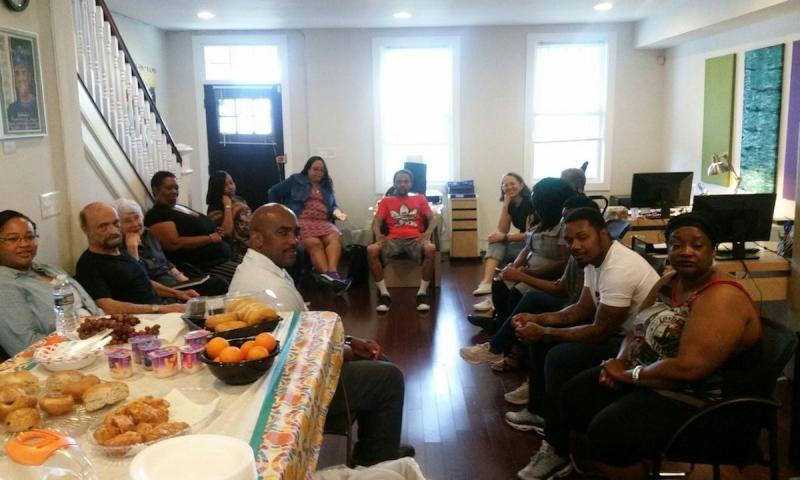
“We were connecting with them so that once they got out of jail, they’d have community support,” Jacquline says.
The Recovery Circles currently have more than 60 members, and growing, who have participated in thousands of hours of recovery support sessions. The Conerlys say all of them report that the sessions have helped avoid relapse.
Collaborative model
There are significant health disparities between Ward 8 in DC’s Southeast and the whiter and more affluent neighborhoods across the Anacostia River in DC’s Northwest. The gap in average life expectancy between the two parts of the city is more than 20 years.
Through Jacqueline, Conerly met Jim Knight of Jubilee Housing, an affordable housing development nonprofit, part of the network of DC’s Jubilee organizations, and Kim Montroll of Recovery Cafe Network, who has also worked with Jubilee Housing.
Montroll and Knight helped to bring in the Anacostia Economic Development Corp., or AEDC, as co-developer of the project. As the tax credits expire in 15 years, DC Recovery Cafe will become the full owner of the project. Montroll and Knight also helped the Conerly’s raise $2.5 million to buy the lot where the project is being built, and brought in Letsinger as well. All are residents of DC Northwest neighborhoods.
“We know that so much of the result of years of discrimination and unevenness — the pain is more obvious in this community,” says Knight.
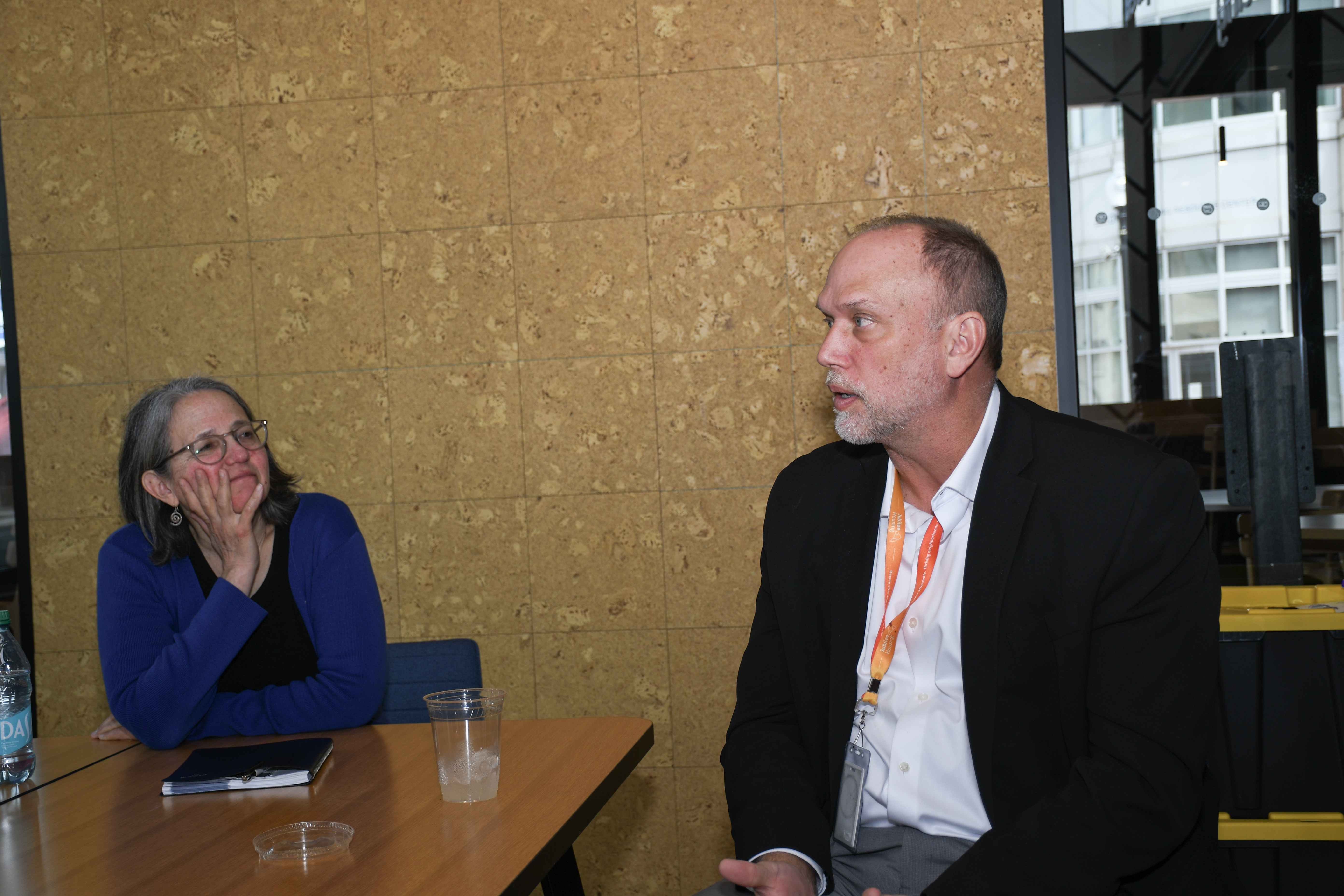
Beyond the innovative financing, the Recovery Cafe project is a model for how community leaders trusted by their neighbors can tap expertise and networks outside the community to drive place-based impact in overlooked communities.
“The power of this model is that everyone’s recovering from something, and traumas and effects of trauma impact people in many different ways,” says Montroll. She says she appreciates being part of a project that moves beyond the idea, ‘If only they would get themselves together…’
“That’s a narrative that is too common,” she says. “DC Recovery Cafe is a change in that.”