
Bees, among the planet’s most crucial pollinators, are dying at an alarming rate. Major food crops, including avocados, peaches, nuts, seeds, melons, cucumbers and many more, rely on bee pollination. Climate-induced extreme weather and monoculture-driven threats such as pesticides and pathogens are destroying their hives.
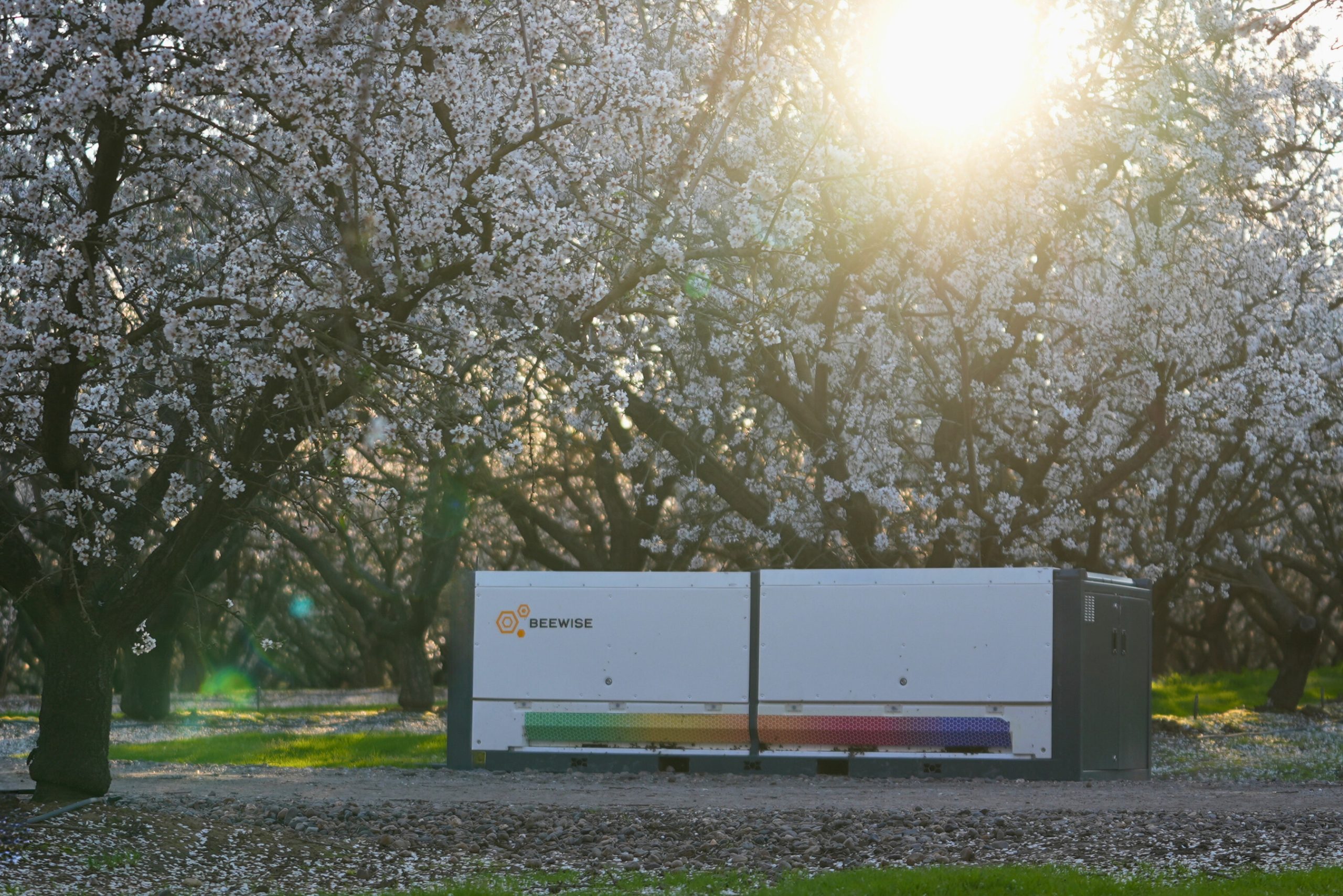
San Ramon, Calif.-based Beewise has built BeeHome, a solar-powered beehive that uses robotics and machine learning to help beekeepers and growers monitor and protect bees in real time. BeeHome reduces bee mortality by 80% and increases yields by at least 50%, Beewise says, while eliminating 90% of manual labor when compared to traditional beehives.
Beewise’s Saar Safra said the Series D financing validates the company’s use of AI “to tackle one of humanity’s most pressing issues: declined pollination to the global collapse of bee colonies.”
Climate adaptation
Beewise has dispatched 1,240 BeeHomes since 2018 to provide pollination for hundreds of growers. Clients include Nuveen Natural Capital (part of TIAA Investments), Agriland and Olam Food Ingredients. Beewise’s latest model of its modular beehive includes a heat chamber that destroys varroa mites, a parasite that feeds on honey bees, without exposing bees to harmful chemicals.
“What Saar and the Beewise team are building has global implications for the environment, food chain, and so much more,” said Daniel Aronovitz of Insight Partners, which backed Beewise’s round with Fortissimo Capital, APG Asset Management, Badiya Capital and other investors. BeeWise raised $80 million in its Series C round in 2022.