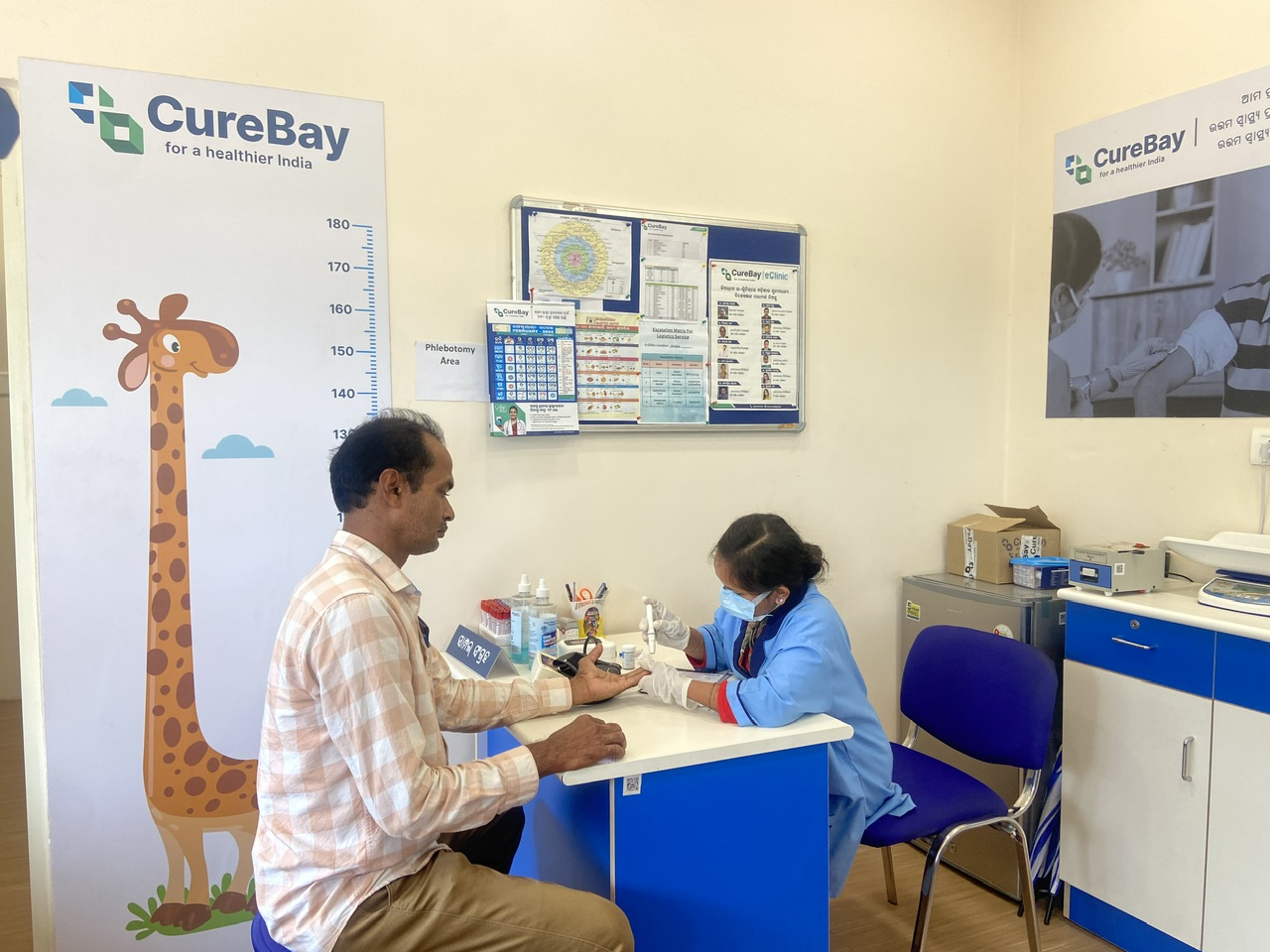
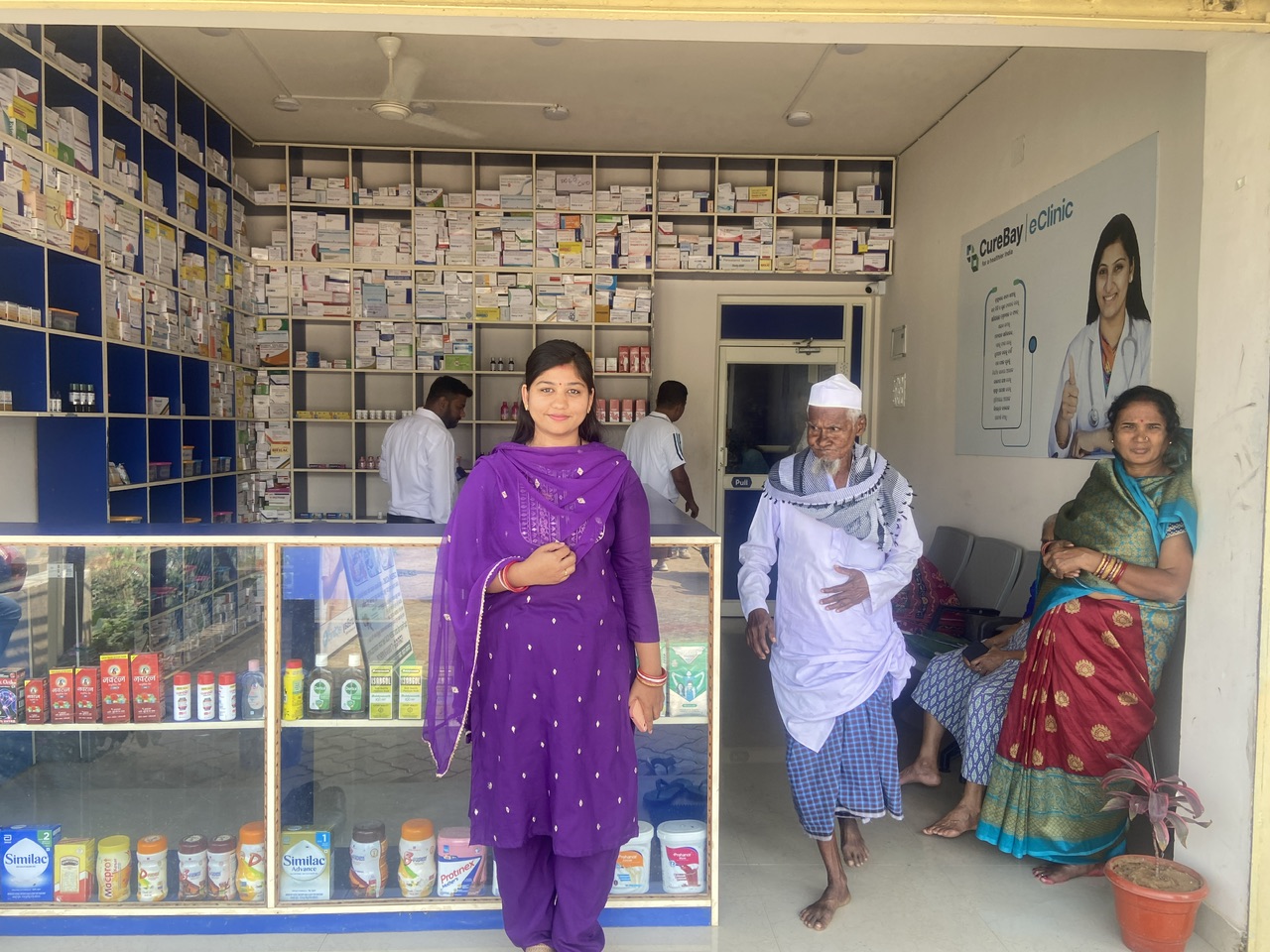
On a recent Thursday, Hasina bibi sat on a bench along with other patients, waiting to meet a doctor in a clinic run by healthtech startup CureBay. The doctor would meet with her virtually on a TV screen while sitting miles away.
Hasina, who didn’t share her last name, said she had traveled about 30 minutes from her village to reach CureBay’s clinic in India’s eastern state of Odisha. The journey to CureBay was better than going to the nearest city clinic, she said. “This is a good facility.”
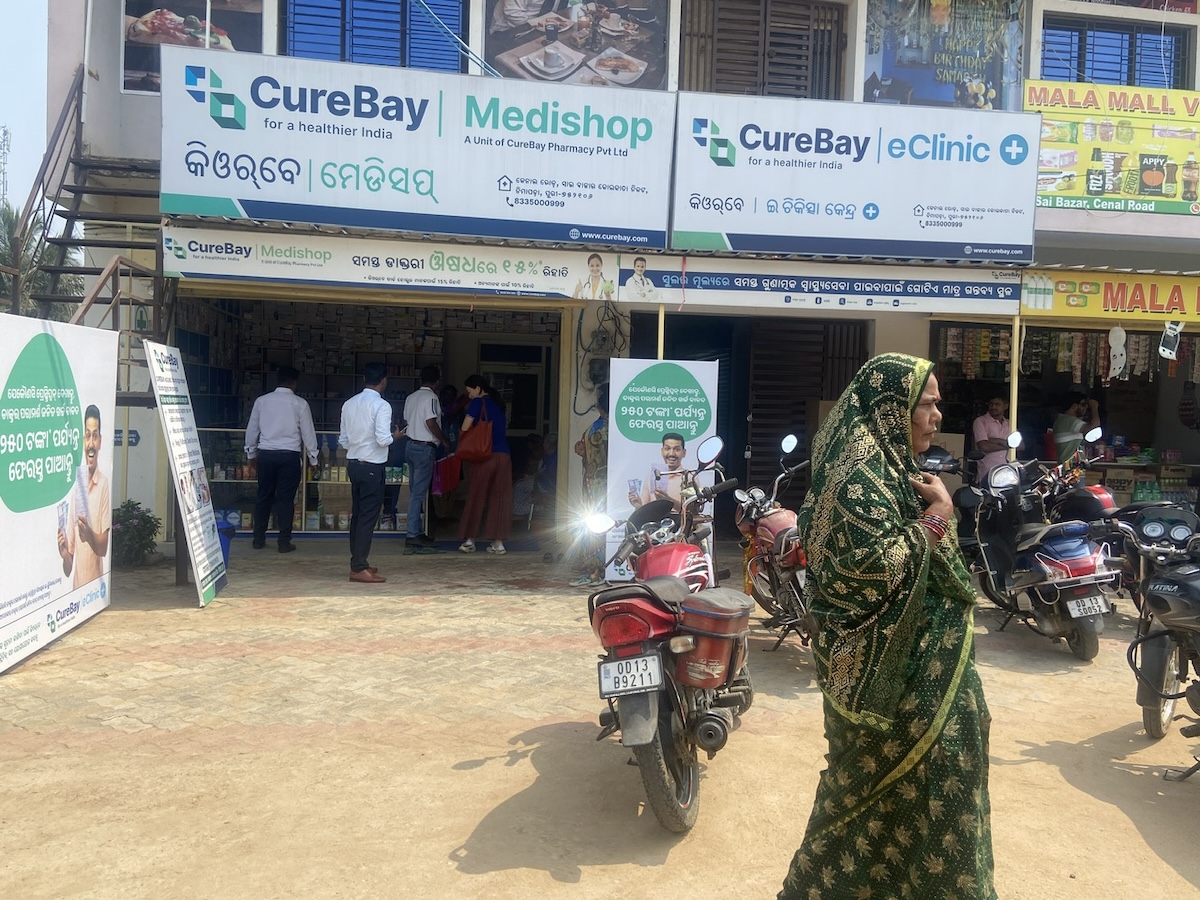
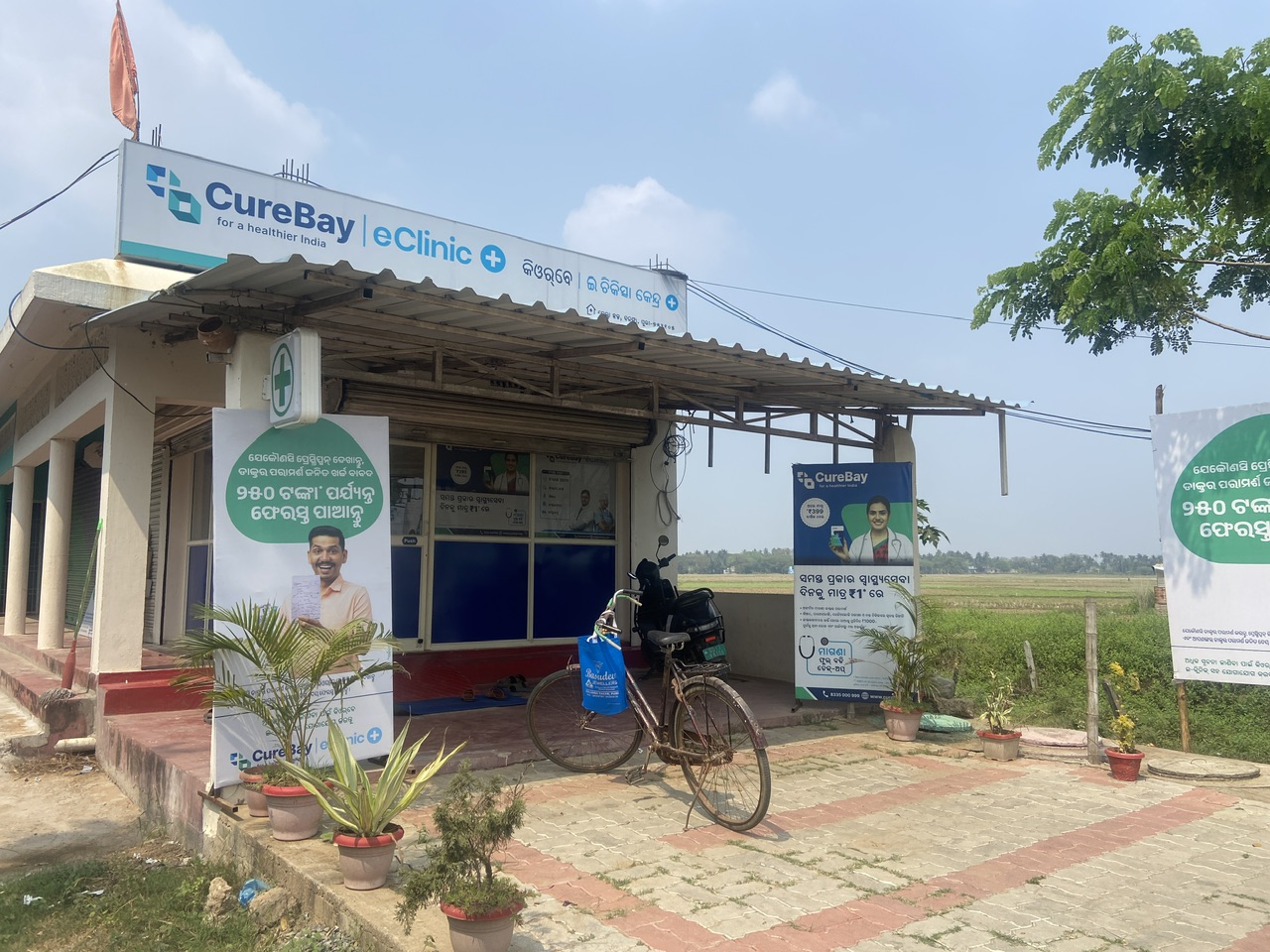
CureBay is out to prove that for thousands of villagers like Hasina bibi, virtual health clinics provide essential, accessible and quality healthcare, and that such care can not only be delivered cost-effectively, it can be profitable. The four-year-old company operates 150 clinics in Odisha and Chhattisgarh, each of which serves patients within a six-mile radius. Most break even in 18 to 20 months.
“People in rural India are underserved, they are not underprivileged,” says CureBay co-founder Priyadarshi Mohapatra.
India’s rural households spend about $45 billion annually on healthcare, not including expenditure on travel to cities for medical needs, according to data from Elevar Equity, a CureBay investor. Its affiliate, EPIC World, released new research finding that most rural households have to travel more than an hour to see a health specialist, and nearly 80% would be willing to pay more to access better care locally.
“The rural healthcare market in India presents a significant and largely untapped investment opportunity,” says Jyotsna Krishnan of Elevar and EPIC World.
Trials of telemedicine
Though two-thirds of India’s 1.4 billion-population lives in rural areas, there is a shortage of medical staff and weak healthcare facilities to serve them. Service in India’s large network of government-run primary and community rural healthcare centers can be unreliable; medical workers sometimes don’t show up to work.
Villagers often face the choice of traveling long distances to a nearby town or city to get professional medical advice, which means a loss of daily wages, or turning to informal “doctors” in their neighborhoods.
For years, telemedicine has attempted to extend the research of city specialists into remote areas, but efforts have had limited success. Most of India’s heavily-funded healthcare startups instead cater to a tech-savvy urban population.
In April 2020, in the wake of the Covid-19 pandemic, India’s government launched eSanjeevani, a free national telemedicine service. The program has faced difficulties, however, including a shortage of doctors and poor network connectivity.
The telemedicine model also fails to address “what happens after a consultation,” says Krishnan. “How does a patient access medicines or diagnostic services?” Unlike the cities, these are not easily available in rural India.
For its model, CureBay uses a mix of technology, remote medical experts, and physical staff that assists with the use of technology for the unfamiliar. Its clinics employ trained staff who can draw blood and take other samples that a doctor may require for a diagnosis. Many of the clinics also have pharmacies.
The startup has a network of delivery drivers that collect the samples and take them to pathology labs in nearby towns or cities with whom CureBay has partnerships.
Its revenues come from patient fees for doctor consults and lab tests, and sales from its pharmacies.
To spread the word about its services, CureBay has recruited a network of swasthya mitras, literally “health friends”, who are from the local communities where CureBay works and help the company build local trust.
One, Kaberi Rath, is a 28-year-old math teacher in a village near the town of Nimapada in Odisha. She teaches in the morning, and in the afternoon, drives her two-wheeler to nearby villages, dropping by people’s homes and asking after their health and that of their family members. If needed, she can book an online consultation or diagnostic test via the CureBay app. CureBay pays her a commission for her work.
“We feel good when we help people,” Rath told ImpactAlpha.
Rural mindset
Failure to understand and adapt to the rural psyche has been one of the biggest obstacles to telemedicine’s success, says Shubhang Tandon of Online Chikitsa Mitra, a virtual healthcare provider based in Lucknow in the mostly rural state of Uttar Pradesh.
Tandon knows because he learned the hard way. In 2016, he opened four health centers in Uttar Pradesh. They were staffed with a trained nurse who would record patients’ vital signs, like blood pressure and temperature, and facilitate a consultation with a doctor via a TV. But Online Chikitsa Mitra received few patients. Villagers preferred instead to go to the neighborhood informal doctor or their local pharmacy, whose owners they knew and where they could chit-chat about family members’ health issues and even get medicines on credit.
“They have a very tightly knit community,” says Tandon.
In 2019, he changed up the business model. Instead of operating its own centers, the company trains local pharmacy store-owners to take vitals and facilitate consultations with doctors on OCM’s platform via any device, including mobile phones. The store owners pay OCM a one-time setup cost and an annual fee to access the doctor network.
In turn, the pharmacies often see an increase in medicine sales, says Smriti Tandon, Shubhang’s sister Smriti who also works at the startup.
OCM now has 565 pharmacies enrolled on its network, half of them in Uttar Pradesh. It also works with four pathology labs that do diagnostic tests in Uttar Pradesh, and is looking to build a network of drivers who will go to the villages to collect samples.
“We’ll always be considered an outsider,” she says, but by working with local pharmacy owners, the company has been able to win the trust of locals.
Health concierge
CureBay is betting that its model can help rural India be more proactive about its health needs. Because of the challenges most households face in accessing care, many only consult a doctor only when their condition is acute, says Mohapatra. CureBay launched a membership program for as little as 399 rupees ($4.80) a year, which allows for unlimited consultations and discounted rates for tests and medicines.
“Sixty percent of them are coming back to us for renewal,” says Mohapatra.
When surgery or major tests like CT scans are needed, CureBay helps patients navigate getting to a hospital. It provides advice on which hospital to go to, which doctor to consult and when. Mohapatra says this is a “concierge” service for which patients don’t pay anything; instead, CureBay earns a referral fee from the hospital. The patients’ care is typically covered under government health schemes.
Last year CureBay raised around $7.5 million from investors, including Elevar, to support its growth, and it’s now close to completing another round of funding, Mohapatra tells ImpactAlpha, though he declined to comment on how much. The capital will help the company expand its clinic network beyond Odisha and Chhattisgarh, he says. “The opportunity is massive.”