President Trump wants the US to get a piece of action in TikTok. And bitcoin.
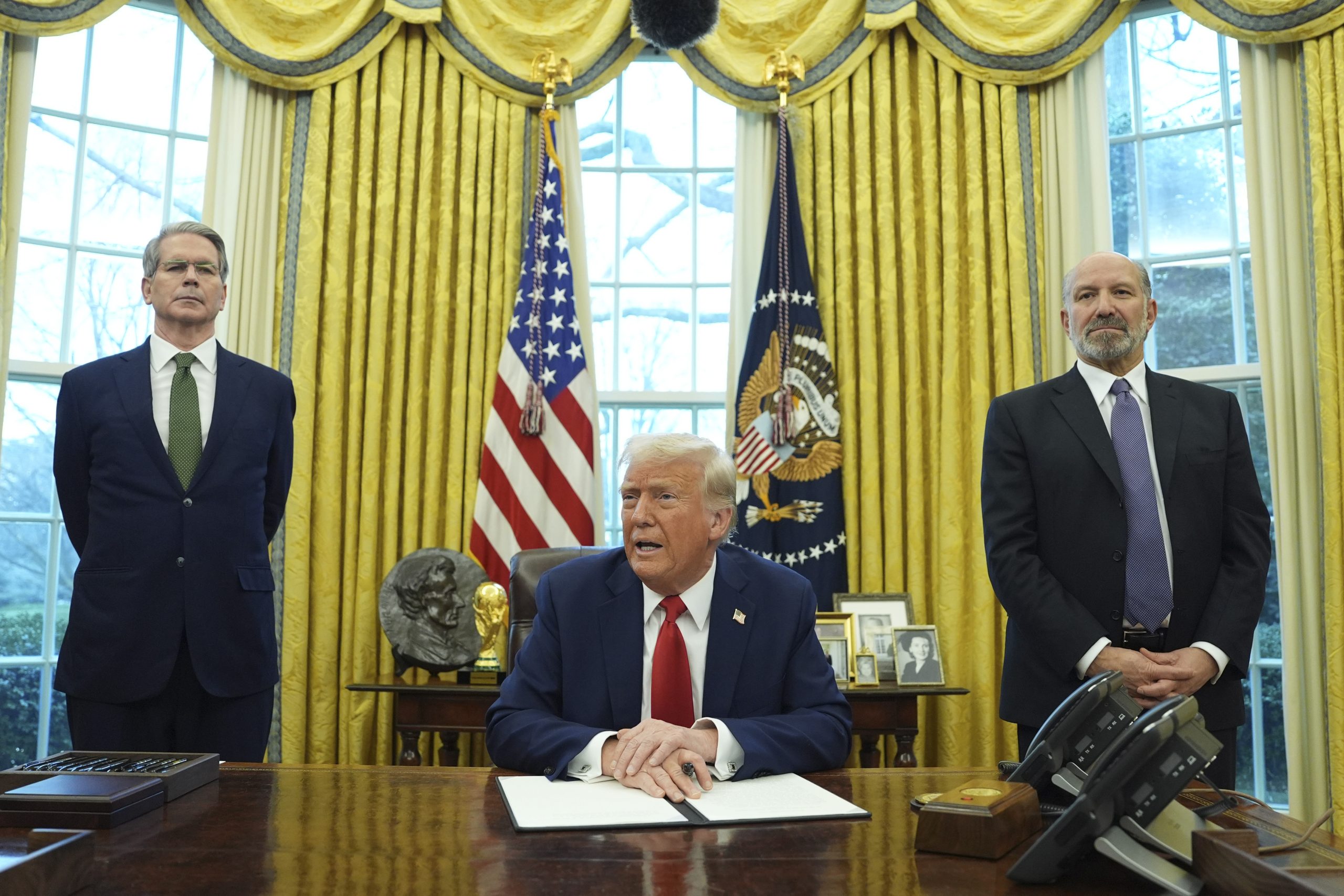
In signing an executive order Monday calling for a sovereign wealth fund, Trump mused that the first deal could be for Tik Tok, the Chinese-owned social media powerhouse. Such a fund could also provide a vehicle to create a national stockpile of bitcoin, as Trump has suggested.
The idea of a state-run fund that could invest, for profit, in line with national priorities, has some intrinsic appeal. The US, through its research labs and funding, has helped develop key technologies from the internet to genomics. Why shouldn’t it make a return?
“We are going to monetize the asset side of the US balance sheet for the American people,” Treasury Secretary Scott Bessent declared at the signing.
Roy Swan of the Ford Foundation wrote in a recent column, “The potential to strategically align government funding with long-term national interests can drive broad-based economic progress, benefiting the nation and building domestic wealth.”
Swan foresees an American sovereign wealth fund supporting capital investments in quality jobs, affordable housing development, overlooked geographies like Appalachia, and the relocation of supply chains to geographies like sub-Saharan Africa, “all while expanding our economy, increasing the resilience of our supply chains and strengthening our national security.”
A government purchase of TikTok would be a horse of a different color, giving Trump and his billionaire tech pals control of nearly every major social media platform used by Americans. Such possibilities highlight the potential for abuse of sovereign wealth funds more broadly.
“These state-owned and government-controlled funds are also highly susceptible to corruption, including embezzlement, fraud, and political exploitation,” the Anti-Corruption Data Collective reported last year. “At the heart of the problem is a profound lack of transparency and accountability, which severely restricts access to reliable, comprehensive data.”
Profitable investments
Investments by the government are not new, but Trump is not supportive of all of them. The White House has frozen loan disbursements from a successful Energy Department program that has generated profits for Americans. In total, the Loan Programs Office has made some $69 billion in low-cost loans and guarantees, often conditioned upon meeting financial and technical milestones, to help startups commercialize and scale innovative technology and de-risk deals for private investors. Back in 2010, Tesla received a $465 million loan from the Energy Department program to build its first factory in Fremont, Calif.
The Small Business Investment Company program, or SBIC, provides venture capital and private equity to early stage and growth businesses. When the US International Development Finance Corp. was created in the first Trump administration, it gained the ability to make equity as well as debt investments. Some have suggested that the DFC could manage the proposed sovereign wealth fund.
Dozens of countries from Norway to Saudi Arabia have such funds, which manage a total of more than $12 trillion in assets. Most of those funds have budget surpluses, often from oil sales. In contrast, the U.S. deficit in fiscal year 2024 was $1.8 trillion.
Stiffing partners
While the Trump administration was considering new investments, it was reneging on old ones. The shuttering – temporarily or permanently – of the $43 billion US Agency for International Development, or USAID, has thrown hundreds of organizations and their workers into chaos.
Chemonics, a Washington, DC-based international development company that has received $4.5 billion from 2013 through 2022, said it has furloughed employees and reduced other costs in the wake of the funding freeze. Chemonics had been selected to manage the USAID Climate Finance for Development Accelerator, a $250 million initiative designed to mobilize $2.5 billion in public and private climate investments by 2030.
Other top USAID contractors include the nonprofit Catholic Relief Service, the privately held development company DAI, and the nonprofit Mercy Corps. Most such companies operate on a “cost-reimbursable” basis, meaning they must front their own funds and wait to be repaid by USAID.
They may have a long wait. On Monday, Elon Musk declared USAID was “beyond repair” and would be shut down this week. Musk’s DOGE staffers took control of USAID systems, including classified information.
The dismantling of government agencies has only begun. The new administration has halted activity at the Consumer Financial Protection Bureau, set up in the wake of the Great Financial Crisis to protect against deceptive mortgage-lending and other abuses. The administration is also eliminating jobs at the EPA and is mulling ways to dismantle the Department of Education.
And that doesn’t include the accelerating purges at the Department of Justice and the FBI.