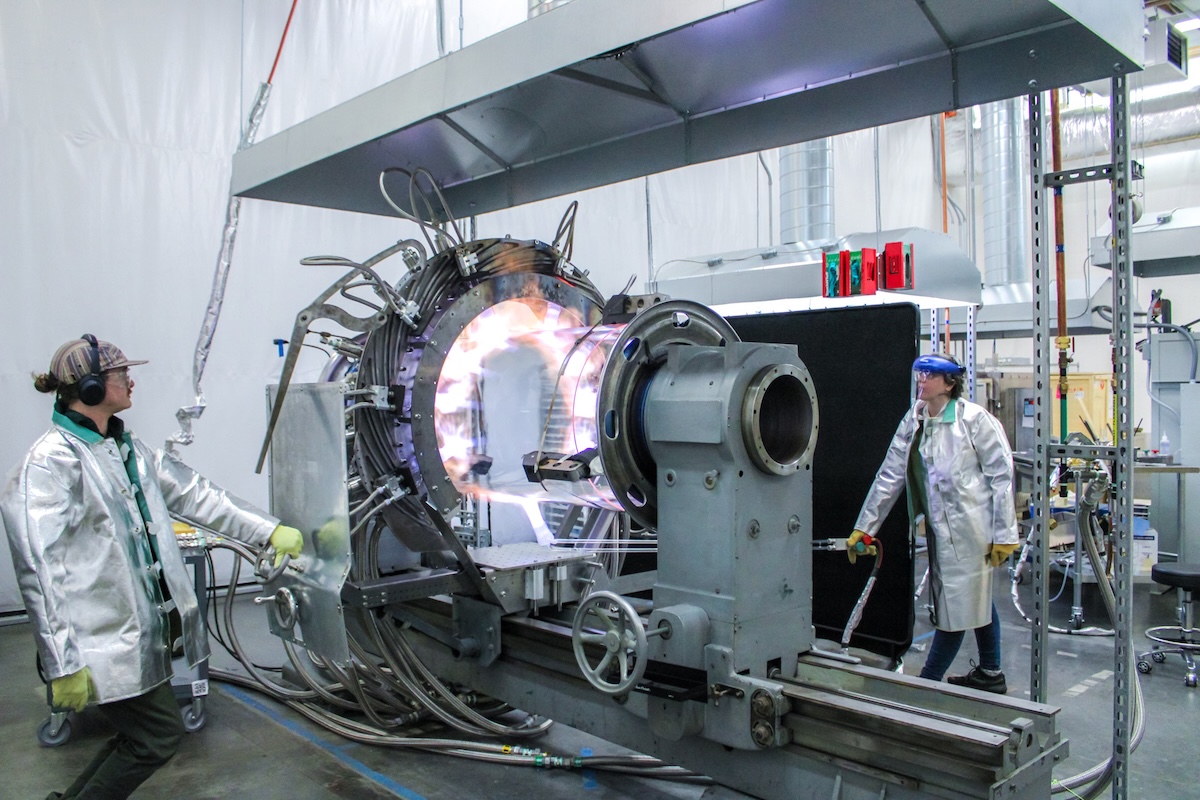
Everett, Wash.-based Helion Energy has raised over $1 billion since 2013 from deep-pocketed investors, led by OpenAI’s Sam Altman, as it seeks to commercialize fusion energy. It is racing other well-funded fusion hopefuls, such as Pacific Fusion, Zap Energy and Commonwealth Fusion, to unlock the cheap, abundant and zero-carbon energy source.
Helion has signed an offtake agreement with Microsoft with the ambitious target of delivering grid-connected fusion power by 2028, with penalties for missing the target. Helion has an agreement with Charlotte-based steel producer Nucor Corp. to supply energy for steel manufacturing facilities in the US.
“We are on the brink of delivering a transformative energy solution that can meet the world’s increasing electricity demands while preserving US energy leadership,” said Helion’s David Kirtley.
Heating up
The Series F funding round, about $75 million less than its 2021 Series E, will sustain Helion as it begins its seventh fusion prototype, Polaris. The company’s previous prototype, Trenta, achieved plasma temperatures of 100 million degrees Celsius, meeting the required operating temperature threshold for a commercial fusion power plant. The new round brings Helion’s post-money valuation to $5.4 billion.
Political support
Recent breakthroughs belie the significant engineering and technical hurdles that remain before commercial fusion becomes a reality. The Biden administration supported fusion development through tax credits and grants, including $107 million for six projects announced just days before Trump took office. Fusion enjoys bipartisan support.
“After extensive due diligence, we’re very confident in Helion’s technology and leadership as the company moves from research and development into commercial production,” said Ravi Mhatre of Lightspeed Venture Partners, a new investor in Helion, alongside SoftBank Vision Fund 2 and a major university endowment. Existing backers re-upped, including Altman, Nucor and Capricorn Investment Group.