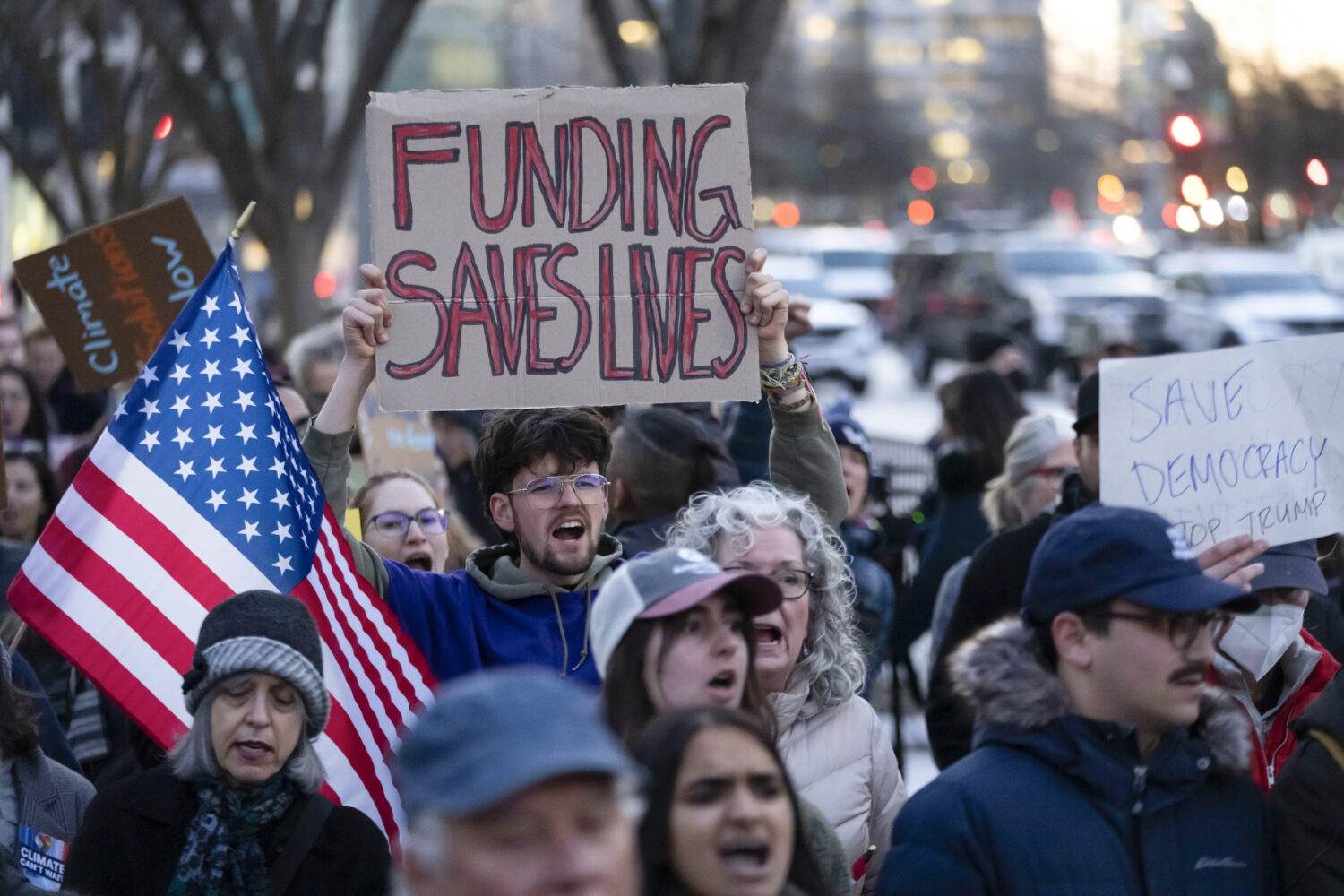
The COVID shutdown and Silicon Valley Bank meltdown were practice missions for emergency relief. President Trump’s federal funding freeze could be The Big One – and perhaps too big for many mission-driven organizations.
As confusion reigned Tuesday, philanthropic and impact-focused funders mobilized to build bridges for social enterprises facing cancelled programs, funding shortfalls and inevitable layoffs.
A federal judge halted, at least until next week, parts of the Trump administration’s sweeping federal funding freeze just before it was set to take effect. An earlier stop-work order for overseas projects funded by the US Agency for International Development had already threatened to disrupt refugee relief, AIDS treatment and clean water programs and anti-trafficking efforts, among many other projects.
“We exist to ‘unstick’ capital and capital is very certainly getting stuck and risking billions of dollars of foreign aid,” Open Road’s Caroline Bressan wrote on LinkedIn. “While we cannot hope to cover all of the projects at risk, we are looking to organize additional funding that can either bridge to new funding or other anticipated revenues.”
Bressan said Open Road has been fielding inquiries from enterprises restoring mangroves, working with smallholder farmers and waste recyclers in emerging markets that were expecting USAID grants.
The nonprofit lender can only make loans to enterprises that have a clear line of sight to repayment. To support the countless organizations who might not meet that benchmark, Bressan has been organizing a coalition of philanthropic funders who can make zero-interest recoverable grants.
“The enormity of the problem is a bit overwhelming,” Bressan told ImpactAlpha. “Funders want to do something.” She said she is in discussions with at least 10 philanthropic organizations looking to mobilize capital. “If we can get these funds pooled and a structure set up this week, hopefully we could start identifying criteria and moving money from there.”
Impoundment challenge
The message from the Office of Management and Budget landed with thud, pausing all activities that could run afoul of Trump’s executive orders, “including, but not limited to, financial assistance for foreign aid, nongovernmental organizations, DEI, woke gender ideology, and the green new deal.”
Humanitarian aid organizations were asked by USAID to send “written certification that no DEIA related activities are being implemented under your award.” The Trump administration’s assault on diversity, equity and inclusion (and accessibility) extends to government contractors and corporations as well as to federal agencies.
Awardees under the $27 billion Greenhouse Gas Reduction Fund received notices that the Environmental Protection Agency “has paused all funding actions related to the Inflation Reduction Act and the Infrastructure Investment and Jobs Act at this time.” It was not clear how the pause would affect GGRF disbursements: the EPA’s awards to coalitions of green banks and community lenders already are on deposit at Citi; some sub-grants have already been announced (see, “Coalition for Green Capital commits $175 million for green real estate and electric buses” and “Climate United rolls out $250 million to electrify truck fleets”). The OMB last week indicated that it was specifically targeting funding for climate change mitigation and incentives for electric vehicle charging.
Also at risk: Billions of dollars allocated by the EPA for improving the nation’s water infrastructure, including replacing lead pipes and removing “forever chemicals” from the drinking water supply.
Federal funding that is approved and appropriated by Congress had been considered safe from clawback under the Impoundment Control Act of 1974, passed after President Nixon had withheld funds for programs he opposed. An emboldened Trump administration has signaled it will challenge such restrictions.
“Impound, Baby, Impound!” exhorted Mark Paoletta, Trump’s pick for general counsel for the OMB.
Working capital
The nonpartisan American Public Health Association, a plaintiff in the suit that led to the temporary stay, argued that Trump’s funding freeze “would take a wrecking ball” to public health programs. The group argued that the order “chills APHA’s research, work, expression, and speech,” forcing it “to abandon, as a condition of federal funding, its viewpoints and beliefs that working to achieve equity in health status is essential not only to APHA’s own mission but to the discipline of public health itself.”
The temporary reprieve buys funders a little more time to organize their emergency response. P150, a global philanthropy collaborative, is building a database of grantees that might need funding support.
Enduring Planet, a Portland, Ore.-based company that provides working capital for climate tech companies, jumped into action when Silicon Valley Bank went bust two years ago. The company is now inviting climate startups affected by the freeze to apply for up to $500,000 in working capital via its government advance program.
“We’re here for you!” wrote the firm’s Dimitry Gershenson.
LendForGood, a crowdlending platform for impact enterprises, said it was forming “a collaborative network and approach around the working capital needs” of borrowers caught up in the chaos.
Open Road’s Bressan worries about the knock-on effects from the federal funding stoppage. Many federal programs require recipients to line up matching funds, for example, which are now also at risk.
“There are just all of these intricacies with how funding is structured that can cause real roadblocks for organizations.”
The funding crisis feels like déjà vu, Bressan said. During the COVID pandemic, the company deployed some $10 million in loans and grants to 49 social enterprises in food and agriculture, energy, education and other sectors whose operations were derailed by the shutdown.
“It’s a real flashback,” she says. “Except instead of being something that is a public health emergency, it’s something that our government is doing that really didn’t need to happen.”